Fishhook barrel cactus
A pleated barrel cactus with hooked red spines, a crown of orange flowers in late summer, and a habit of leaning southwest.

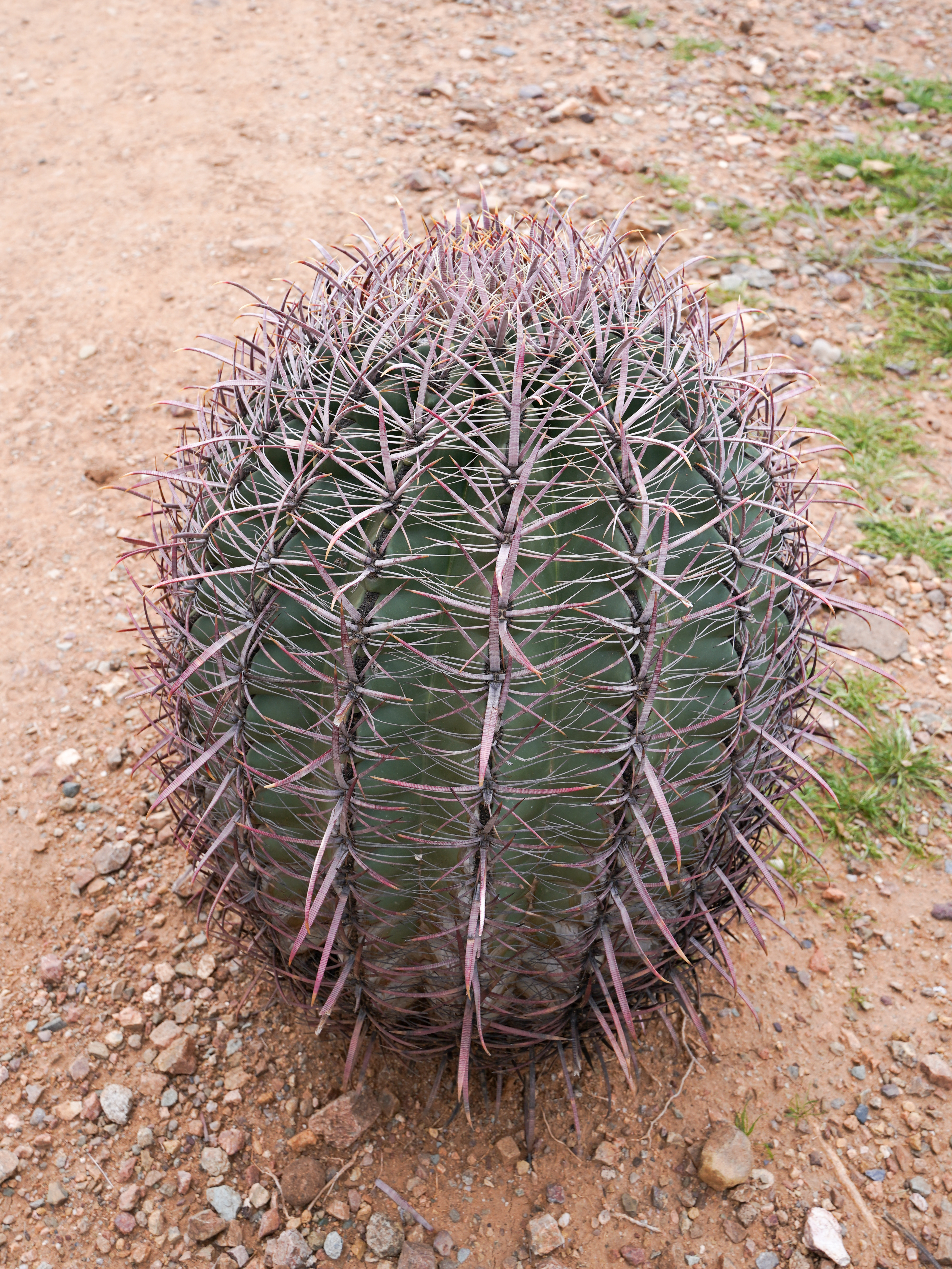
Fishhook barrel cactus at a glance
Ferocactus wislizeni FISH-hook BAIR-ul KAK-tus; Ferocactus wislizeni is fair-oh-KAK-tus wiz-lih-ZEN-eye
- Type
- Plant · cactus
- Diet
- Producer
- Size
- Usually 2 to 4 feet tall and nearly as wide as a beach ball, though a very old one can pass 10 feet.
- Lifespan
- Slow-growing; the Desert Museum says large specimens are more than a century old.
- Conservation
- Not federally listed; Arizona law protects native cacti from collection
Eats sunlight, rainwater, carbon dioxide
Pleats let the barrel swell as it drinks and shrink as it spends, so one plant can hold a season's rain. It makes its food in the green skin between the spine clusters.
Is it safe to touch?
The central spines are thick, curved, and hooked — built to hold on. Do not touch, sit near, or step over one in sandals. And ignore the old survival movies: this is not a canteen.
A fishhook barrel cactus is the easiest cactus in the park to walk past without noticing, until a spine catches a shoelace. It sits low, a foot or two of pleated green barrel with a flat crown, and its ribs work like the folds of an accordion: the plant swells as it takes in rain and shrinks as it spends the water, so the same cactus can look fat in August and pinched in May. The spines are the giveaway. Around the edge of each cluster, several are thick, curved, and hooked at the tip, which is where the name comes from and why the plant is not something to step over in sandals.
The old desert-survival story is that you can cut one open and drink what is inside. Do not. The pulp is a gooey, acidic sponge rather than a canteen, hard to reach through the spines, and the Desert Museum notes that some barrels cause diarrhea — which is the opposite of what a thirsty person needs. The plant is also slow: a barrel the size of a beach ball is likely more than a century old, and it has spent that century storing a season of rain in a body only a couple of feet tall.
The other thing barrels do is lean. Large fishhook barrels tend to tip toward the southwest, which is why they are sometimes called compass barrels, and the leading explanation is that the intense afternoon sun on that side slows growth, so the cooler side grows faster and pushes the plant over. In late summer the crown carries a ring of orange flowers, and the yellow fruit that follows can hang on for more than a year. A plant that leans, stores its own water, and wears last year’s fruit while this year’s flowers open is doing a lot of living in a very small space.
Did you know?
- The old story that you can cut a barrel cactus open for a drink is wrong. NPS says the water inside a cactus is too rich in acids to drink, and the Desert Museum notes the pulp of some barrels causes diarrhea.
- It leans. Big fishhook barrels tend to tip toward the southwest, which earned them the name compass barrel; the guess is that afternoon heat slows growth on that side and the cooler side pushes the plant over.
- The yellow fruits stay on the plant for more than a year, and the Tohono O'odham have used them as an emergency food.
Common questions
Can you drink water from a barrel cactus?
No. NPS is blunt about it: the liquid inside a cactus is not fit to drink. The pulp is gooey, hard to reach through the spines, and in some barrels causes diarrhea. Carry your own water.
Why does the barrel cactus lean toward the southwest?
Nobody is certain. The leading idea is that intense afternoon sun on the southwest side slows growth there, so the cooler side grows faster and tips the plant over. Very tilted plants can topple after heavy rain.
When does a fishhook barrel bloom?
Late summer, mostly August and September, over a longer season than most other barrel cacti. Flowers are usually orange, and about one plant in ten has yellow or red ones.
What eats a barrel cactus?
Javelinas, jackrabbits, packrats, and cactus beetles eat the plant; birds and squirrels take the fruit. The spines stop some animals and not others.