Mammals of Redwood National and State Parks
The 7 mammals of Redwood National and State Parks. Their profiles carry sizes, diets, and whether you should worry.
Common questions
Which Redwood National and State Parks mammals demand distance from a kid?
American black bear, Columbian black-tailed deer, Coyote, Douglas squirrel, and Elk carry a rule worth reading. American black bear: Black bears are usually shy and would rather leave than meet you. Columbian black-tailed deer: Usually calm around people, but they are wild animals, not park mascots. Coyote: Coyotes almost always run from people. Douglas squirrel: Harmless if left alone. Elk: Elk look calm but they are large and wild. 2 more species carry a rule worth reading. (per NPS species pages).
What do Redwood National and State Parks mammals eat?
American black bear eats berries, acorns, nuts, insects, roots, sometimes carrion. Columbian black-tailed deer eats grasses, lichens, berries, leafy plants, young tree buds. Coyote eats mice, rabbits, lizards, insects, fruit, whatever it can find. Douglas squirrel eats conifer seeds, mushrooms, berries, bird eggs, buds. 3 more species have menus worth reading. (per NPS species pages).
The strangest true thing about Redwood National and State Parks's mammals.
American black bear: Great Smoky Mountains National Park has about two black bears per square mile, roughly 1,900 bears, one of the thickest black-bear populations anywhere. Columbian black-tailed deer: Its tail is solid black on top, which is the easiest way to tell it apart from a mule deer's white-tipped tail or a white-tailed deer's brown-and-white one. (per NPS species pages).
-
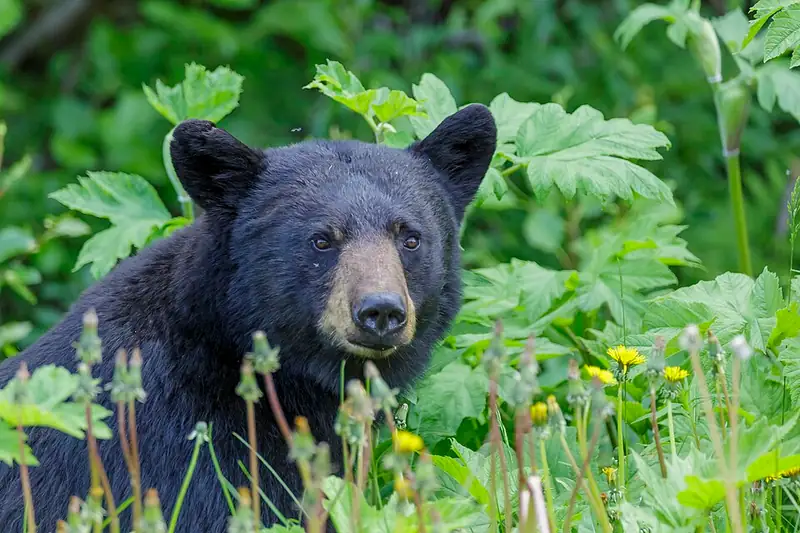 Mammal
American black bear
Ursus americanus
The bear you're most likely to meet east of the Rockies, a strong tree-climber that eats mostly plants and comes in black, brown, or cinnamon.
-
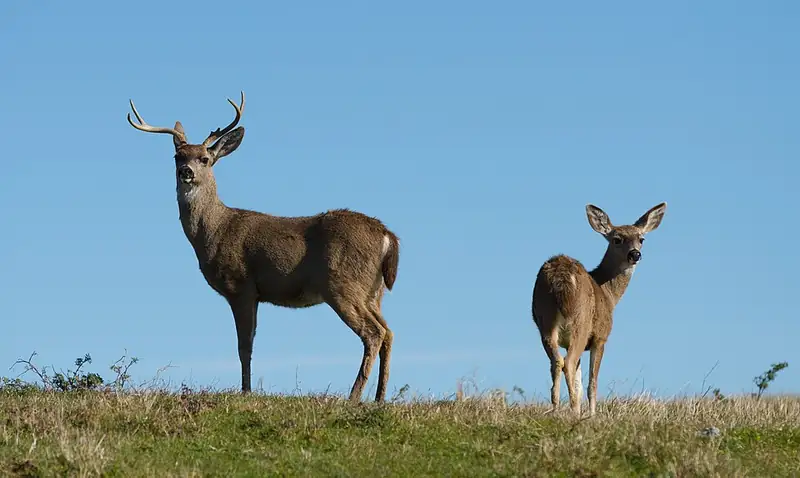 Mammal
Columbian black-tailed deer
Odocoileus hemionus columbianus
The coastal rainforest subspecies of mule deer, common on foggy meadow edges from Olympic to Redwood, easy to tell apart by its all-black tail.
-
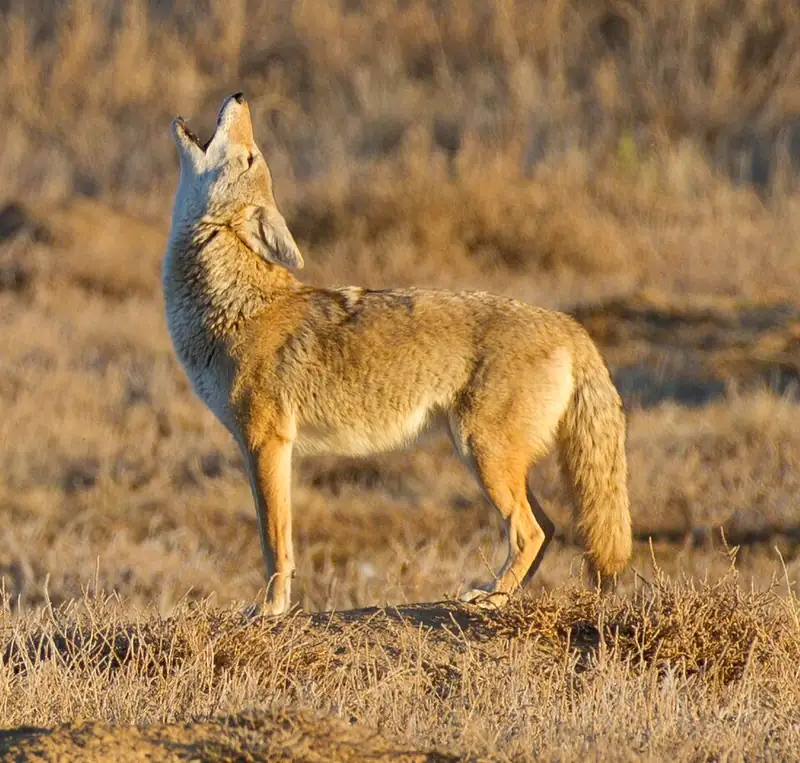 Mammal
Coyote
Canis latrans
The wild dog you're most likely to hear at a national park — a coyote, at home in the desert, the mountains, and the edges of towns.
-
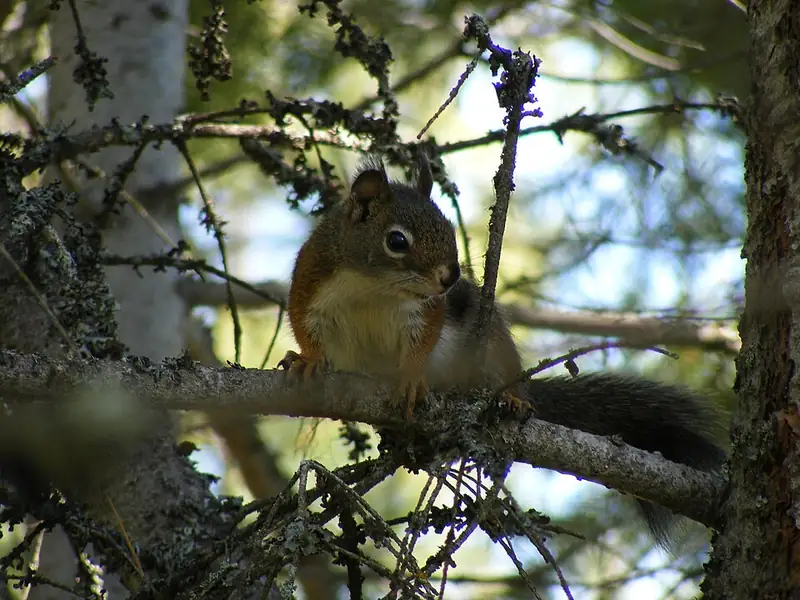 Mammal
Douglas squirrel
Tamiasciurus douglasii
A small, loud tree squirrel of West Coast conifer forests, known for cutting green cones by the hundred and scolding every hiker who walks under its tree.
-
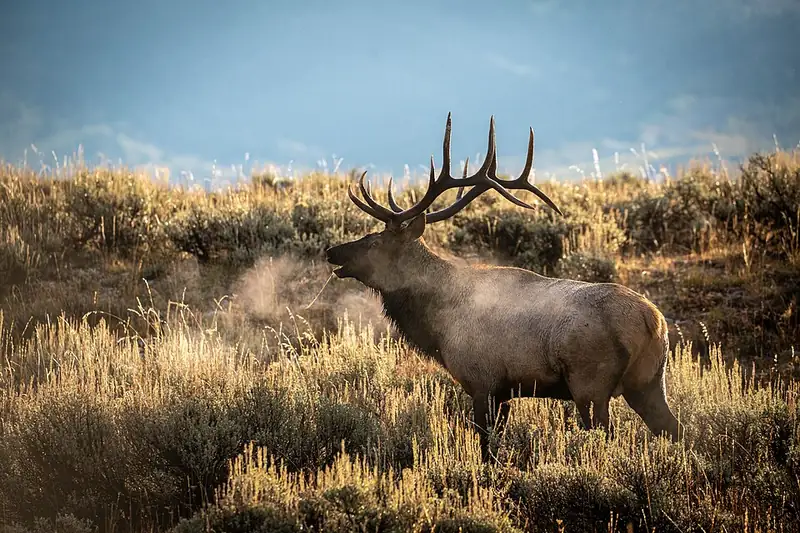 Mammal
Elk
Cervus canadensis
A large deer of mountain meadows whose bulls grow branching antlers and, each fall, bugle a high whistling call across the valley.
-
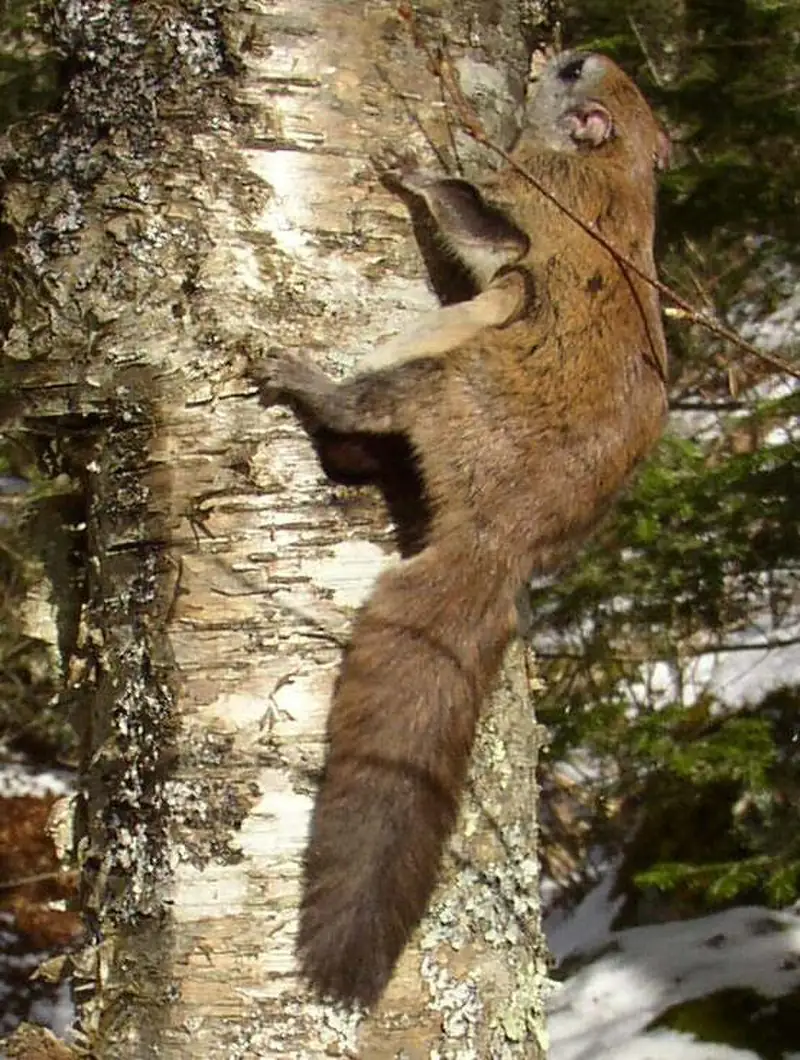 Mammal
Northern flying squirrel
Glaucomys sabrinus
A nocturnal glider of old-growth conifer forests that eats mostly underground fungus and, under a UV light, glows bubblegum pink.
-
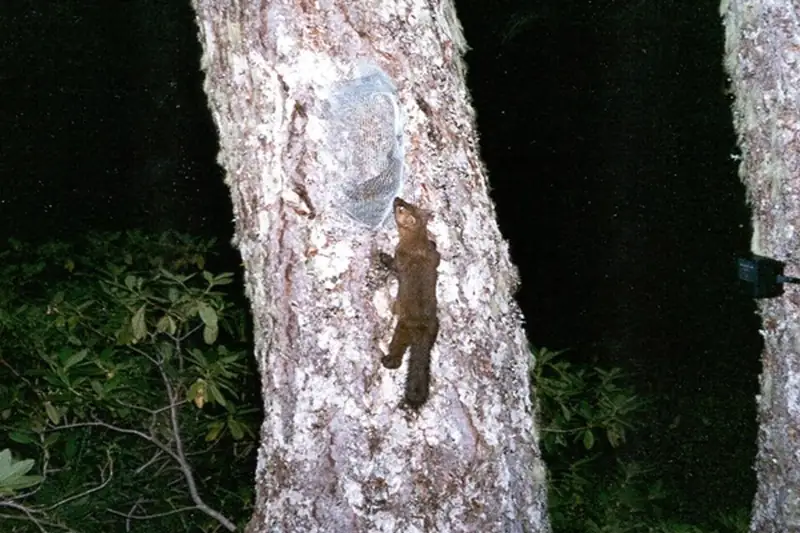 Mammal
Pacific marten
Martes caurina
A tree-climbing weasel relative of the old-growth canopy, whose coastal population was feared extinct for 50 years before a trail camera caught one in 1996.