Mammals of Lassen Volcanic National Park
The 7 mammals of Lassen Volcanic National Park. Their profiles carry sizes, diets, and whether you should worry.
Common questions
Which Lassen Volcanic National Park mammals demand distance from a kid?
American black bear, American pika, Bobcat, Coyote, and Douglas squirrel carry a rule worth reading. American black bear: Black bears are usually shy and would rather leave than meet you. American pika: Pikas are harmless. Bobcat: Very low. Coyote: Coyotes almost always run from people. Douglas squirrel: Harmless if left alone. 2 more species carry a rule worth reading. (per NPS species pages).
What do Lassen Volcanic National Park mammals eat?
American black bear eats berries, acorns, nuts, insects, roots, sometimes carrion. American pika eats grasses, wildflowers, leaves, mountain plants. Bobcat eats rabbits, hares, mice and other rodents, birds, occasionally young deer. Coyote eats mice, rabbits, lizards, insects, fruit, whatever it can find. 3 more species have menus worth reading. (per NPS species pages).
The strangest true thing about Lassen Volcanic National Park's mammals.
American black bear: Great Smoky Mountains National Park has about two black bears per square mile, roughly 1,900 bears, one of the thickest black-bear populations anywhere. American pika: A pika does not hibernate. Instead it spends all summer clipping plants and piling them under rocks to dry into haypiles, then eats from those piles all winter under the snow. (per NPS species pages).
-
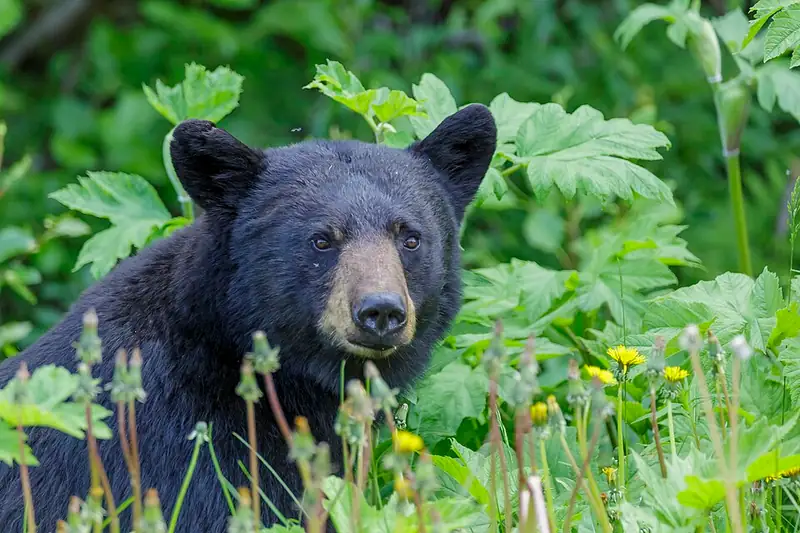 Mammal
American black bear
Ursus americanus
The bear you're most likely to meet east of the Rockies, a strong tree-climber that eats mostly plants and comes in black, brown, or cinnamon.
-
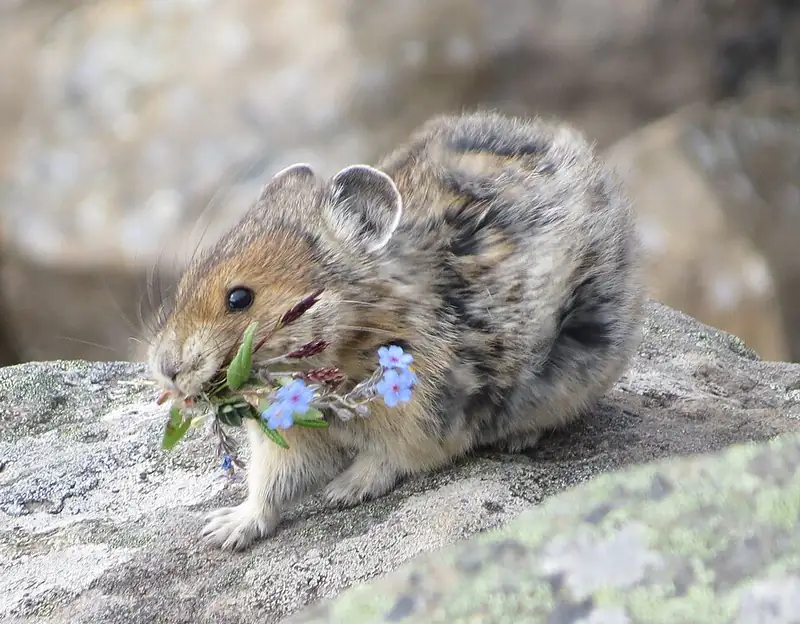 Mammal
American pika
Ochotona princeps
A small round cousin of the rabbit that lives in mountain rock piles at Rocky Mountain, Mount Rainier, and North Cascades, and never sleeps through winter.
-
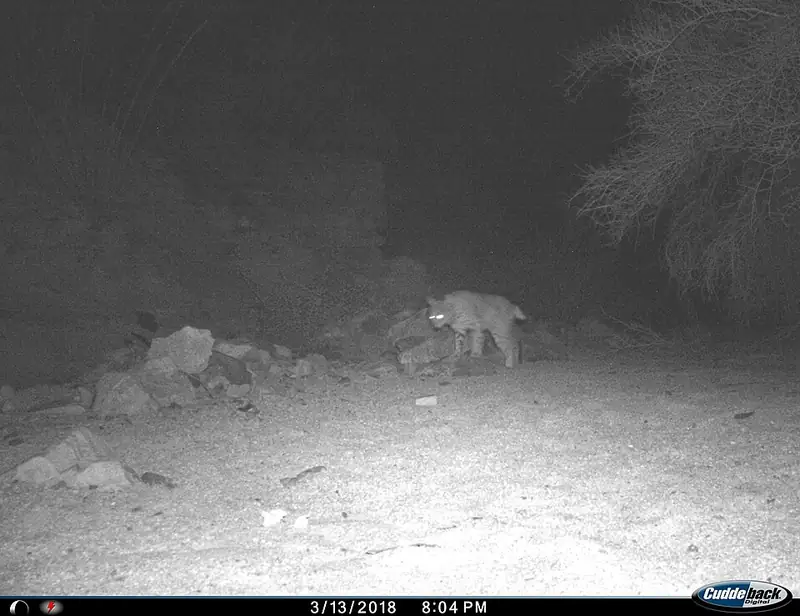 Mammal
Bobcat
Lynx rufus
A small wildcat about twice the size of a house cat, common but rarely seen, that can bring down prey many times its own weight.
-
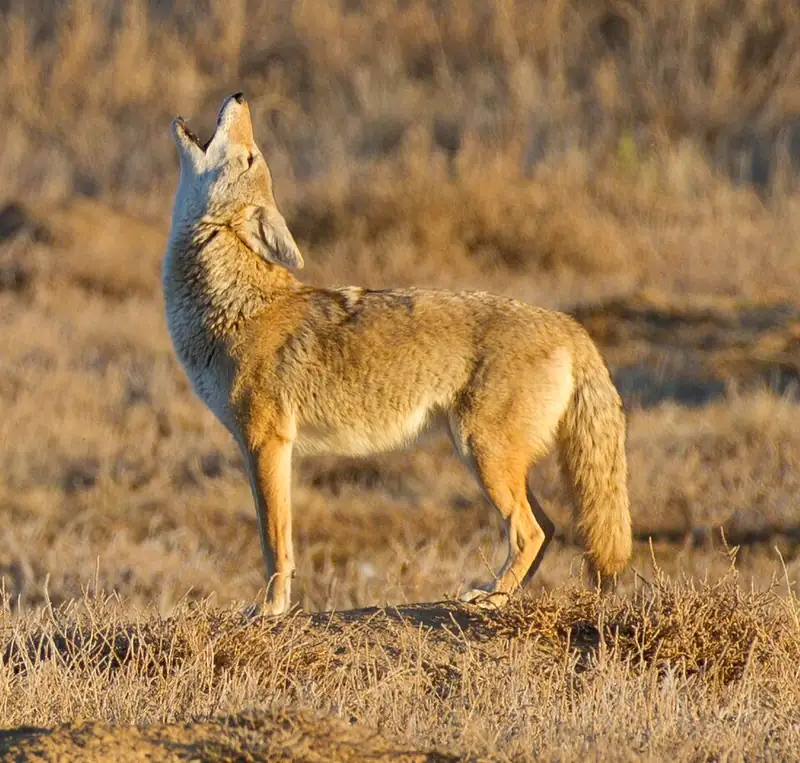 Mammal
Coyote
Canis latrans
The wild dog you're most likely to hear at a national park — a coyote, at home in the desert, the mountains, and the edges of towns.
-
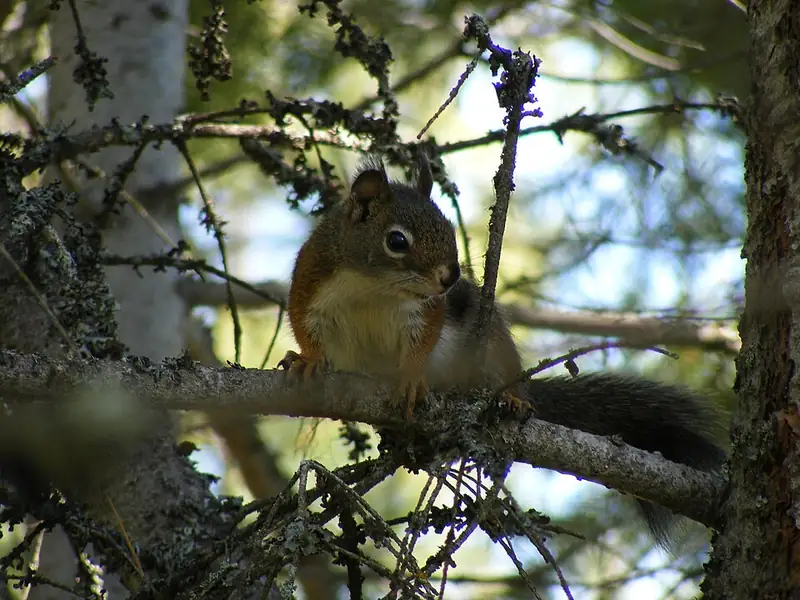 Mammal
Douglas squirrel
Tamiasciurus douglasii
A small, loud tree squirrel of West Coast conifer forests, known for cutting green cones by the hundred and scolding every hiker who walks under its tree.
-
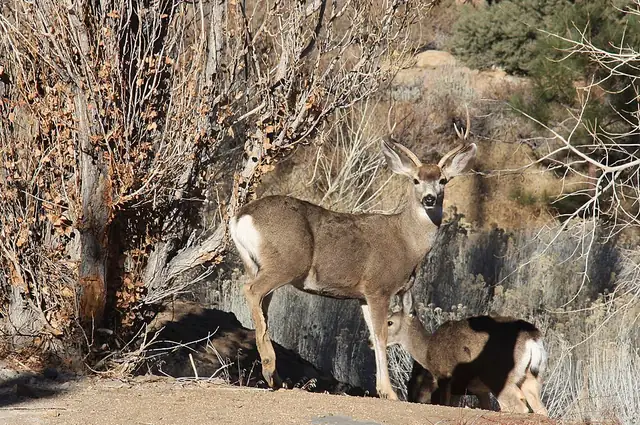 Mammal
Mule deer
Odocoileus hemionus
A western deer named for its big mule-like ears, common on canyon rims and in desert washes in Grand Canyon, Zion, Yosemite, Arches, Canyonlands, and Saguaro.
-
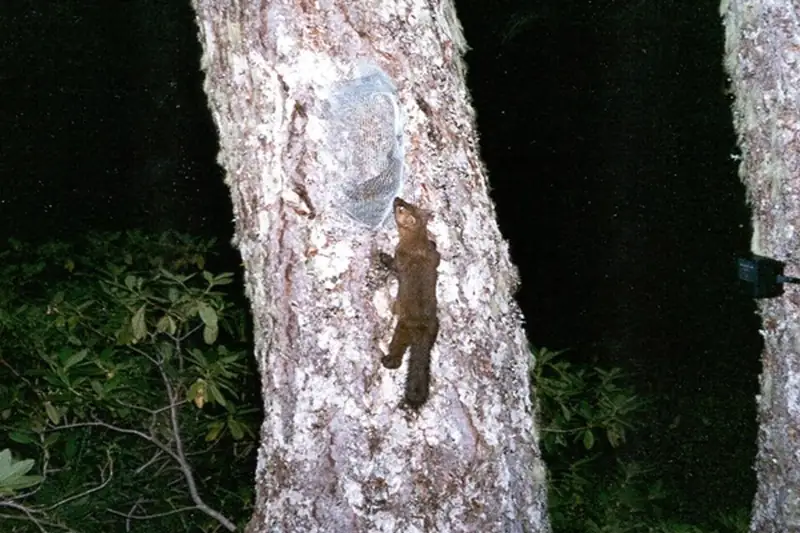 Mammal
Pacific marten
Martes caurina
A tree-climbing weasel relative of the old-growth canopy, whose coastal population was feared extinct for 50 years before a trail camera caught one in 1996.