Plants of Yosemite National Park
The 10 plants of Yosemite National Park. Each carries a fun fact and a note on whether a kid should worry about it.
Common questions
Which Yosemite National Park plants demand distance from a kid?
Bigleaf maple, Douglas-fir, Giant sequoia, Indian paintbrush, and Ponderosa pine carry a rule worth reading. Bigleaf maple: A bigleaf maple is completely harmless. Douglas-fir: Completely safe. Giant sequoia: A giant sequoia is completely harmless. Indian paintbrush: Harmless to touch. Ponderosa pine: Safe and fun. 5 more species carry a rule worth reading. (per NPS species pages).
What do Yosemite National Park plants eat?
Bigleaf maple eats sunlight, rainwater, carbon dioxide, soil nutrients. Giant sequoia eats sunlight, water, carbon dioxide, soil nutrients, snowmelt. Quaking aspen eats sunlight, water, carbon dioxide, soil nutrients. Snow plant eats sugars from underground fungi, which take their sugar from conifer tree roots. (per NPS species pages).
The strangest true thing about Yosemite National Park's plants.
Bigleaf maple: The bigleaf maple has the largest leaves of any maple in the world. A single leaf can be about a foot wide, big enough to hold in front of your face like a mask. Douglas-fir: It is not a true fir at all. Its scientific name means false hemlock, and it fits so oddly among the conifers that botanists gave it its own group. (per NPS species pages).
-
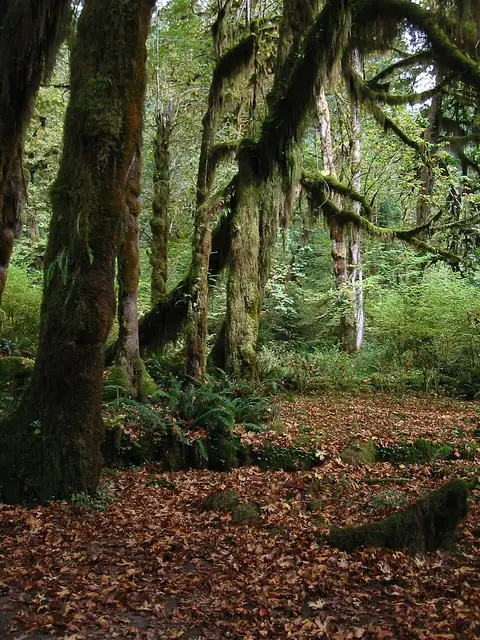 Plant
Bigleaf maple
Acer macrophyllum
A Pacific Northwest maple with the largest leaves of any maple, often draped in moss and ferns in the rainforests of Olympic and North Cascades.
-
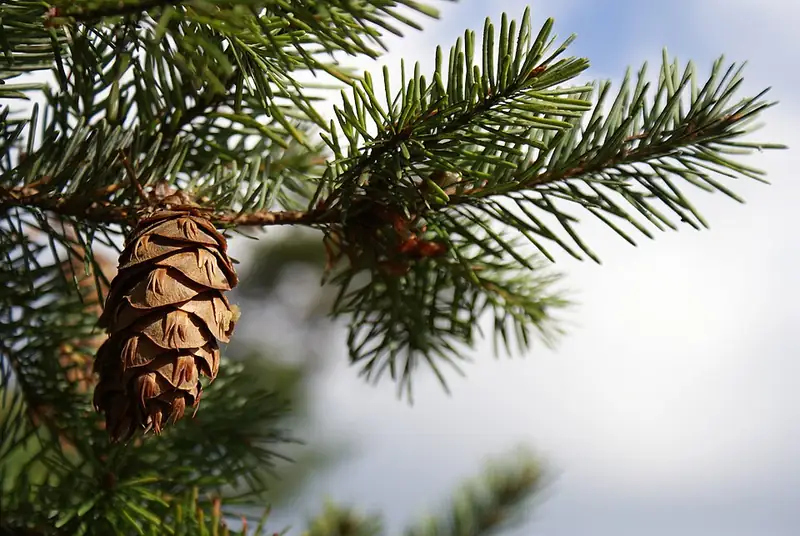 Plant
Douglas-fir
Pseudotsuga menziesii
One of the tallest trees on Earth, not actually a true fir, whose cones carry little three-pointed flaps a Native story calls the tails and legs of hiding mice.
-
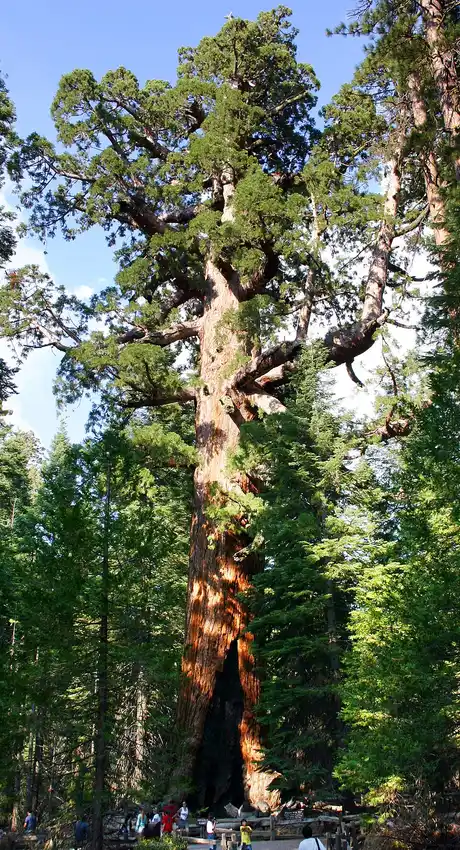 Plant
Giant sequoia
Sequoiadendron giganteum
The largest tree on Earth by wood volume, growing only in scattered groves on the west slope of California's Sierra Nevada.
-
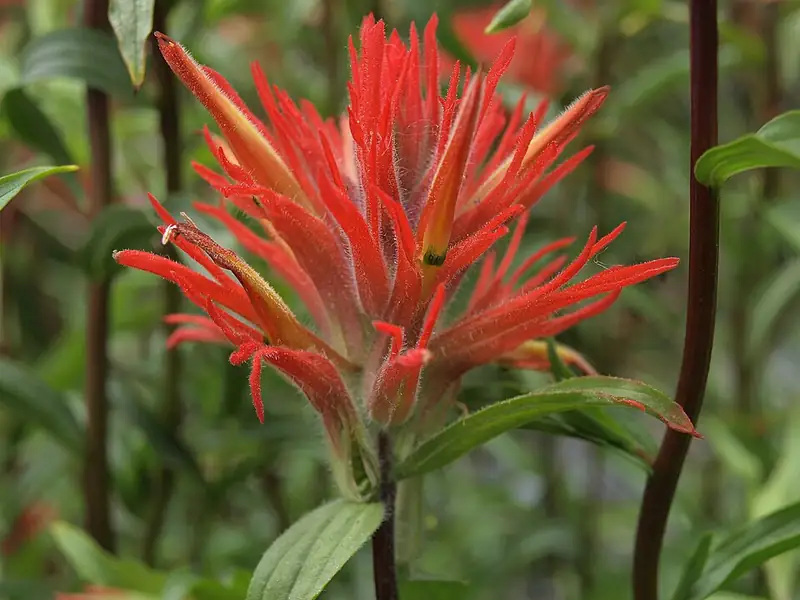 Plant
Indian paintbrush
Castilleja miniata
A scarlet mountain wildflower that steals water and food from its neighbors' roots, and whose bright color comes from leaves, not petals.
-
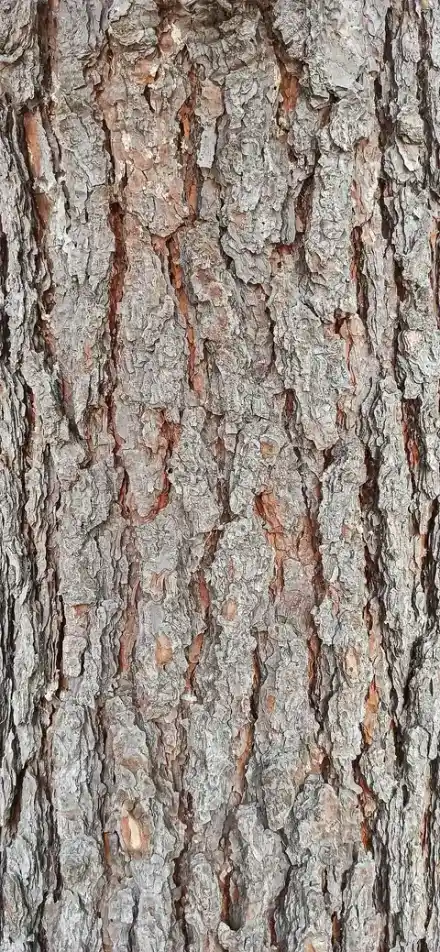 Plant
Ponderosa pine
Pinus ponderosa
A tall western pine whose sun-warmed bark smells like butterscotch and vanilla, and which drops its low branches so ground fire can pass safely beneath it.
-
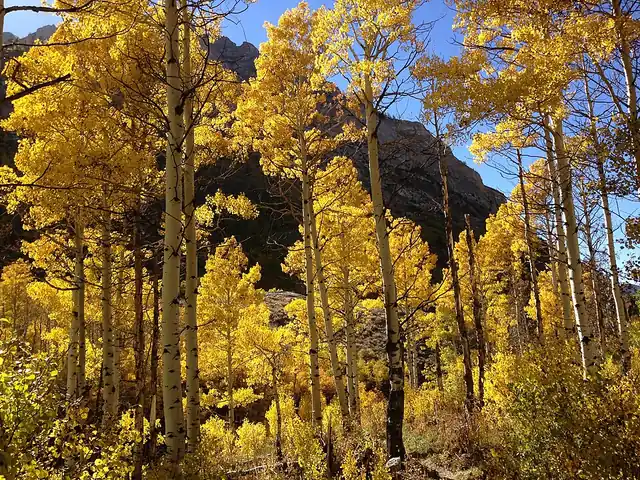 Plant
Quaking aspen
Populus tremuloides
A white-barked mountain tree whose flat-stemmed leaves shiver in the lightest breeze, turning whole hillsides gold each fall.
-
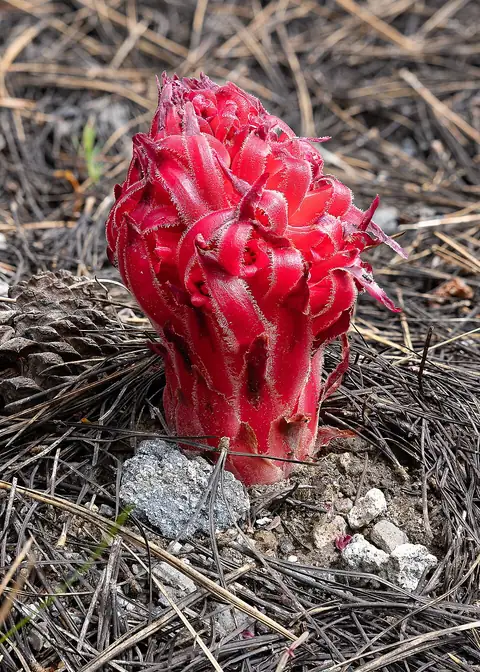 Plant
Snow plant
Sarcodes sanguinea
A bright red, leafless stalk that pushes up through melting spring snow in the conifer forests of Lassen Volcanic, and makes no food of its own.
-
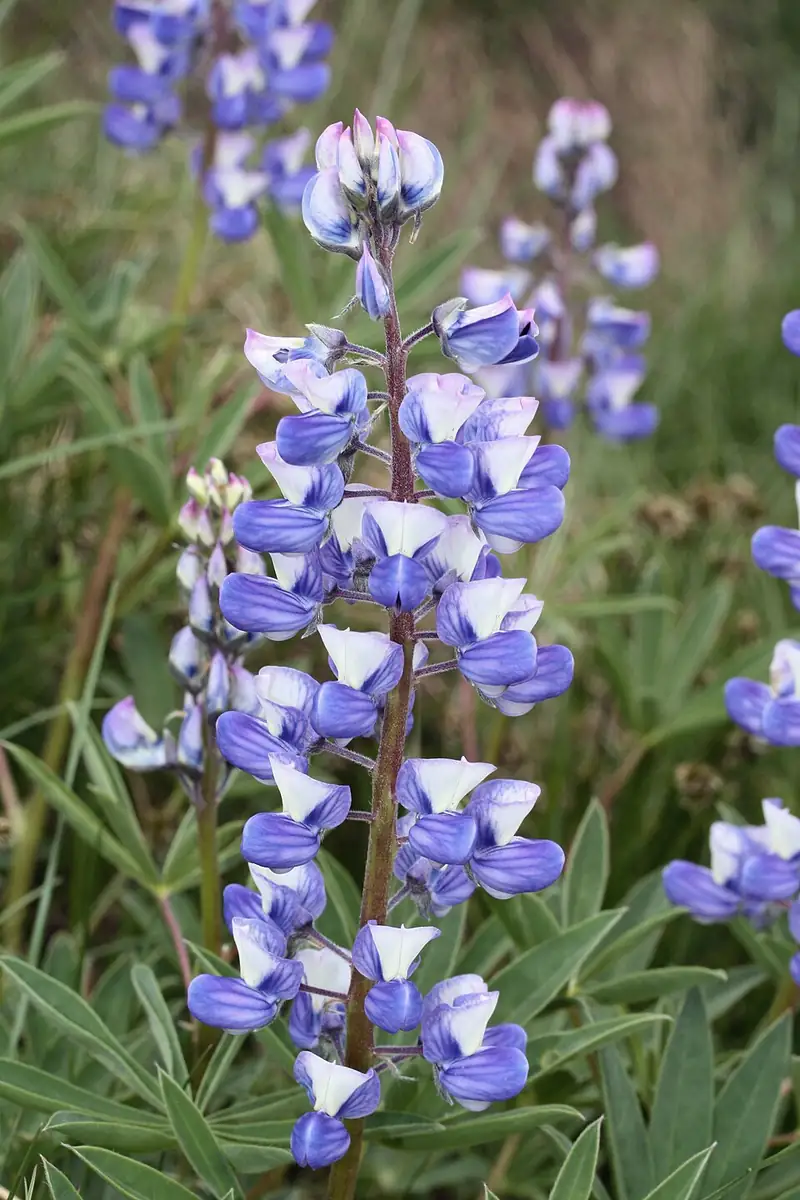 Plant
Subalpine lupine
Lupinus latifolius
The blue lupine that fills Mount Rainier's Paradise meadows in summer and quietly rebuilds raw volcanic soil by pulling nitrogen from the air.
-
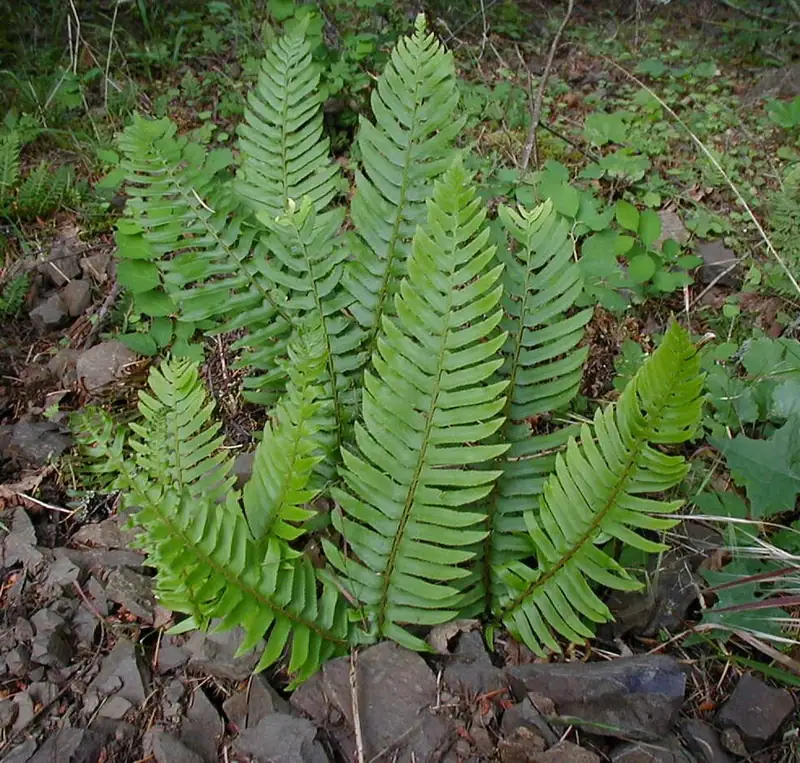 Plant
Western sword fern
Polystichum munitum
The knee-high fern that carpets the Northwest rainforest floor in deep green all year, each leaflet marked with a little hilt like a tiny sword.
-
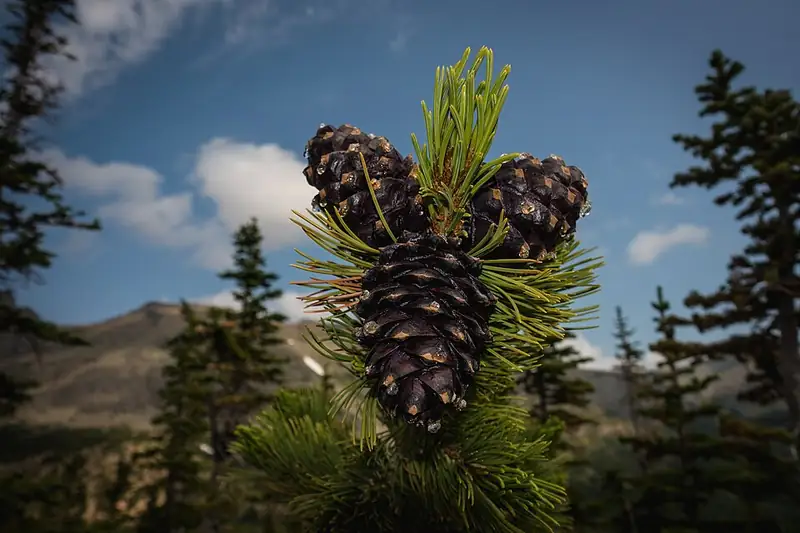 Plant
Whitebark pine
Pinus albicaulis
The twisted pine at Glacier's treeline that feeds grizzlies and Clark's nutcrackers, holds the snowpack in place, and is dying faster than it grows.