Mammals of Mount Rainier National Park
The 10 mammals of Mount Rainier National Park. Their profiles carry sizes, diets, and whether you should worry.
Common questions
Which Mount Rainier National Park mammals demand distance from a kid?
American black bear, American pika, Cascade red fox, Columbian black-tailed deer, and Douglas squirrel carry a rule worth reading. American black bear: Black bears are usually shy and would rather leave than meet you. American pika: Pikas are harmless. Cascade red fox: Not dangerous, but a real problem: some Mount Rainier foxes near Paradise have learned to approach cars and people for handouts, which is exactly why rangers ask everyone not to feed them. Columbian black-tailed deer: Usually calm around people, but they are wild animals, not park mascots. Douglas squirrel: Harmless if left alone. 5 more species carry a rule worth reading. (per NPS species pages).
What do Mount Rainier National Park mammals eat?
American black bear eats berries, acorns, nuts, insects, roots, sometimes carrion. American pika eats grasses, wildflowers, leaves, mountain plants. Cascade red fox eats pocket gophers, snowshoe hares, songbirds, huckleberries and other berries, insects. Columbian black-tailed deer eats grasses, lichens, berries, leafy plants, young tree buds. 6 more species have menus worth reading. (per NPS species pages).
The strangest true thing about Mount Rainier National Park's mammals.
American black bear: Great Smoky Mountains National Park has about two black bears per square mile, roughly 1,900 bears, one of the thickest black-bear populations anywhere. American pika: A pika does not hibernate. Instead it spends all summer clipping plants and piling them under rocks to dry into haypiles, then eats from those piles all winter under the snow. (per NPS species pages).
-
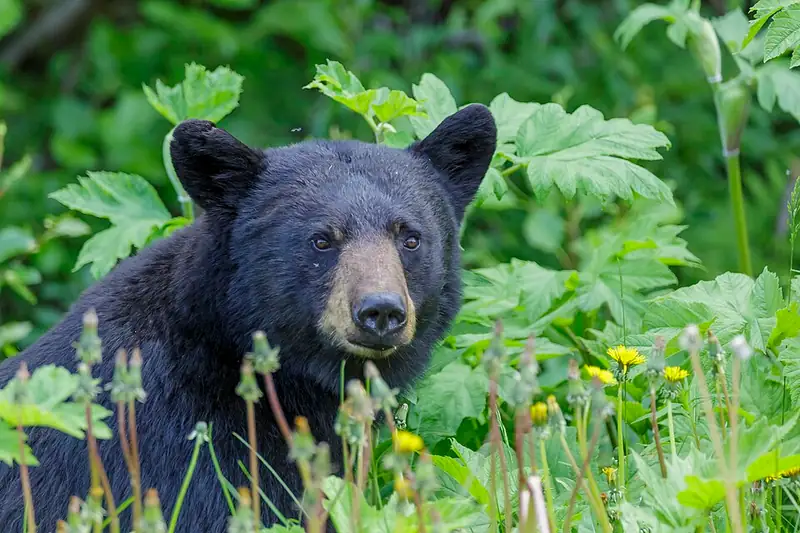 Mammal
American black bear
Ursus americanus
The bear you're most likely to meet east of the Rockies, a strong tree-climber that eats mostly plants and comes in black, brown, or cinnamon.
-
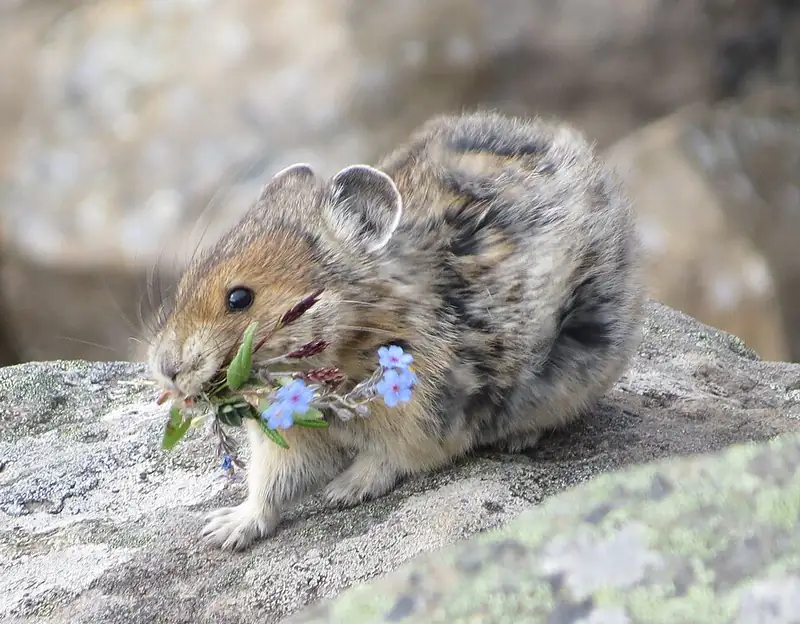 Mammal
American pika
Ochotona princeps
A small round cousin of the rabbit that lives in mountain rock piles at Rocky Mountain, Mount Rainier, and North Cascades, and never sleeps through winter.
-
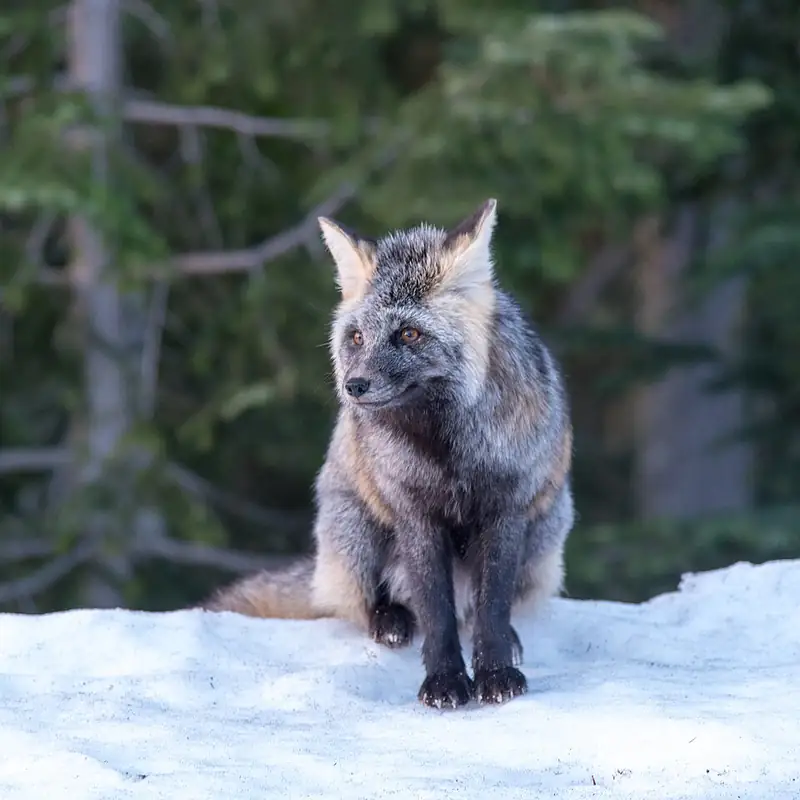 Mammal
Cascade red fox
Vulpes vulpes cascadensis
A rare, high-elevation red fox subspecies found almost nowhere but Mount Rainier's subalpine meadows, in red, black, or mixed cross-colored fur.
-
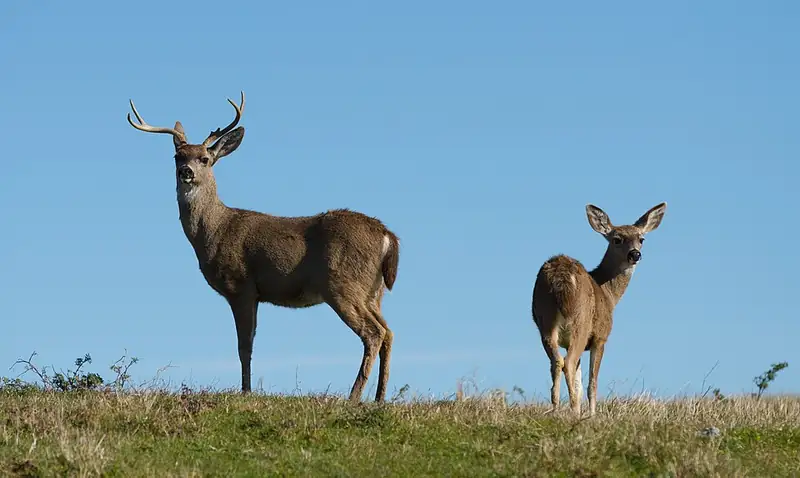 Mammal
Columbian black-tailed deer
Odocoileus hemionus columbianus
The coastal rainforest subspecies of mule deer, common on foggy meadow edges from Olympic to Redwood, easy to tell apart by its all-black tail.
-
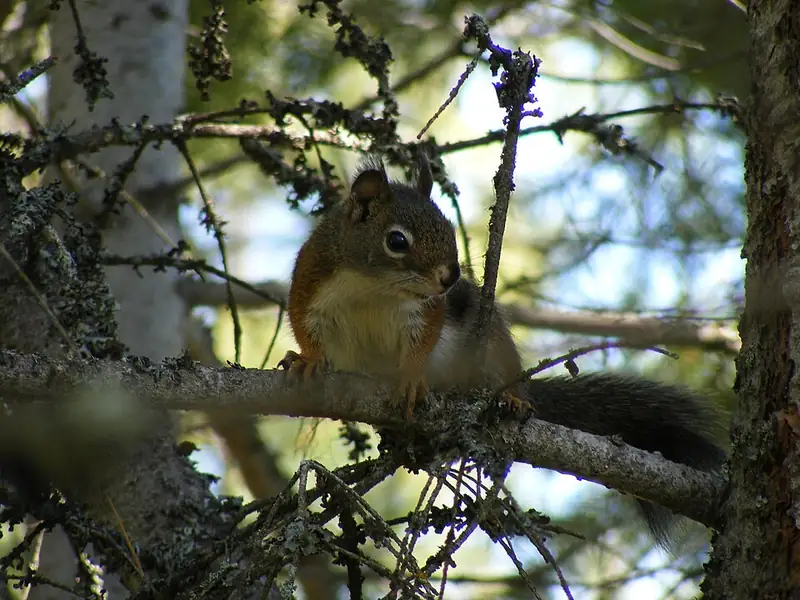 Mammal
Douglas squirrel
Tamiasciurus douglasii
A small, loud tree squirrel of West Coast conifer forests, known for cutting green cones by the hundred and scolding every hiker who walks under its tree.
-
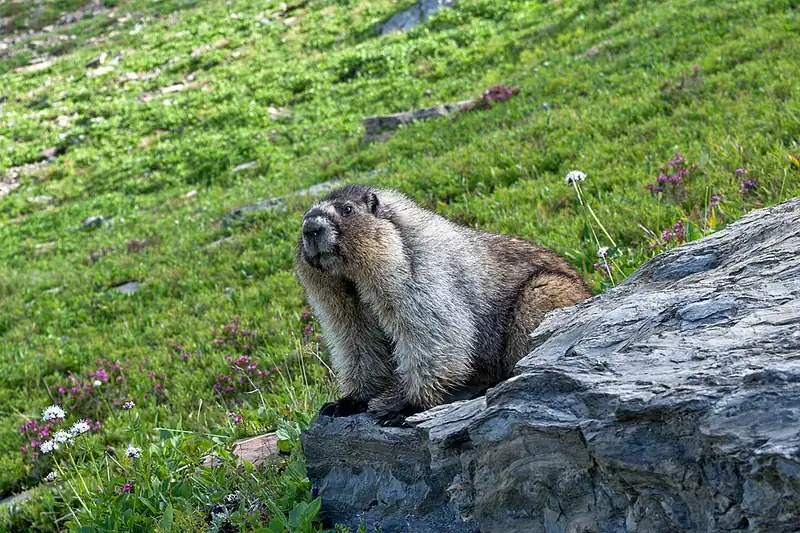 Mammal We saw it
Hoary marmot
Marmota caligata
The big silver-gray ground squirrel of the high meadows at Mount Rainier, famous for the sharp whistle it gives when danger is near.
-
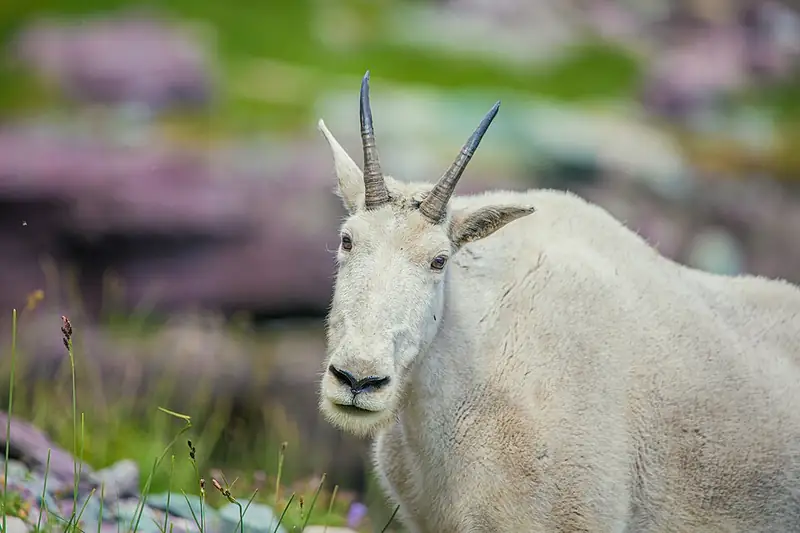 Mammal We saw it
Mountain goat
Oreamnos americanus
A white, shaggy climber with black horns that lives on the steepest crags and pumice fields high on Mount Rainier, where almost nothing else can walk.
-
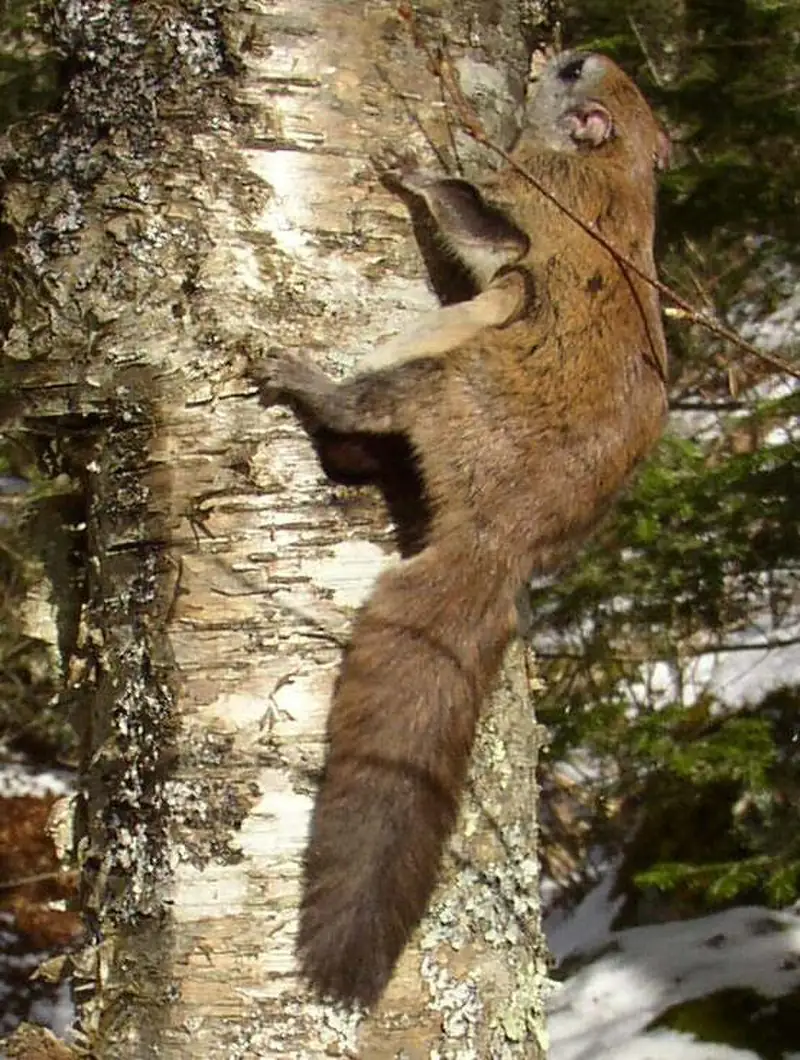 Mammal
Northern flying squirrel
Glaucomys sabrinus
A nocturnal glider of old-growth conifer forests that eats mostly underground fungus and, under a UV light, glows bubblegum pink.
-
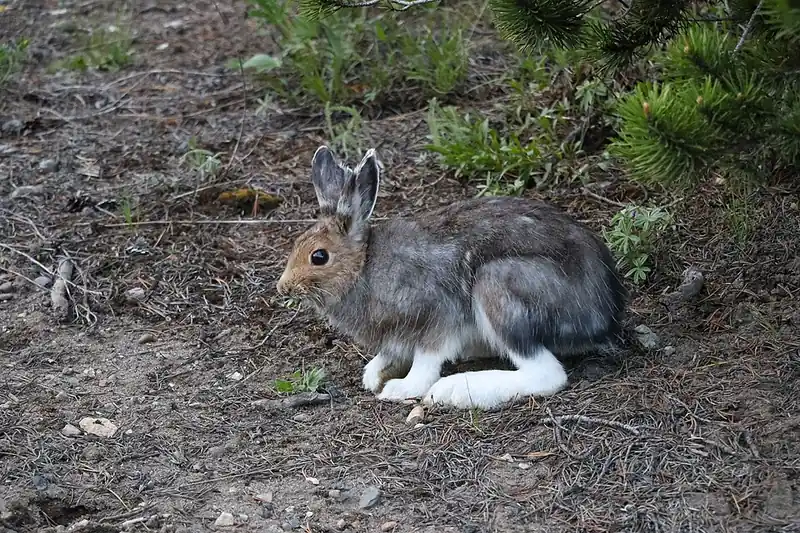 Mammal
Snowshoe hare
Lepus americanus
A forest hare whose coat flips from brown to white on a clock set by daylight, not by snow, and whose oversized feet work like actual snowshoes.
-
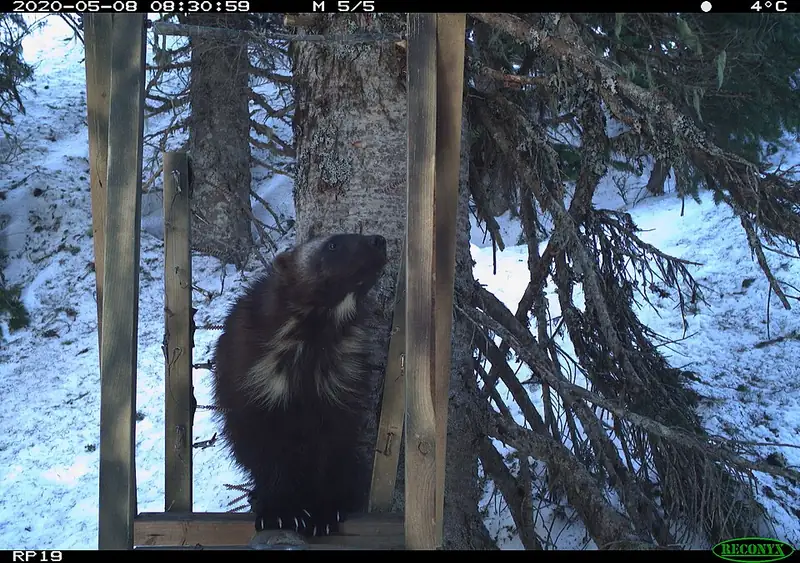 Mammal
Wolverine
Gulo gulo
The largest weasel-family member, so rare in Washington that a 2020 den at Mount Rainier was its first confirmed wolverine family in over a century.