Mammals of Guadalupe Mountains National Park
The 4 mammals of Guadalupe Mountains National Park. Their profiles carry sizes, diets, and whether you should worry.
Common questions
Which Guadalupe Mountains National Park mammals demand distance from a kid?
Bighorn sheep, Elk, Mule deer, and Pronghorn carry a rule worth reading. Bighorn sheep: Bighorn sheep are shy and would rather climb away than come near you. Elk: Elk look calm but they are large and wild. Mule deer: Mule deer look calm and tame, but they are wild animals with sharp hooves, and bucks have antlers in fall. Pronghorn: Not a real worry: pronghorn keep their distance from people on their own. (per NPS species pages).
What do Guadalupe Mountains National Park mammals eat?
Bighorn sheep eats grasses, shrubs, desert plants. Elk eats grasses, forbs, shrubs, tree bark in winter. Mule deer eats grasses, leaves, twigs, flowers, nuts, berries. Pronghorn eats sagebrush, rabbitbrush, forbs, some grasses. (per NPS species pages).
The strangest true thing about Guadalupe Mountains National Park's mammals.
Bighorn sheep: A ram's two curled horns can weigh up to 30 pounds together, about as much as a big bag of dog food, and he carries them on his head his whole life. Elk: Only the bulls grow antlers, and they grow fast, up to an inch a day, then drop off each winter and start over in spring. (per NPS species pages).
-
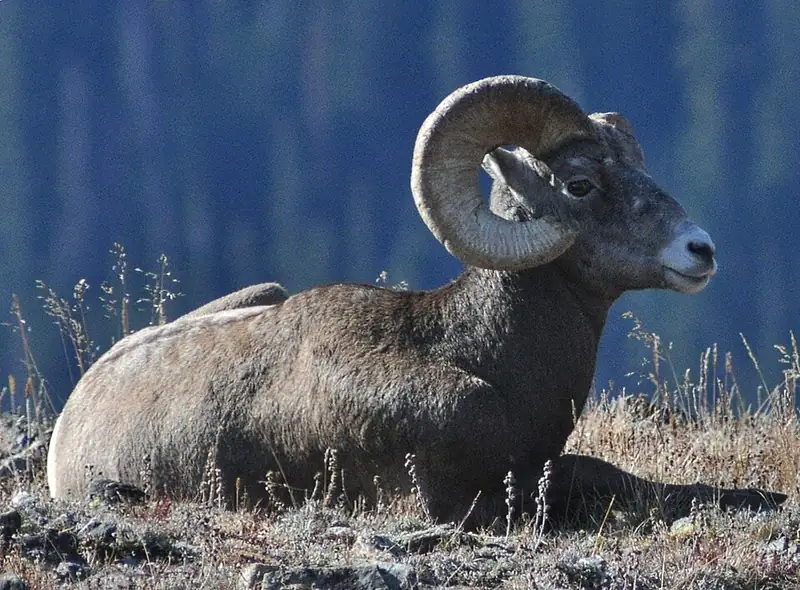 Mammal
Bighorn sheep
Ovis canadensis
A wild sheep of cliffs and canyons, where rams carry heavy curled horns and both sexes cross steep rock other animals can't.
-
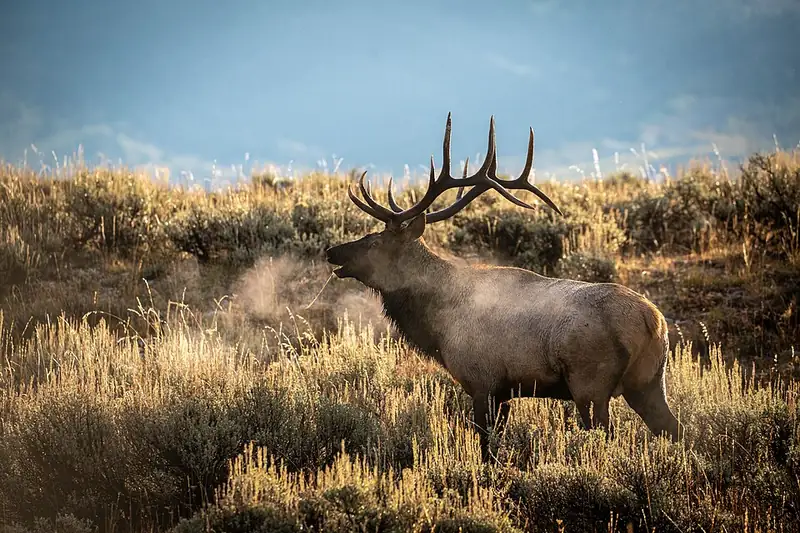 Mammal
Elk
Cervus canadensis
A large deer of mountain meadows whose bulls grow branching antlers and, each fall, bugle a high whistling call across the valley.
-
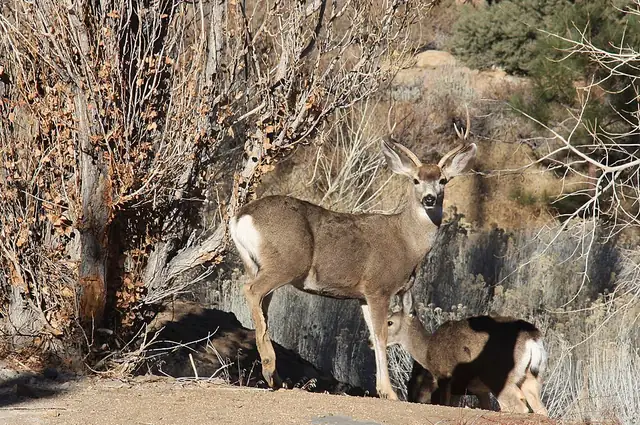 Mammal
Mule deer
Odocoileus hemionus
A western deer named for its big mule-like ears, common on canyon rims and in desert washes in Grand Canyon, Zion, Yosemite, Arches, Canyonlands, and Saguaro.
-
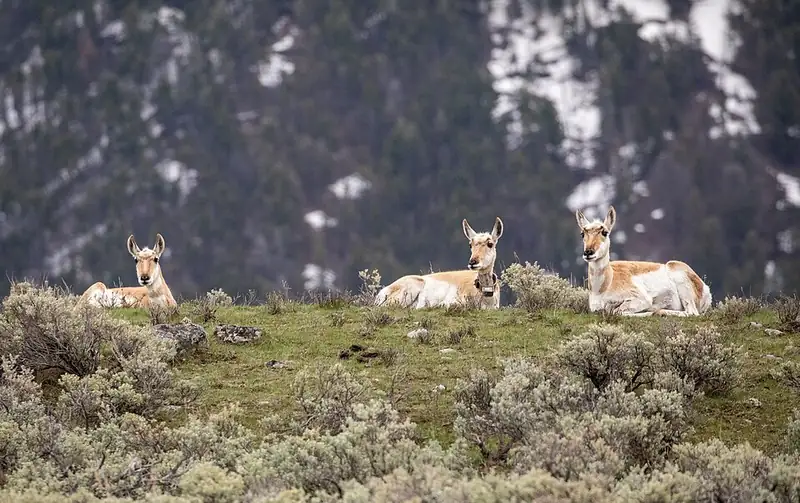 Mammal
Pronghorn
Antilocapra americana
North America's fastest land mammal, seen in Yellowstone's northern range and at Lava Beds, built to outrun a predator that went extinct 12,000 years ago.