Mammals of Great Basin National Park
The 7 mammals of Great Basin National Park. Their profiles carry sizes, diets, and whether you should worry.
Common questions
Which Great Basin National Park mammals demand distance from a kid?
Black-tailed jackrabbit, Bobcat, Coyote, Elk, and Mule deer carry a rule worth reading. Black-tailed jackrabbit: A jackrabbit's entire plan is to run, not fight. Bobcat: Very low. Coyote: Coyotes almost always run from people. Elk: Elk look calm but they are large and wild. Mule deer: Mule deer look calm and tame, but they are wild animals with sharp hooves, and bucks have antlers in fall. 2 more species carry a rule worth reading. (per NPS species pages).
What do Great Basin National Park mammals eat?
Black-tailed jackrabbit eats grasses, sagebrush, creosote bush, cactus, clover and alfalfa where it grows. Bobcat eats rabbits, hares, mice and other rodents, birds, occasionally young deer. Coyote eats mice, rabbits, lizards, insects, fruit, whatever it can find. Elk eats grasses, forbs, shrubs, tree bark in winter. 3 more species have menus worth reading. (per NPS species pages).
The strangest true thing about Great Basin National Park's mammals.
Black-tailed jackrabbit: Its ears work like an elephant's: blood vessels near the surface widen in the heat and let body warmth radiate away into the air, cooling the animal without sweat. Bobcat: A bobcat's home range can cover many square miles as it hunts night after night, moving quietly enough that fresh tracks in dust or snow are usually the only sign one passed through. (per NPS species pages).
-
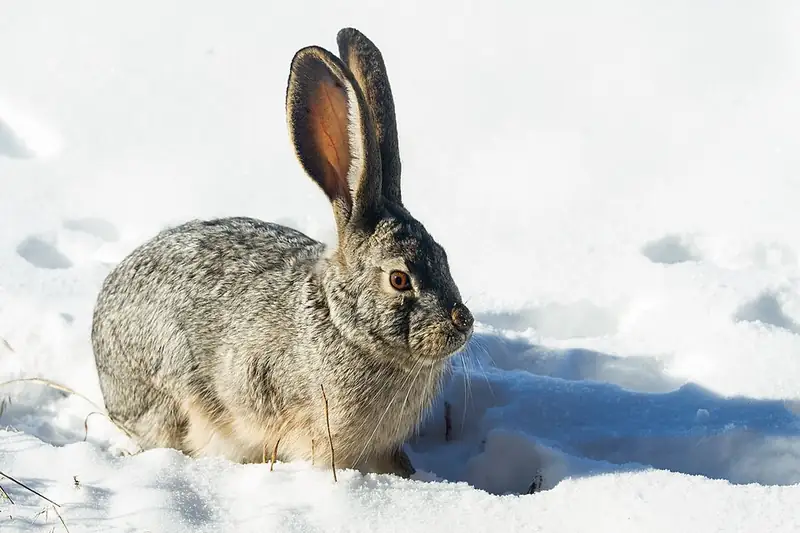 Mammal
Black-tailed jackrabbit
Lepus californicus
A big-eared hare of Joshua Tree, Lava Beds, Arches, and Canyonlands that dumps body heat through those ears and outruns coyotes in zigzags at 40 miles an hour.
-
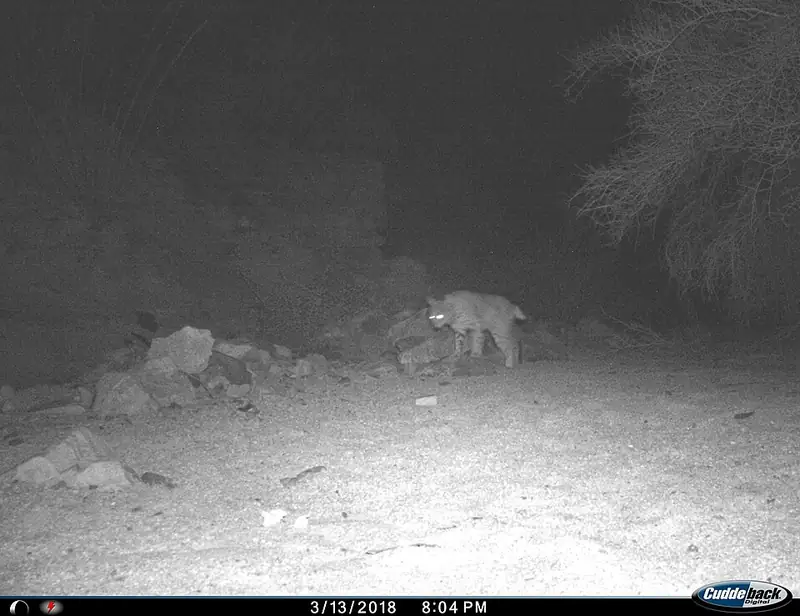 Mammal
Bobcat
Lynx rufus
A small wildcat about twice the size of a house cat, common but rarely seen, that can bring down prey many times its own weight.
-
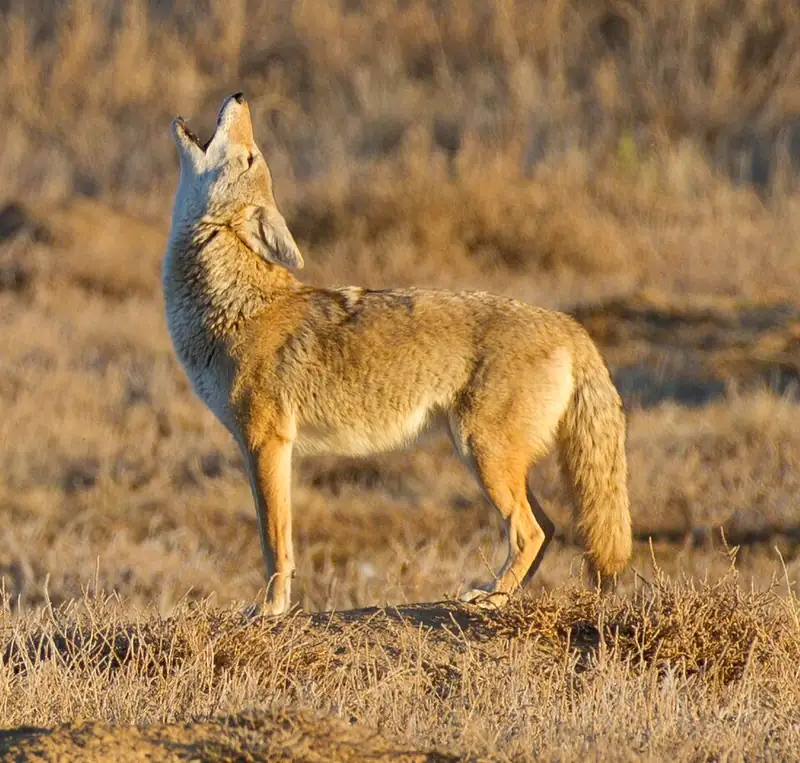 Mammal
Coyote
Canis latrans
The wild dog you're most likely to hear at a national park — a coyote, at home in the desert, the mountains, and the edges of towns.
-
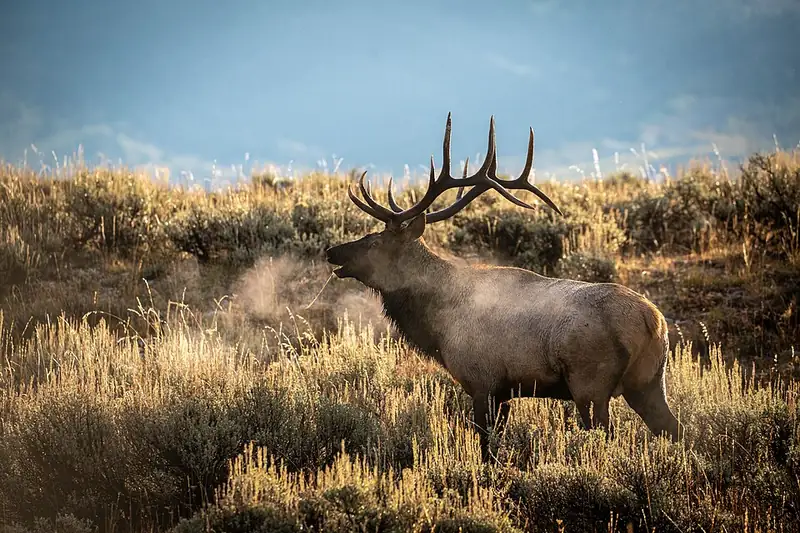 Mammal
Elk
Cervus canadensis
A large deer of mountain meadows whose bulls grow branching antlers and, each fall, bugle a high whistling call across the valley.
-
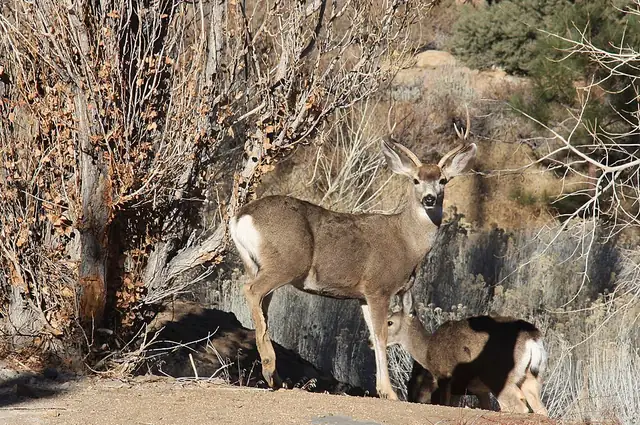 Mammal
Mule deer
Odocoileus hemionus
A western deer named for its big mule-like ears, common on canyon rims and in desert washes in Grand Canyon, Zion, Yosemite, Arches, Canyonlands, and Saguaro.
-
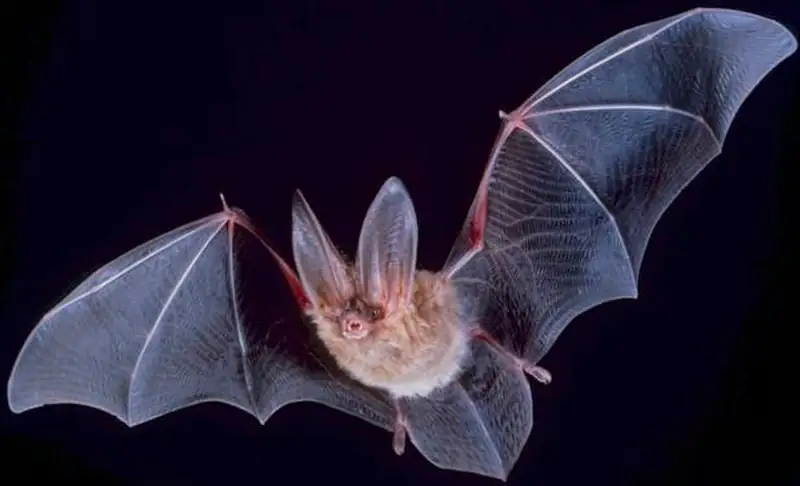 Mammal
Townsend's big-eared bat
Corynorhinus townsendii
A soft brown bat with enormous curling ears that roosts in the cool lava-tube caves of Lava Beds and hunts moths in the dark.
-
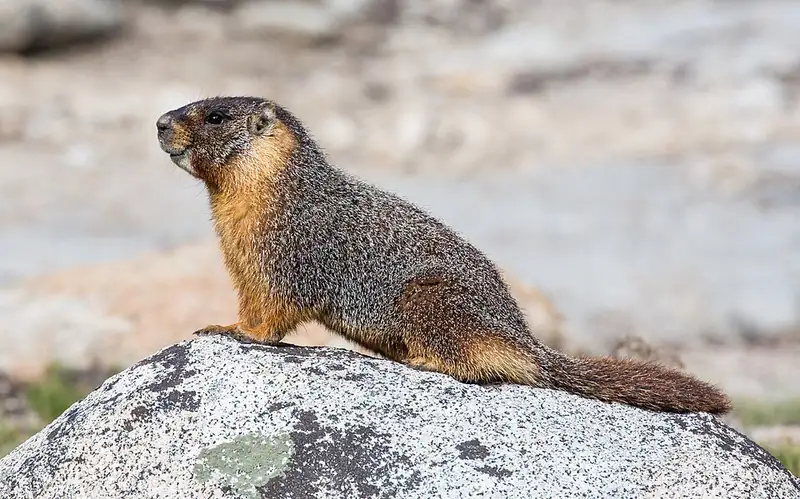 Mammal
Yellow-bellied marmot
Marmota flaviventris
A chubby, whistling ground squirrel that suns itself on high-country rocks at Rocky Mountain and Yosemite, and sleeps away most of the year.