Birds of Grand Teton National Park
The 23 birds of Grand Teton National Park. Their profiles carry sizes, diets, and whether you should worry.
Common questions
Which Grand Teton National Park birds demand distance from a kid?
American dipper, American white pelican, Bald eagle, Black-billed magpie, and Canada jay carry a rule worth reading. American dipper: None. American white pelican: Pelicans are not aggressive toward people. Bald eagle: A bald eagle will not come after you. Black-billed magpie: A nesting pair will scold and dive at anything near the nest, including people, but they do not attack. Canada jay: None. 18 more species carry a rule worth reading. (per NPS species pages).
What do Grand Teton National Park birds eat?
American dipper eats caddisfly and mayfly larvae, aquatic insects under rocks, small fish, fish eggs, flying insects. American white pelican eats rough fish, minnows, small schooling fish, salamanders. Bald eagle eats fish, ducks, gulls, small mammals, carrion. Black-billed magpie eats insects, carrion, grain, seeds, ticks off elk and deer, other birds' eggs. 19 more species have menus worth reading. (per NPS species pages).
The strangest true thing about Grand Teton National Park's birds.
American dipper: A dipper's eyelids are lined with white feathers, so each blink flashes a bright white wink, which biologists think may double as a signal to other dippers over the roar of a rapid. American white pelican: The Molly Islands, where nearly all of Yellowstone's pelicans nest, add up to only 0.7 to 1.2 acres depending on the lake's water level, small enough to flood in a single hard spring. (per NPS species pages).
-
 Bird
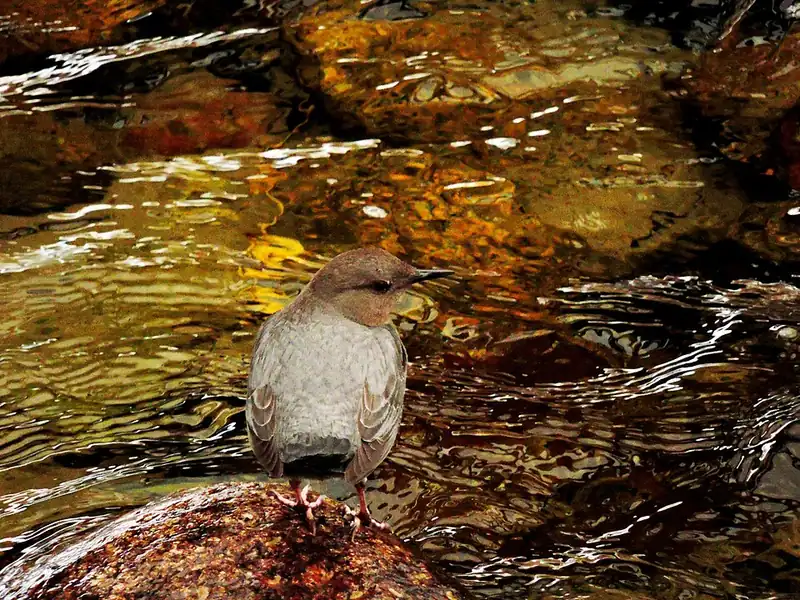
American dipper
Cinclus mexicanus
A stream-gray songbird that walks along the bottom of cold mountain creeks to hunt, the only songbird in North America that does.
-
 Bird
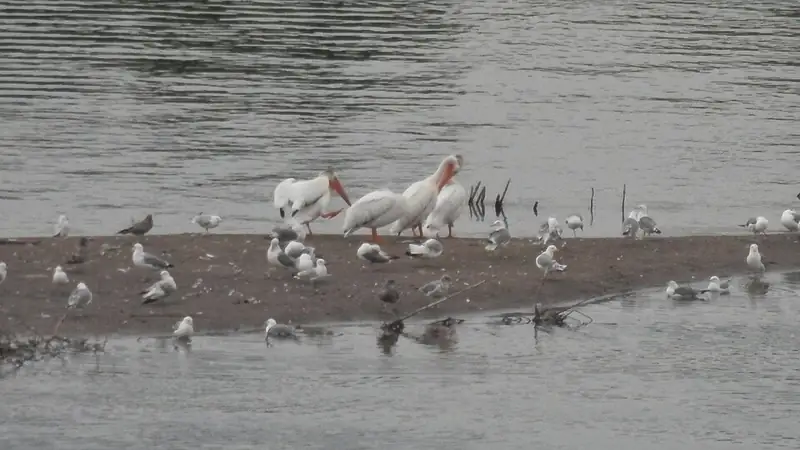
American white pelican
Pelecanus erythrorhynchos
A huge white bird with an orange throat pouch that fishes in groups and nests on tiny islands in Yellowstone Lake and other high-country waters.
-
 Bird
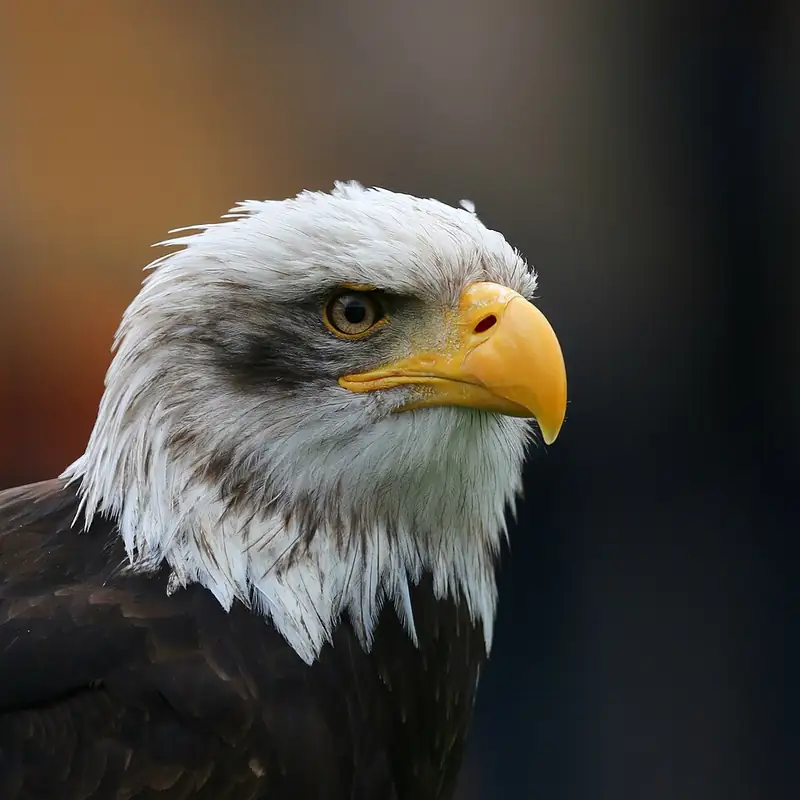
Bald eagle
Haliaeetus leucocephalus
The white-headed fish hawk that is the national bird of the United States, common along the lakes of Voyageurs and the coasts of Olympic and Katmai.
-
 Bird
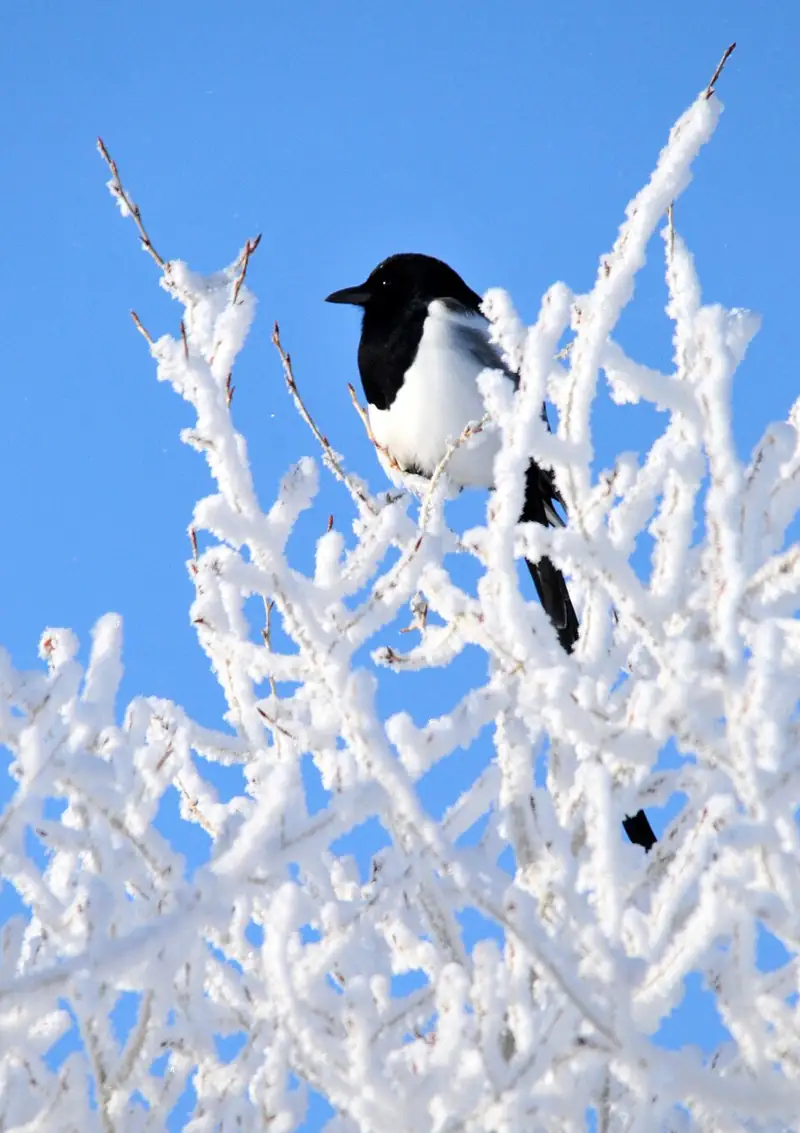
Black-billed magpie
Pica hudsonia
A black-and-white corvid with a tail as long as its body, common on fences and roadsides across the northern Rockies and Great Plains.
-
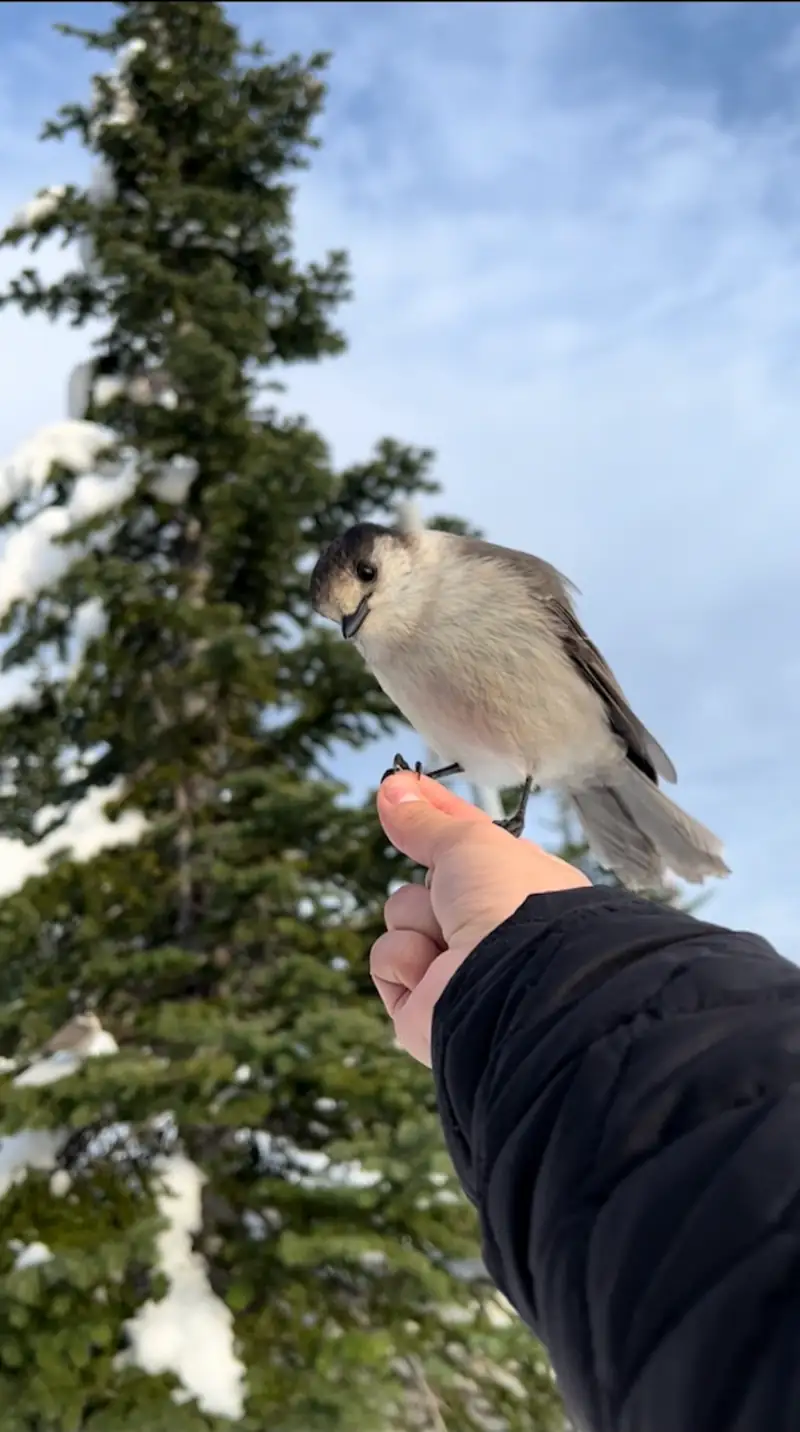 Bird
Canada jay
Perisoreus canadensis
A fearless, fluffy gray bird that glues thousands of food scraps into tree bark with its own sticky spit and remembers nearly all of them through winter.
-
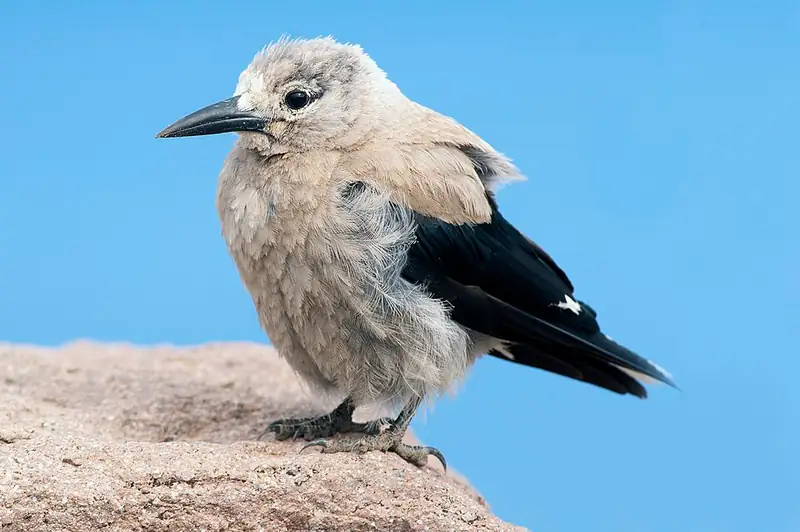 Bird
Clark's nutcracker
Nucifraga columbiana
A pale-gray, black-winged cousin of the crow that hides tens of thousands of pine seeds each fall and remembers where to find them again.
-
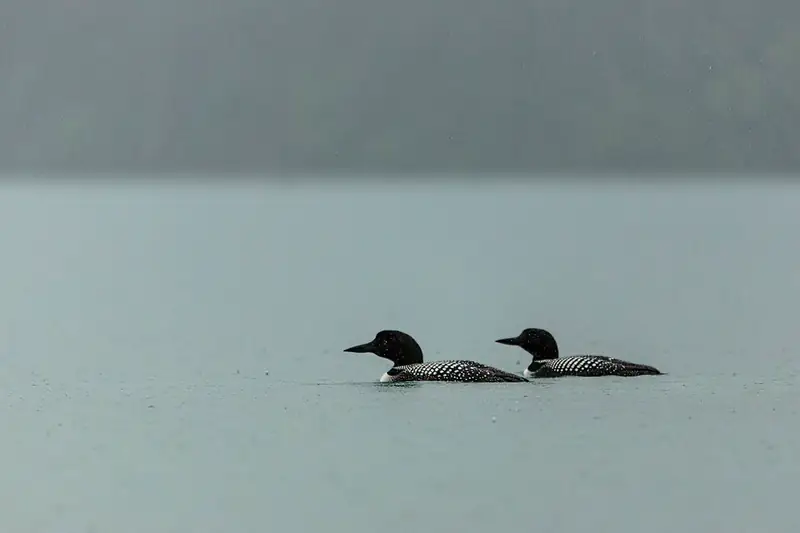 Bird
Common loon
Gavia immer
The black-and-white diving bird whose call carries across Glacier's lakes; one in five of Montana's nesting loons is inside this park.
-
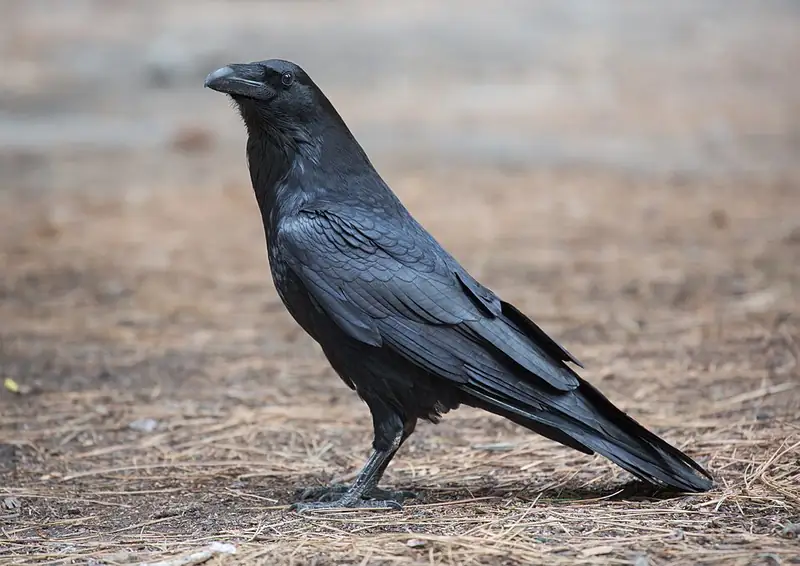 Bird
Common raven
Corvus corax
A big, glossy-black problem-solver that rolls and tumbles in the wind over the cliffs of Grand Canyon, Arches, and Canyonlands.
-
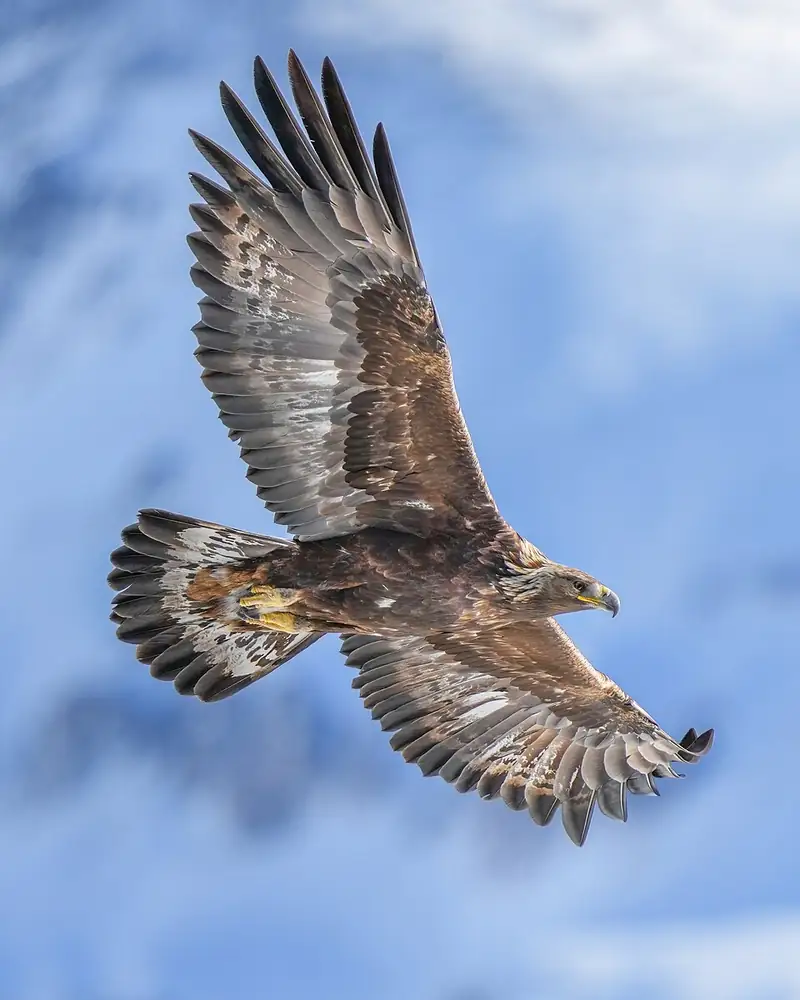 Bird
Golden eagle
Aquila chrysaetos
A dark brown eagle with golden neck feathers that hunts rabbits and hares across open country, nesting on cliffs in Denali, Death Valley, and Great Basin.
-
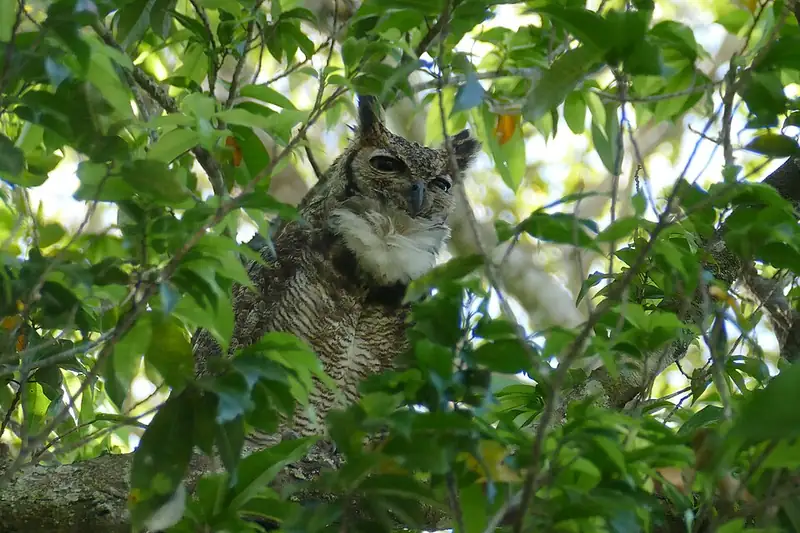 Bird
Great horned owl
Bubo virginianus
A big night hunter with feathery "horns" and a deep hoot, found from the saguaro desert to the Everglades, hunting after dark on silent wings.
-
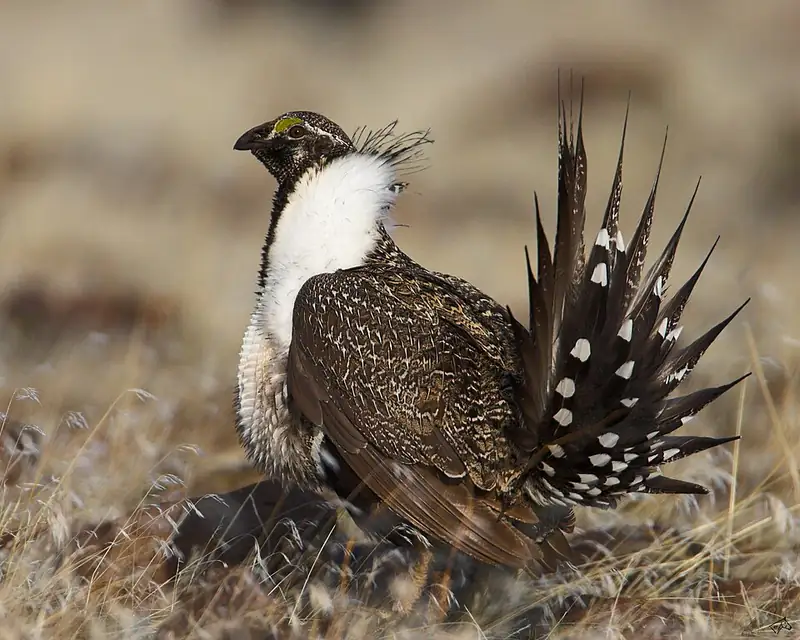 Bird
Greater sage-grouse
Centrocercus urophasianus
North America's largest grouse, dependent on sagebrush, known for the popping, booming display males perform on spring dancing grounds.
-
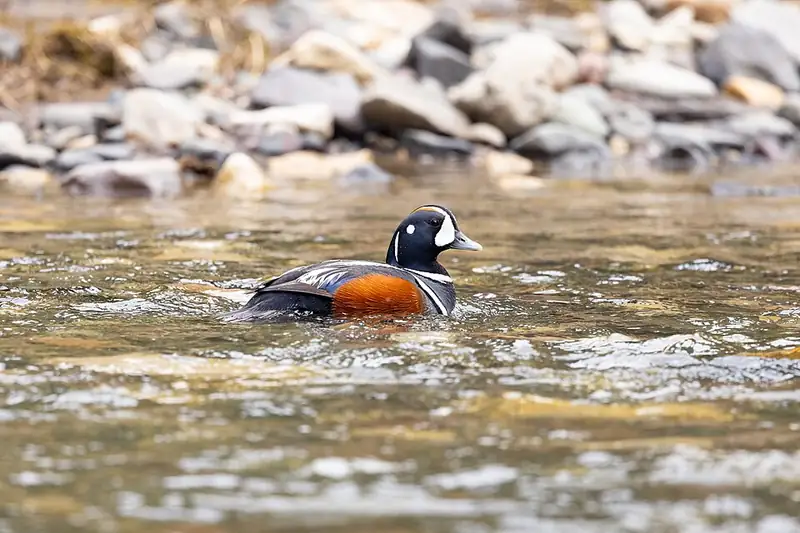 Bird
Harlequin duck
Histrionicus histrionicus
A slate-blue and chestnut sea duck that breeds by diving and bracing in fast mountain whitewater instead of calm water.
-
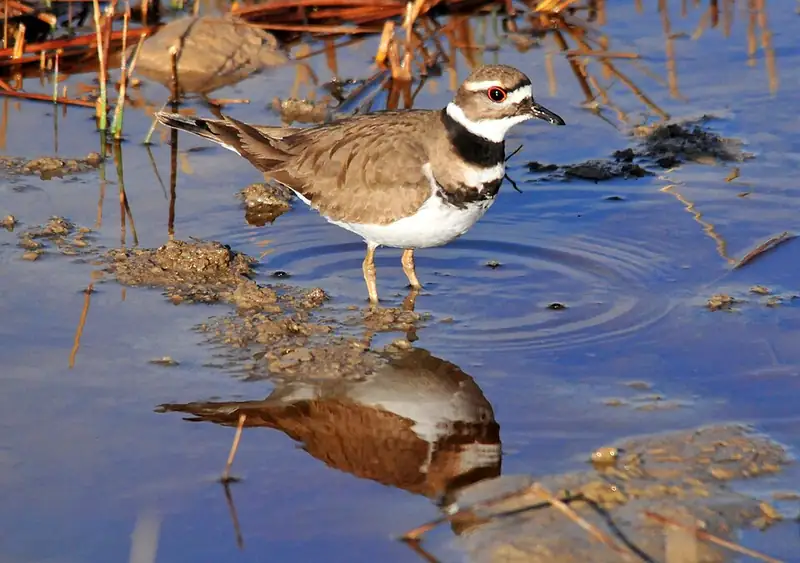 Bird
Killdeer
Charadrius vociferus
A shorebird that lives nowhere near a shore. At Badlands we never saw one. We heard it call its own name across the campground.
-
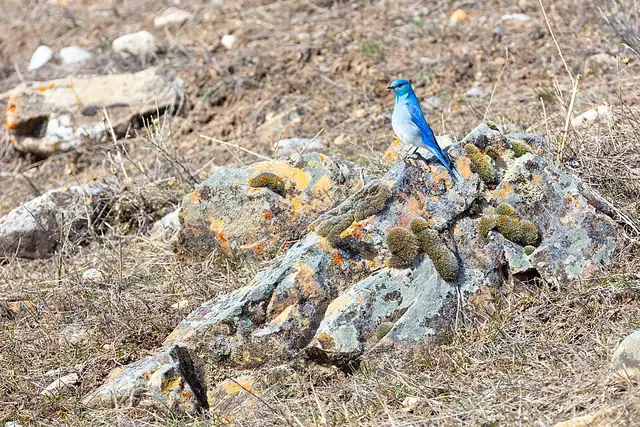 Bird
Mountain bluebird
Sialia currucoides
A sky-blue thrush of high, open country, the only bluebird seen regularly above 5,000 feet, nesting in lava-rock crevices at Craters of the Moon.
-
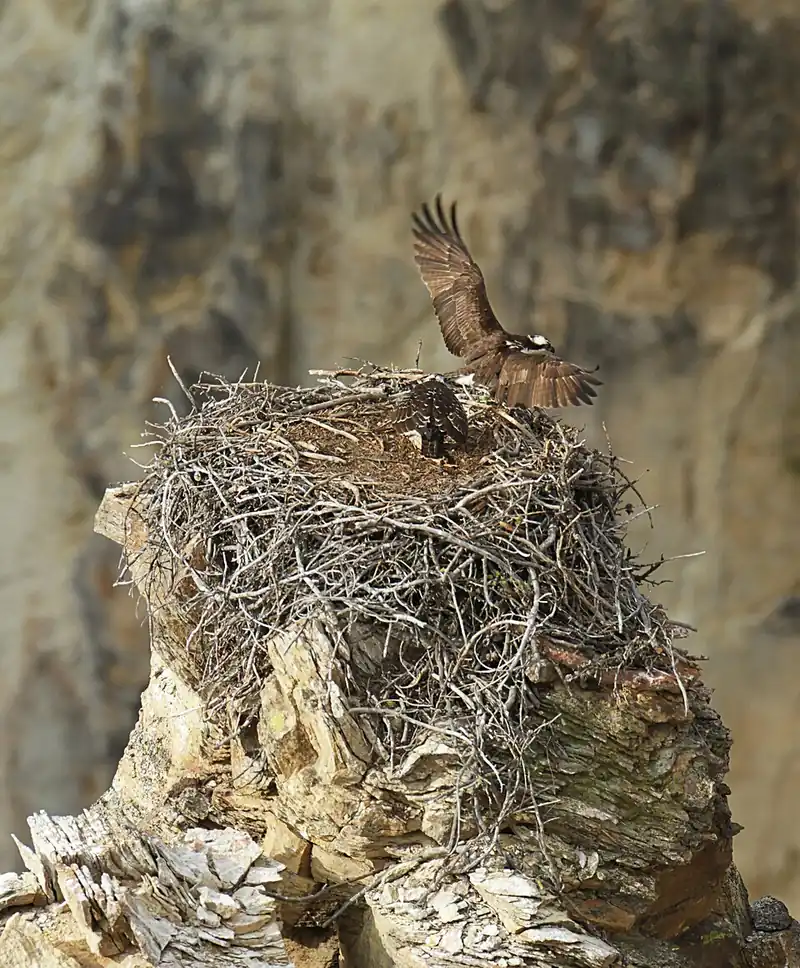 Bird
Osprey
Pandion haliaetus
A fish-hunting hawk that dives feet-first into open water and flies off with its catch turned head-forward like a torpedo.
-
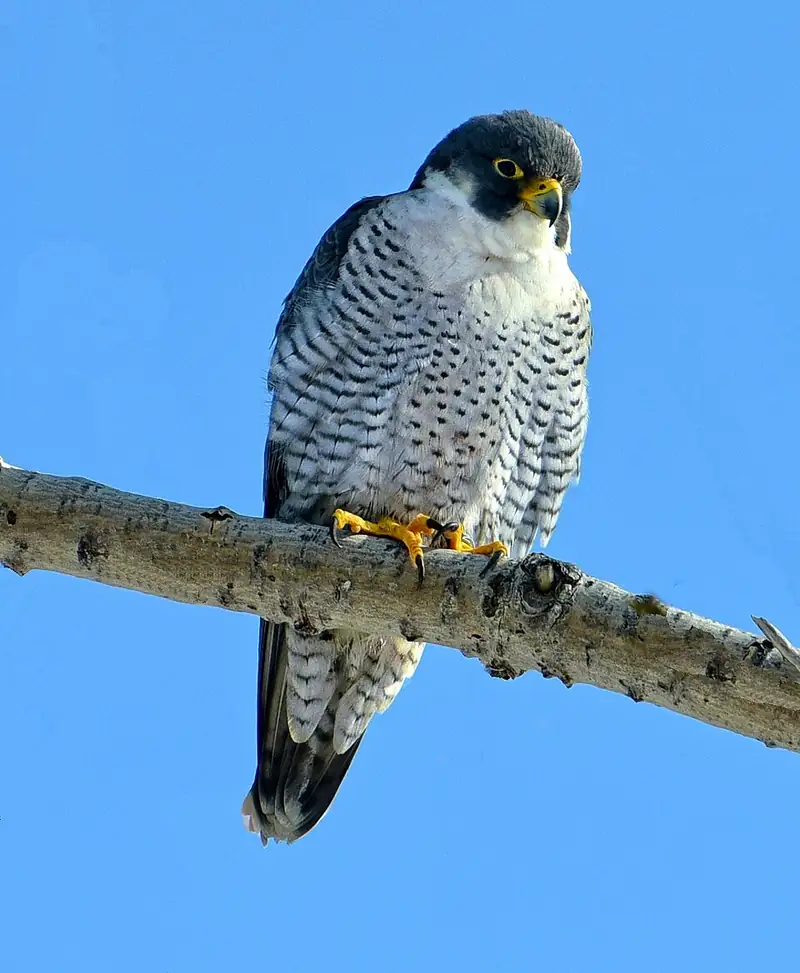 Bird
Peregrine falcon
Falco peregrinus
The fastest animal alive, a crow-sized falcon that folds its wings and stoops on other birds in midair, and a species that nearly vanished before recovering.
-
 Bird
Red-tailed hawk
Buteo jamaicensis
The hawk most often recorded in Yellowstone. We watched a hawk take a pika near the Roosevelt cabins and could not tell you which hawk it was.
-
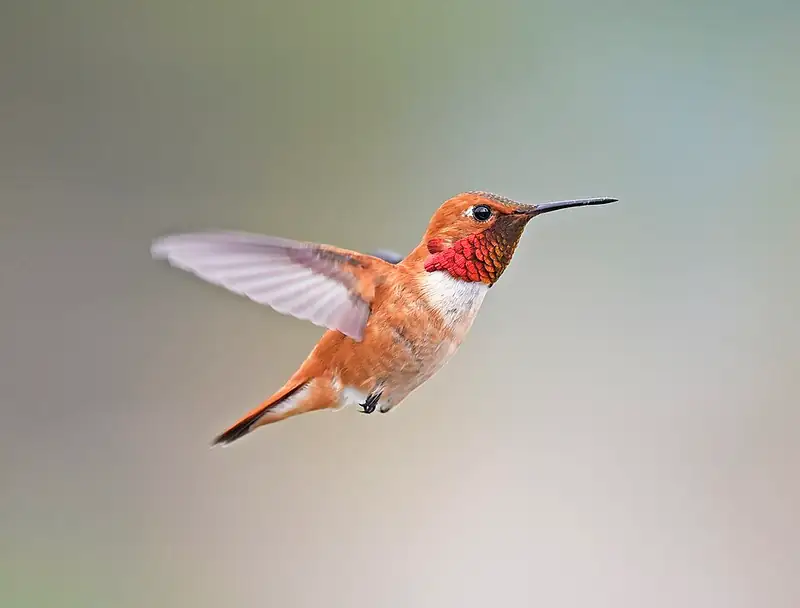 Bird
Rufous hummingbird
Selasphorus rufus
A copper-orange hummingbird that flies farther, relative to its size, than almost any other bird on Earth, from Mexico to Alaska and back every year.
-
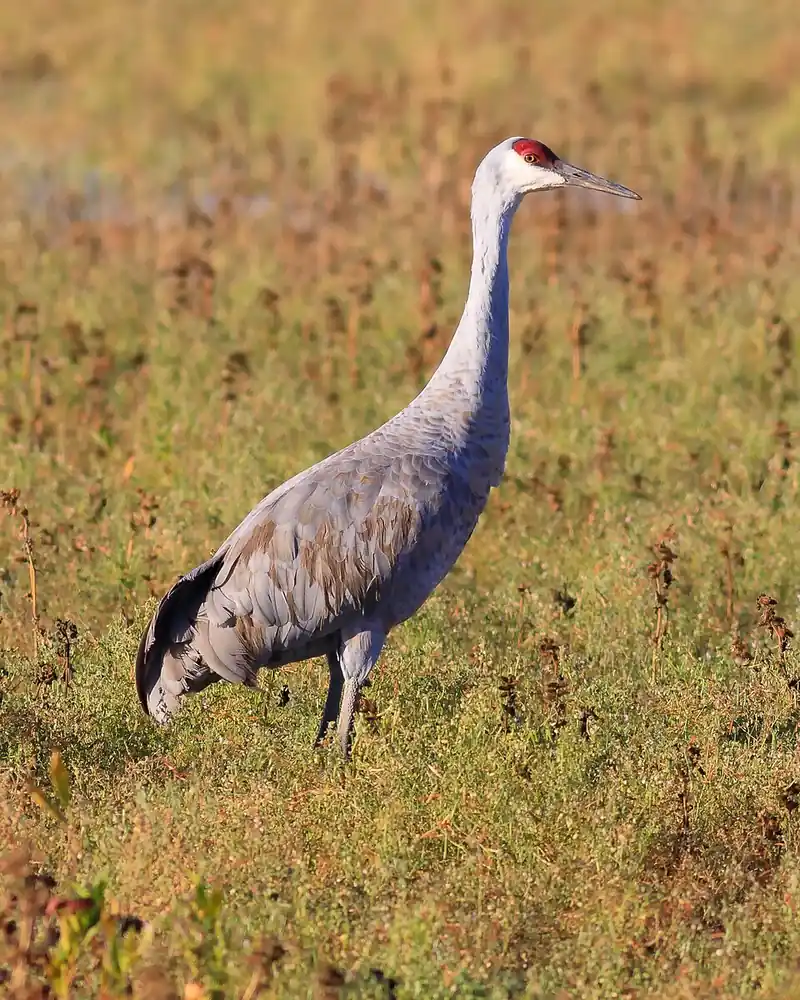 Bird
Sandhill crane
Antigone canadensis
A tall gray wading bird with a red forehead and a bugling call, gathering by the thousands near Great Sand Dunes and standing year-round in the Everglades.
-
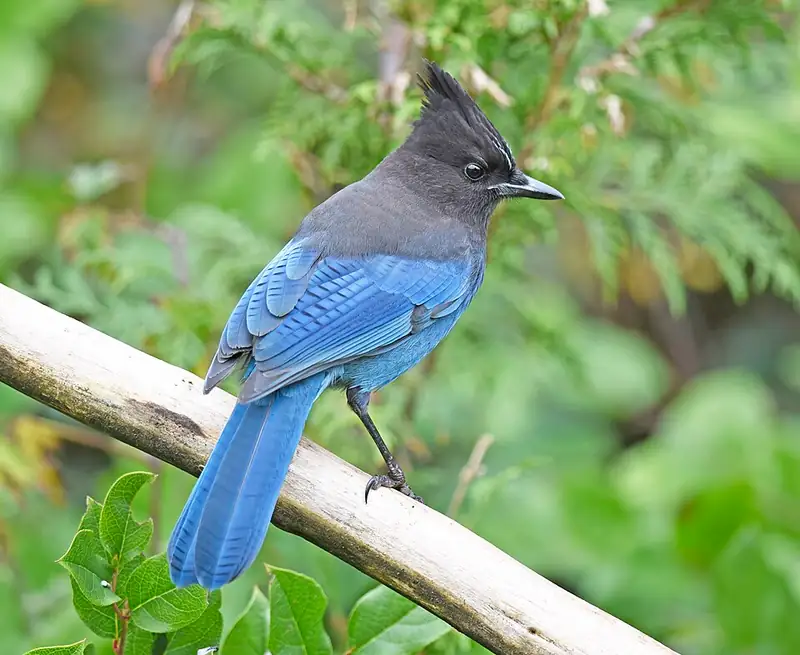 Bird
Steller's jay
Cyanocitta stelleri
A deep-blue mountain jay with a black crest and a loud voice, the campground bird that will eye your sandwich at Yosemite, Sequoia, and Crater Lake.
-
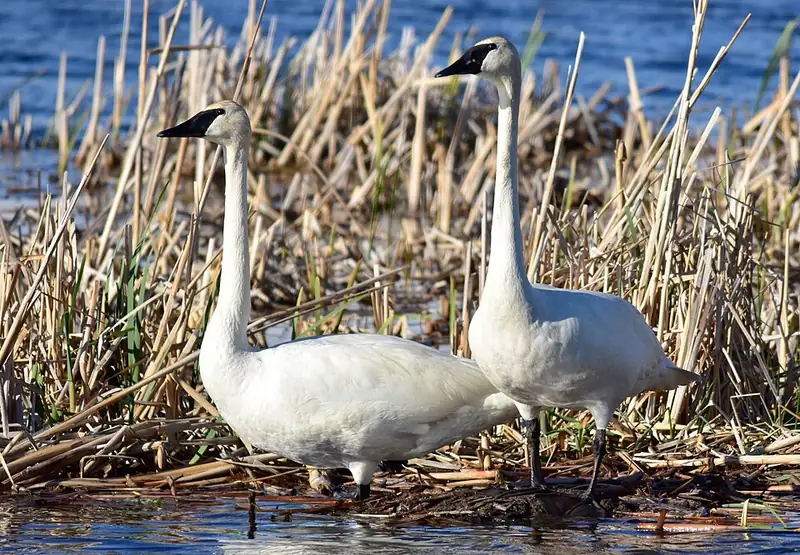 Bird
Trumpeter swan
Cygnus buccinator
North America's largest waterfowl, a white swan with a trumpeting call, found on rivers and lakes from Yellowstone to the Dakota prairies.
-
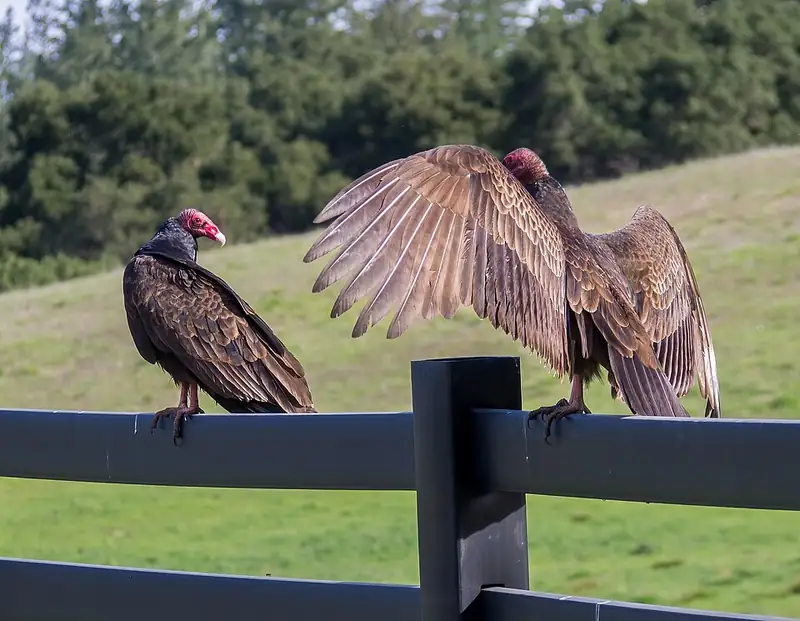 Bird
Turkey vulture
Cathartes aura
A large, dark soaring bird with a bare red head, circling on thermals over open country, using one of the sharpest noses of any bird.
-
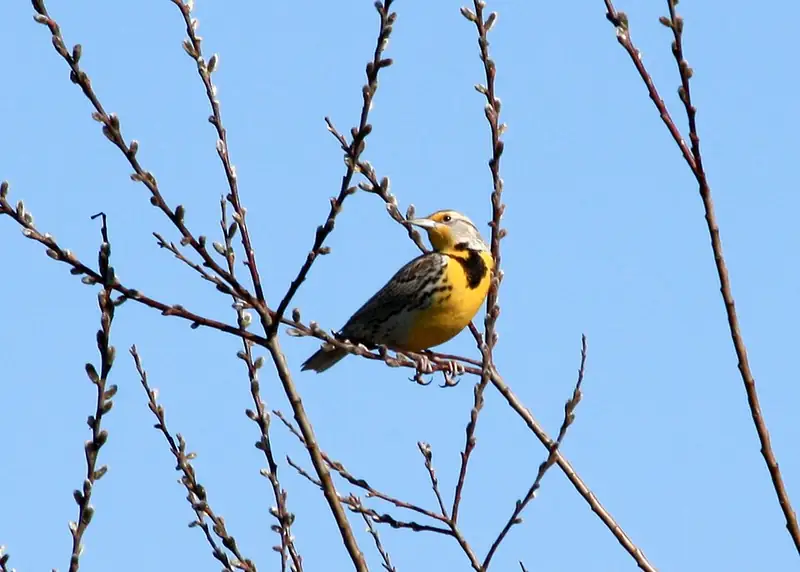 Bird
Western meadowlark
Sturnella neglecta
A grassland songbird with a yellow throat and a black V on its chest, the state bird of Montana, Wyoming, and North Dakota.