Invertebrates of Craters of the Moon National Monument and Preserve
The 2 invertebrates of Craters of the Moon National Monument and Preserve: Army cutworm moth and Western tiger swallowtail.
Common questions
Which Craters of the Moon National Monument and Preserve invertebrates demand distance from a kid?
Army cutworm moth and Western tiger swallowtail carry a rule worth reading. Army cutworm moth: It cannot bite or sting. Western tiger swallowtail: Completely harmless. (per NPS species pages).
What do Craters of the Moon National Monument and Preserve invertebrates eat?
Army cutworm moth eats flower nectar as a moth, grass and crop leaves and roots as a caterpillar. Western tiger swallowtail eats nectar, willow, cottonwood, and aspen leaves (as a caterpillar). (per NPS species pages).
The strangest true thing about Craters of the Moon National Monument and Preserve's invertebrates.
Army cutworm moth: The same insect has two names for two lives: army cutworm for the caterpillar that eats crops on the Great Plains, and miller moth for the dusty gray adult that shows up in mountain towns every spring. Western tiger swallowtail: The young caterpillar disguises itself as a bird dropping, then grows into a green caterpillar with two big fake eyespots that make it look like a small snake. (per NPS species pages).
-
 Invertebrate
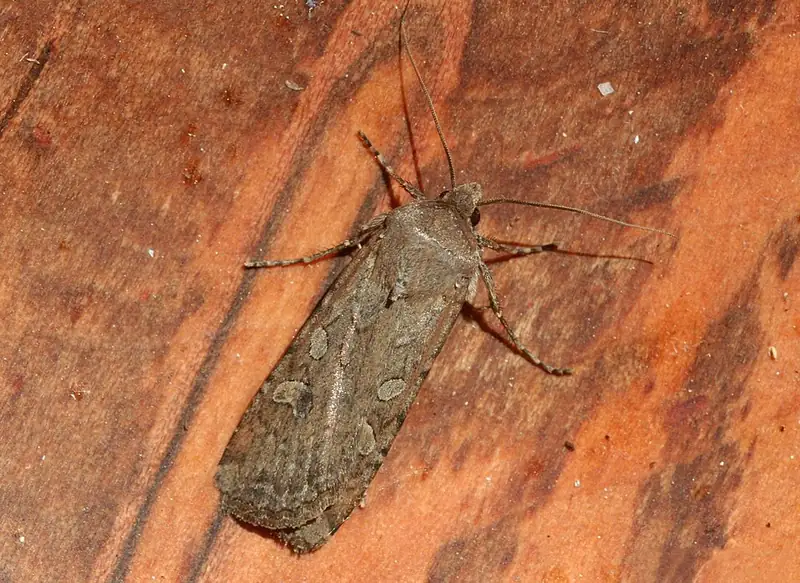
Army cutworm moth
Euxoa auxiliaris
A gray moth that migrates from Great Plains farm fields to high mountain talus, where grizzly bears flip rocks to eat it by the thousands each summer.
-
 Invertebrate
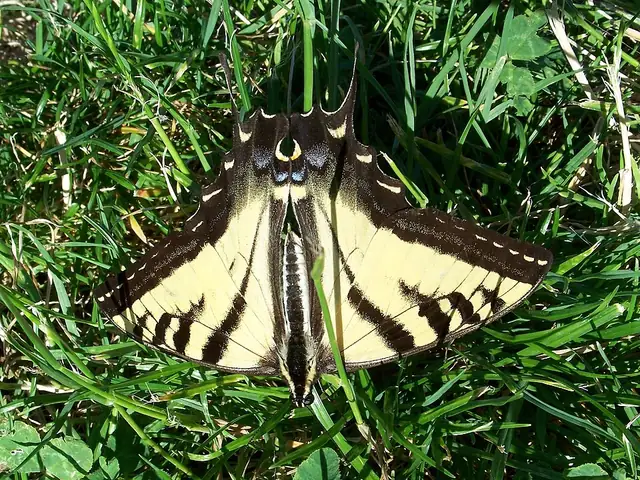
Western tiger swallowtail
Papilio rutulus
The big yellow-and-black butterfly of western streamsides whose caterpillar wears fake snake eyes and flips out a stinky orange horn when scared.