Animals & Plants of Big Bend National Park
The 7 animals, plants, and fungi you can find at Big Bend National Park, with sizes, diets, and whether you should worry. See the full park guide at Big Bend National Park.
Anything here that bites?
Venomous
- Western diamondback rattlesnake: This snake is venomous, so treat it with respect, not fear.
Keep away
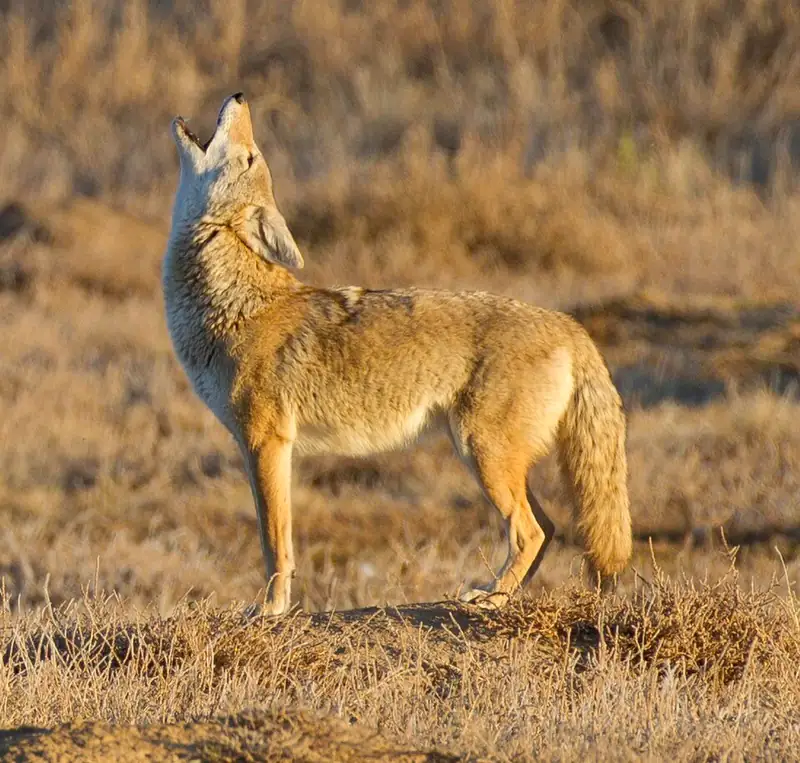
- Coyote: Coyotes almost always run from people.
Don't touch or eat
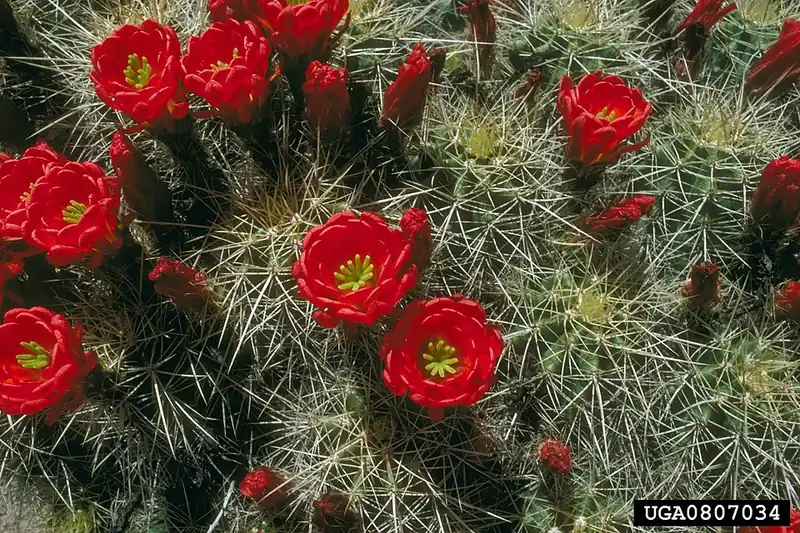
- Claret cup cactus: This cactus is covered in stiff spines, so the rule is look, do not touch.
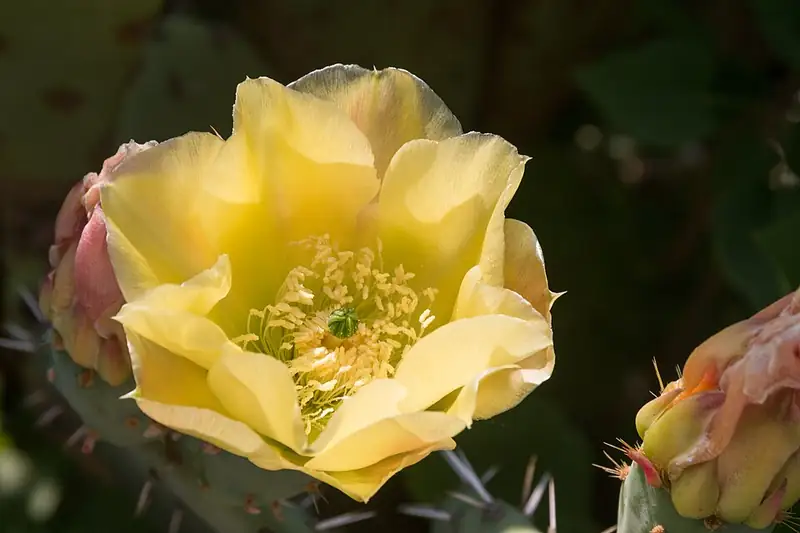
- Engelmann prickly pear: This cactus has two kinds of spines.
Bites if handled
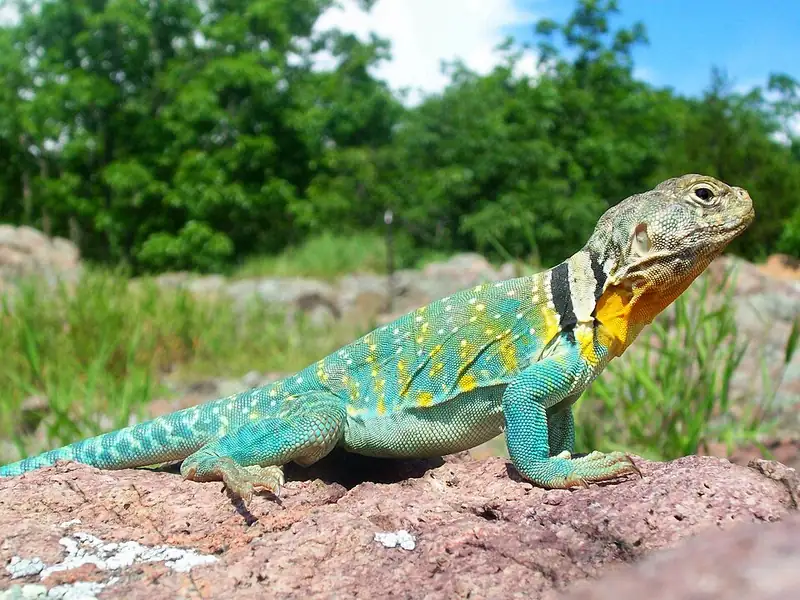
- Common collared lizard: This lizard is not dangerous.
- Great horned owl: This owl hunts small animals at night and will not come after you.
Everything else on this page is harmless. What each group means.
-
 Plant
Plant Claret cup cactus
Echinocereus triglochidiatus
A low, mounding desert cactus that bursts into bright red, cup-shaped flowers each spring at Arches, Canyonlands, and Big Bend.
-
 Reptile
 Common collared lizard
Crotaphytus collaris
A bright, big-headed lizard with two black neck bands that can sprint on its back legs like a tiny dinosaur across the slickrock at Arches and Canyonlands.
-
 Mammal
 Coyote
Canis latrans
The wild dog you're most likely to hear at a national park — a coyote, at home in the desert, the mountains, and the edges of towns.
-
 Plant
Plant Engelmann prickly pear
Opuntia engelmannii
A wide, flat-padded cactus of the southwestern deserts, spreading in low clumps with yellow flowers and purple fruit at Big Bend, Saguaro, and Arches.
-
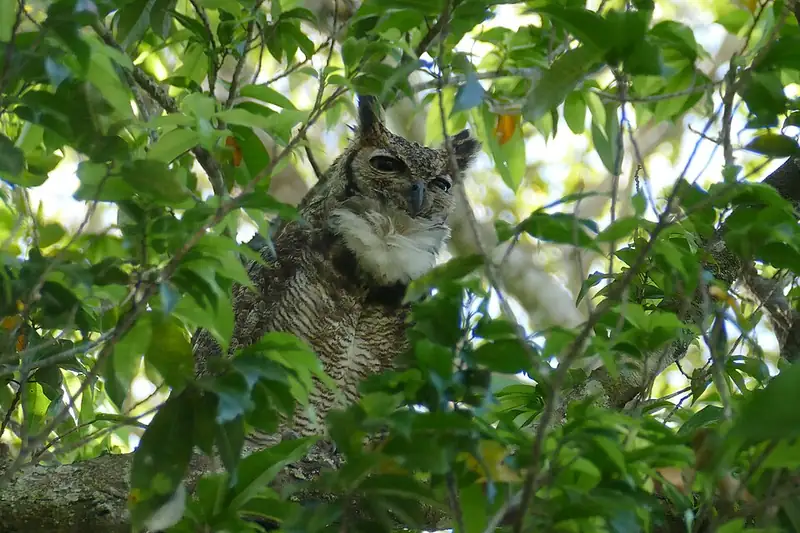 Bird
Bird Great horned owl
Bubo virginianus
A big night hunter with feathery "horns" and a deep hoot, found from the saguaro desert to the Everglades, hunting after dark on silent wings.
-
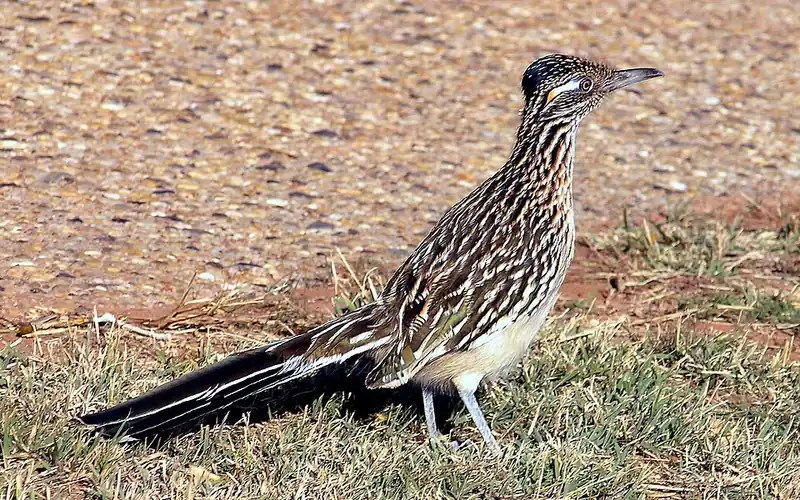 Bird
Bird Greater roadrunner
Geococcyx californianus
A long-legged desert bird that would rather run than fly, chasing down lizards and snakes across the ground at Saguaro, Big Bend, and White Sands.
-
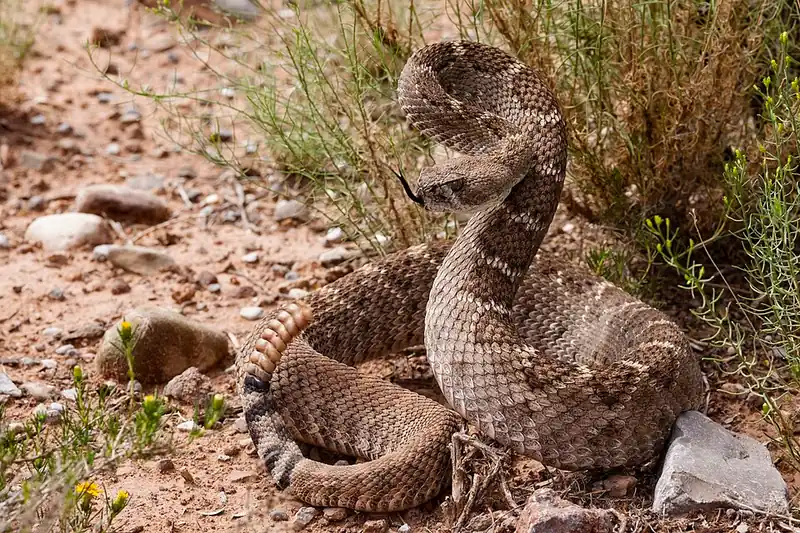 Reptile
 Western diamondback rattlesnake
Crotalus atrox
A big desert rattlesnake with diamond shapes down its back and a black-and-white "coon tail," most likely to be sunning near a trail at Big Bend or Saguaro.