Plants of Big Bend National Park
The 2 plants of Big Bend National Park: Claret cup cactus and Engelmann prickly pear. Each carries a fun fact and a note on whether a kid should worry about it.
Common questions
Which Big Bend National Park plants demand distance from a kid?
Claret cup cactus and Engelmann prickly pear carry a rule worth reading. Claret cup cactus: This cactus is covered in stiff spines, so the rule is look, do not touch. Engelmann prickly pear: This cactus has two kinds of spines. (per NPS species pages).
What do Big Bend National Park plants eat?
Claret cup cactus eats sunlight, rainwater, carbon dioxide, soil nutrients. Engelmann prickly pear eats sunlight, rainwater, carbon dioxide, soil nutrients. (per NPS species pages).
The strangest true thing about Big Bend National Park's plants.
Claret cup cactus: The claret cup gets its name from its flowers, which are shaped like little cups and are a deep red, the color of a drink called claret. A single mound can hold dozens of blooms at once in spring. Engelmann prickly pear: A prickly pear's flat green pads are not leaves, they are actually its stem. The pads do the plant's food-making and store water, while the real leaves shrank down long ago into the spines. (per NPS species pages).
-
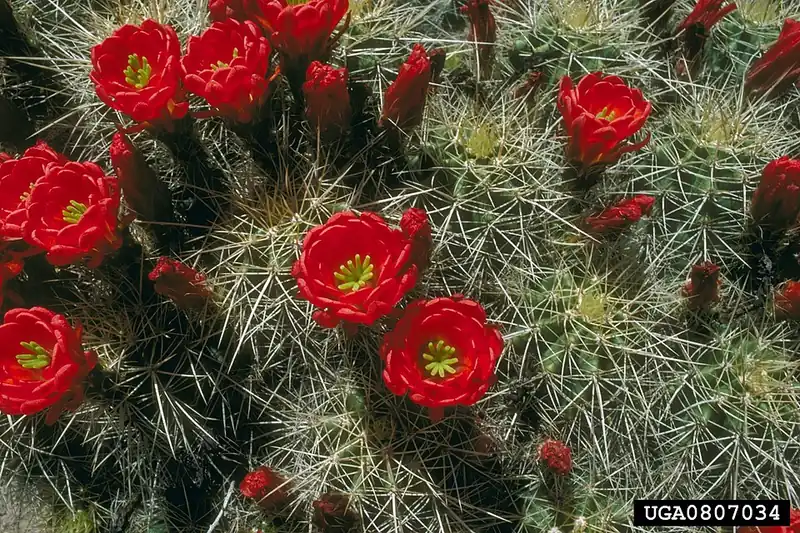 Plant
Claret cup cactus
Echinocereus triglochidiatus
A low, mounding desert cactus that bursts into bright red, cup-shaped flowers each spring on rocky ground across the Southwest.
-
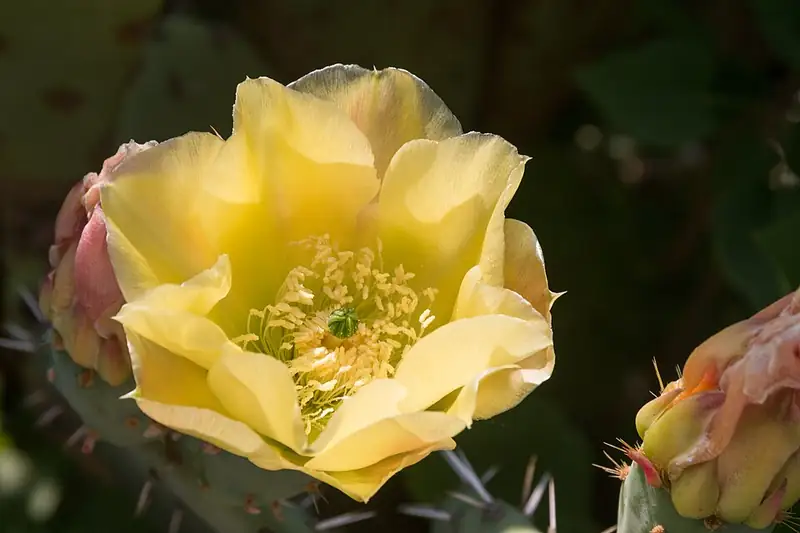 Plant
Engelmann prickly pear
Opuntia engelmannii
A wide, flat-padded cactus of the southwestern deserts, spreading in low clumps with yellow flowers and purple fruit at Big Bend, Saguaro, and Arches.