Reptiles of Big Bend National Park
The 2 reptiles of Big Bend National Park: Common collared lizard and Western diamondback rattlesnake.
Common questions
Which Big Bend National Park reptiles demand distance from a kid?
Common collared lizard and Western diamondback rattlesnake carry a rule worth reading. Common collared lizard: This lizard is not dangerous. Western diamondback rattlesnake: This snake is venomous, so treat it with respect, not fear. (per NPS species pages).
What do Big Bend National Park reptiles eat?
Common collared lizard eats grasshoppers, beetles, spiders, smaller lizards. Western diamondback rattlesnake eats mice, rats, ground squirrels, rabbits, birds, lizards. (per NPS species pages).
The strangest true thing about Big Bend National Park's reptiles.
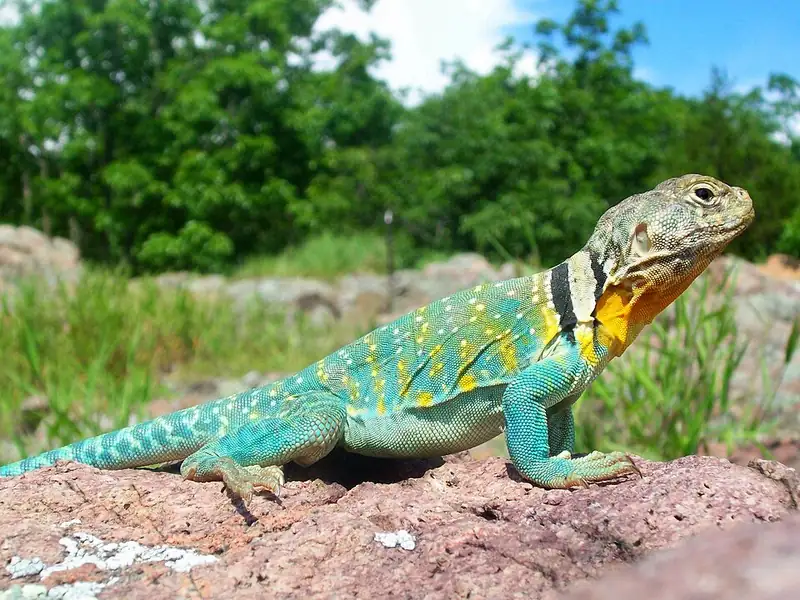
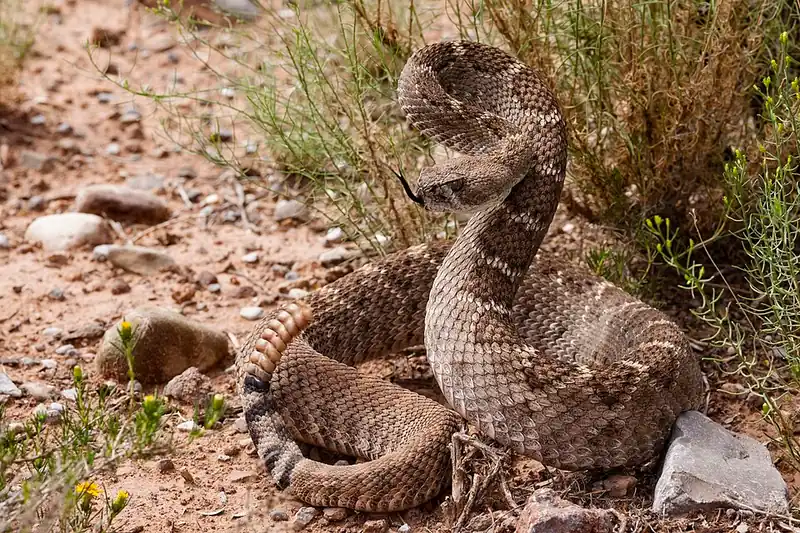
Common collared lizard: A collared lizard can run on just its two back legs when it needs speed, tail out for balance, so it looks like a tiny running dinosaur crossing the rock. Western diamondback rattlesnake: The rattle is made of loose, dry rings of the same stuff as your fingernails. The snake adds a new ring each time it sheds its skin, so a longer rattle does not mean the snake is older by years, just that it has shed more often. (per NPS species pages).
-
 Reptile
Common collared lizard
Crotaphytus collaris
A bright, big-headed lizard with two black neck bands that can sprint on its back legs like a tiny dinosaur across desert rock.
-
 Reptile
Western diamondback rattlesnake
Crotalus atrox
A big desert rattlesnake with diamond shapes down its back and a black-and-white "coon tail," most likely to be sunning near a trail at Big Bend or Saguaro.