Eastern Shoshone Tribe
A nation today
Background
The Fort Bridger Treaty of 1863 covered most of the tribe's land, 44 million acres running from Montana down through Wyoming to Colorado, west through Utah and then up through Idaho. The transcontinental railroad brought a new treaty, and Chief Washakie chose the Wind River Basin, a favorite wintering area, for a permanent reservation of 4.4 million acres. Later agreements ceded the South Pass and Big Horn Hot Springs regions, and Dawes allotment brought what was left to 2.2 million acres. The reservation was established before Wyoming became a state and was later renamed the Wind River Indian Reservation after the placement of the Northern Arapaho Tribe in the 1870s. Chief Washakie's name, wase-kie, means rawhide rattle, according to the Tribe's own history. He died in 1900 and was the only Native American to receive full military honors, with a funeral train one and a half miles long, and he is buried in the cemetery bearing his name at Fort Washakie, where the army post was renamed for him. Sacajawea, whose people were the Lemhi Shoshone, is buried at Fort Washakie in a cemetery that bears her name, and the Tribe's page says she has many descendants living on the reservation today. The Tribe's site also carries the full text of the Fort Bridger Treaty of 1868, dated July 3, 1868, ratified February 26, 1869, and proclaimed February 24, 1869.
Visit and learn
Eastern Shoshone Buffalo Enclosure
A 300-acre fenced buffalo enclosure on the Wind River Indian Reservation. The Tribe's page says tourists can ask for a viewing and educational tour with guidance from the Tribe's buffalo representative, so contact the Tribe ahead of the visit rather than arriving unannounced.
Eastern Shoshone Tribe's own site
Tribal lands have their own laws. Check the nation's site before you visit.
Parks on its homelands
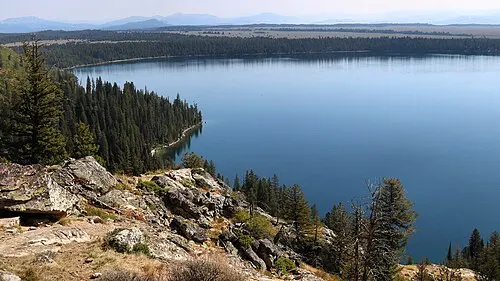
Grand Teton National ParkThe Eastern Shoshone Tribe's own history puts its people in this country more than 12,000 years ago and calls the Shoshone the first tribe in the area to have horses. Chief Washakie chose the Wind River Basin for the tribe's reservation when the transcontinental railroad forced the government to make a new treaty. Source
 Rocky Mountain National Park
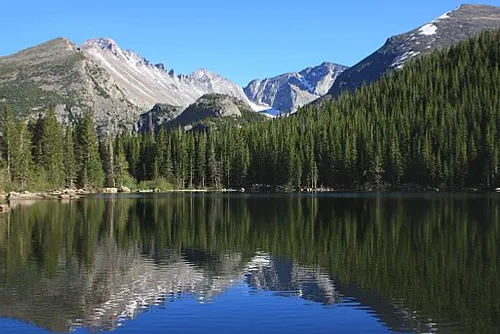
The country in and around Rocky Mountain made up part of the Eastern Shoshone Tribe's extended territory, and the park says its people came into these places often. The tribe shares the Wind River Reservation in Wyoming with the Northern Arapaho. Source
 Yellowstone National Park
Programs
Shoshone dictionary and language lessons
The Tribe's Cultural Center page publishes a Shoshone dictionary online with a compiled dictionary and a Shoshone grammar behind it, and eight audio lessons to run alongside a guide. The lessons cover animals, appearance and grooming, body parts, buildings, clothing and colors, cowboy talk and descriptions, elements of nature, food and home, expressions and conditions, minerals, money, numbers and people, phrases, references and time, and tribes, weather and womanhood. All eight are hosted on the Tribe's site.
Buffalo Enclosure Program (Boy-zhan Bi-den)
The Tribe's program to bring buffalo back to the Wind River Indian Reservation, run with the Tribal Partnerships Program of the National Wildlife Federation and the US Fish and Wildlife Service. A 300-acre enclosure near Morton, Wyoming was fenced in the summer of 2016 with a 60-inch six-strand electrified wildlife-friendly fence, and the first ten buffalo, certified disease free and genetically reputable, came from Iowa's Neil Smith Wildlife Refuge that November. In 2019 five new bulls arrived from the Fort Peck Reservation in a government-to-government agreement to share genetically pure Yellowstone buffalo, and calves have been born since. The Tribe's page records the last buffalo taken inside the reservation by members of either tribe as 1885.
Sources
- https://www.govinfo.gov/content/pkg/FR-2026-01-30/html/2026-01899.htm
- https://easternshoshone.org/about/
- https://easternshoshone.org/fort-bridger-treaty-of-1868/
Checked September 2026.