Crow Tribe
A nation today
Background
Apsáalooke is the Tribe's own name for its people, and two of the three greetings on the Tribe's site are kahée, "Hello, it's good you came," and kalatchí húua, "Come Again." Government runs on a Constitution and Bylaws first adopted in 1948, repealed and replaced by the 2001 Constitution and Bylaws, which set up three branches. An Executive Branch elected from the General Council sets policy, makes the annual budget and administers daily operations. A Legislature meets in quarterly and special sessions and gives final approval on laws and on the budget. Tribal Courts, created by the Crow Law and Order Code, carry three judgeships and a court of appeals. The General Council is every eligible tribal member 18 and older, and it elects the Executive Officials, Legislators and Judges, sits as the forum for committee elections, initiatives, referendums, recalls and removals, and decides amendments to the constitution. The Crow Tribal Historic Preservation Office reviews Section 106 undertakings and works NAGPRA cases, and takes requests through its own forms for research permits, homesites, film and photography, and undertakings. Language work runs through the Crow Language Consortium, which builds the Crow Mobile Dictionary and the Ammiláau course.
Visit and learn
Tribal lands have their own laws. Check the nation's site before you visit.
Parks on its homelands
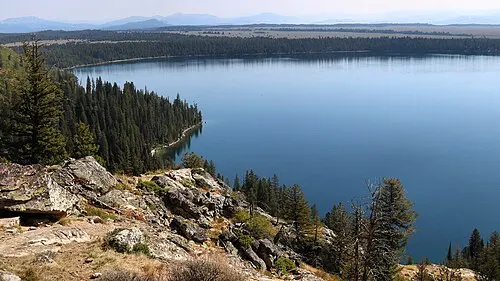
Grand Teton National ParkThe Crow are among the peoples NPS says were harvesting the valley's seasonal riches when Europeans arrived, and the park says these people camped near rivers and lakes, mostly in the northern part of what is now Grand Teton National Park. Source
 Theodore Roosevelt National Park
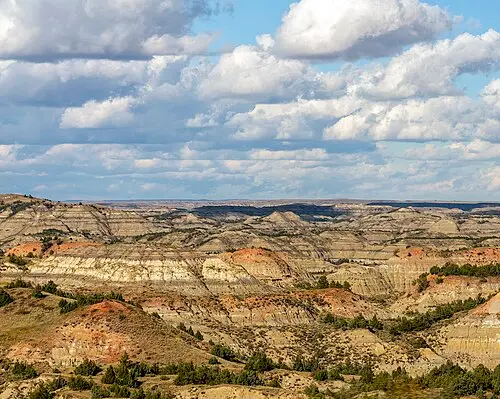
West of these badlands, NPS puts the eastern edge of Crow territory, and contrasts it with the peoples that came into western North Dakota in the early 19th century mainly for hunting and trading, often at Fort Union Trading Post: Blackfeet, Gros Ventre, Chippewa, Cree, Sioux and Rocky Boy, none of whom sought out the badlands the way the Mandan, Hidatsa and Crow did. Source
 Yellowstone National Park
Programs
Crow Mobile Dictionary and Ammiláau
Two learning tools from the Crow Language Consortium. The Crow Mobile Dictionary is a community-informed reference with more than 10,000 Crow entries, more than 30,000 English look-up entries, 20,000 linked Crow morphemes, audio recorded with community members, and offline use on iOS and Android. Ammiláau, which means "Our Language" in Apsáalooke, is an online learning platform with 56 interactive units built for use in and beyond the classroom. The consortium also runs a vocabulary app and flashcard and poster materials for Crow schools, colleges, and educators.
Crow Tribal Historic Preservation Office
The office carries a director, an office manager, a compliance reviewer and a Section 106 reviewer who is also the NAGPRA technician. Its public forms cover an undertaking request, a research permit, a homesite form, and a film and photo permit, and it is reached on its own phone and email.
Affiliations
Crow Language Consortium
A collective of Crow schools, colleges and educators, spearheaded by Crow Nation, Little Big Horn College, St. Charles Mission School and The Language Conservancy. It also works with many Crow speakers to certify them as teachers in best-practice teaching methods.
Sources
- https://www.govinfo.gov/content/pkg/FR-2026-01-30/html/2026-01899.htm
- https://www.crow-nsn.gov/
- https://www.crow-nsn.gov/crow-tribal-govt.html
- https://www.crow-nsn.gov/is-crowtribetourisminfocrow-nsngov.html
- https://crowlanguage.org/
Checked September 2026.