Reptiles of Mesa Verde National Park
The 6 reptiles of Mesa Verde National Park. Their profiles carry sizes, diets, and whether you should worry.
Common questions
Which Mesa Verde National Park reptiles demand distance from a kid?
Common collared lizard, Greater short-horned lizard, Plateau fence lizard, Prairie rattlesnake, and Sagebrush lizard carry a rule worth reading. Common collared lizard: This lizard is not dangerous. Greater short-horned lizard: Not dangerous. Plateau fence lizard: No venom, and harmless if left alone. Prairie rattlesnake: It is the only dangerously venomous snake at Yellowstone, Badlands, Theodore Roosevelt, and Wind Cave. Sagebrush lizard: This lizard has no venom, and its main defense is running. 1 more species carry a rule worth reading. (per NPS species pages).
What do Mesa Verde National Park reptiles eat?
Common collared lizard eats grasshoppers, beetles, spiders, smaller lizards. Greater short-horned lizard eats ants, beetles, bees, grasshoppers. Plateau fence lizard eats ants, beetles, grasshoppers, spiders, occasionally a smaller lizard. Prairie rattlesnake eats mice, prairie dogs, ground squirrels, young rabbits, birds. 2 more species have menus worth reading. (per NPS species pages).
The strangest true thing about Mesa Verde National Park's reptiles.
Common collared lizard: A collared lizard can run on just its two back legs when it needs speed, tail out for balance, so it looks like a tiny running dinosaur crossing the rock. Greater short-horned lizard: A greater short-horned lizard can squirt blood out of the corners of its eyes at a coyote or fox that gets too close — a taste so unpleasant to canines that many let go and back off. (per NPS species pages).
-
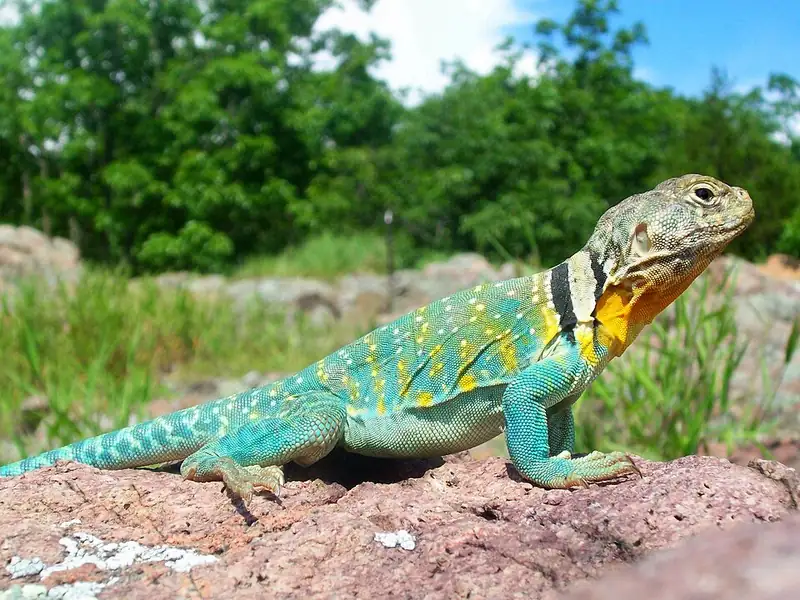 Reptile
Common collared lizard
Crotaphytus collaris
A bright, big-headed lizard with two black neck bands that can sprint on its back legs like a tiny dinosaur across desert rock.
-
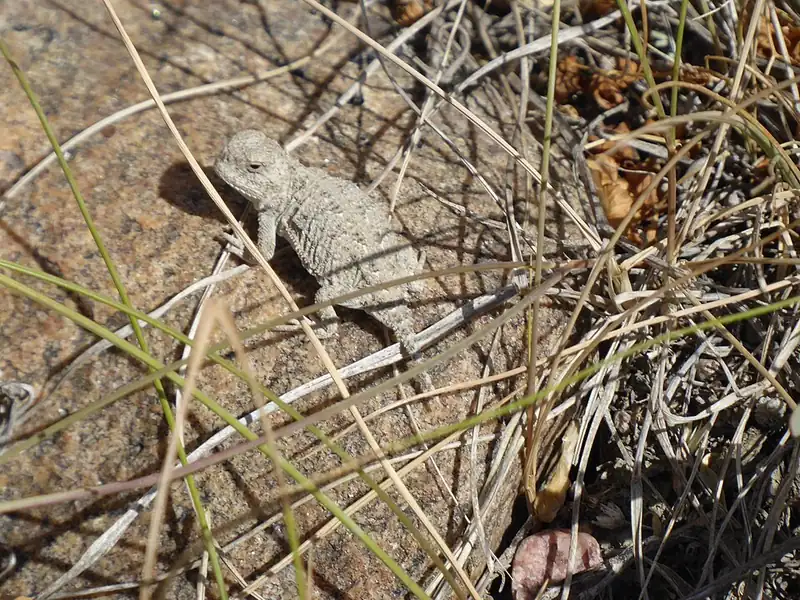 Reptile
Greater short-horned lizard
Phrynosoma hernandesi
A flat, spiky, dirt-colored lizard, sometimes called a horned toad, that can squirt blood from its eyes at a coyote and gives birth to live young.
-
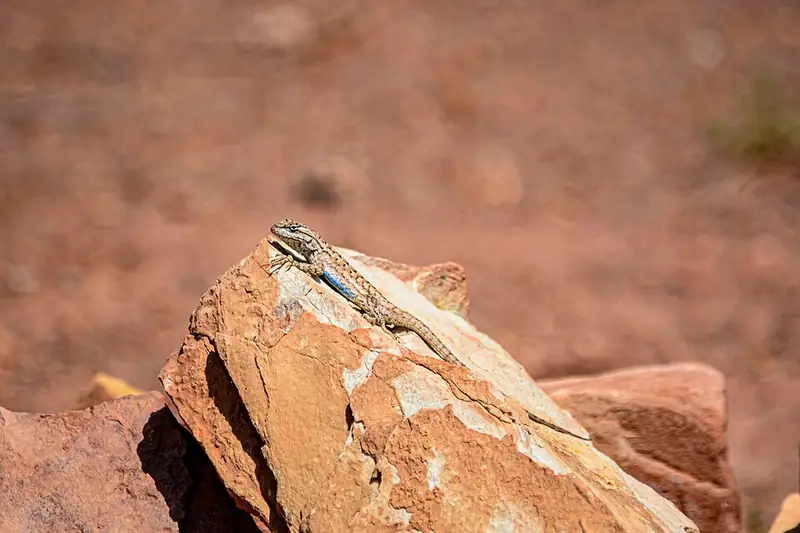 Reptile
Plateau fence lizard
Sceloporus tristichus
A gray-brown lizard with blue belly patches on males, smaller than the flashier collared lizard on the same sunny rock at Mesa Verde, Arches, and Black Canyon.
-
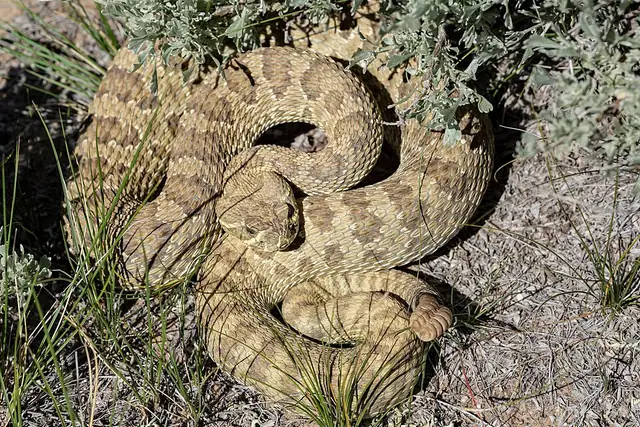 Reptile
Prairie rattlesnake
Crotalus viridis
A gray-green pit viper with a buzzing rattle, the only venomous reptile at several of the parks it shares with prairie dogs and badgers.
-
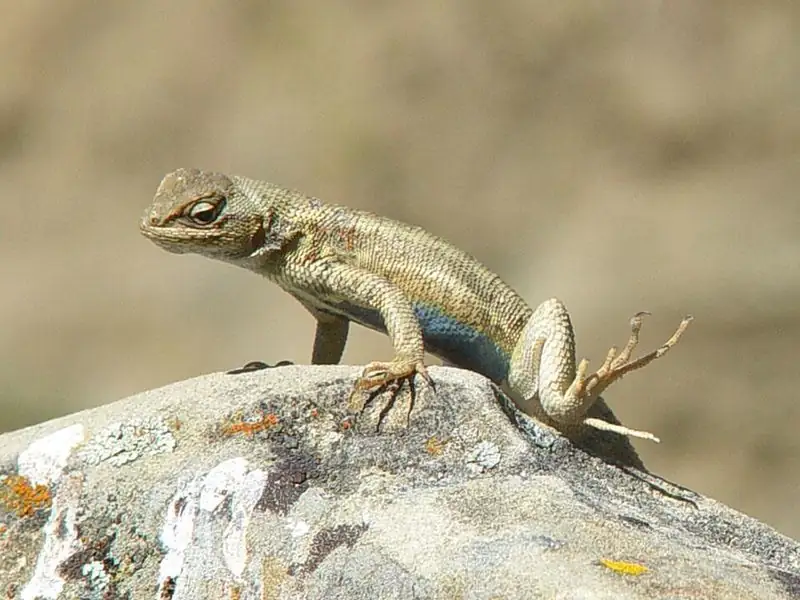 Reptile
Sagebrush lizard
Sceloporus graciosus
A small, slender, high-country lizard, the fence lizard's cousin, whose males flash blue belly and throat patches in a push-up display.
-
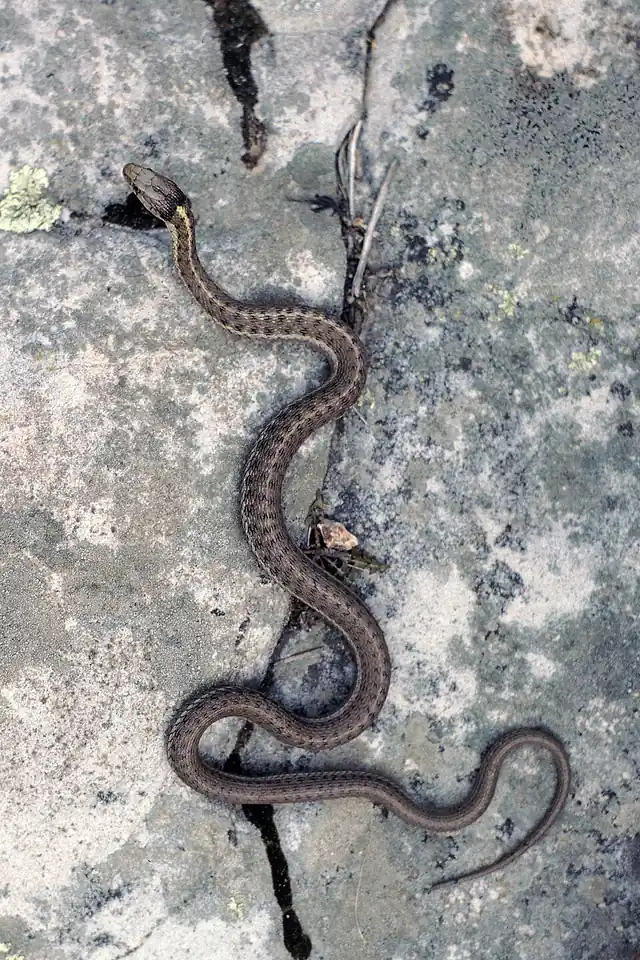 Reptile
Western terrestrial garter snake
Thamnophis elegans
A slim, striped snake found from stream banks to talus slopes across ten of these parks, and the most commonly seen reptile in several of them.