Invertebrates of Glacier National Park
The 2 invertebrates of Glacier National Park: Army cutworm moth and Mountain pine beetle. Their profiles carry sizes, diets, and whether you should worry.
Common questions
Which Glacier National Park invertebrates demand distance from a kid?
Army cutworm moth and Mountain pine beetle carry a rule worth reading. Army cutworm moth: It cannot bite or sting. Mountain pine beetle: Harmless to people. (per NPS species pages).
What do Glacier National Park invertebrates eat?
Army cutworm moth eats flower nectar as a moth, grass and crop leaves and roots as a caterpillar. Mountain pine beetle eats the inner bark (phloem) of pine trees. (per NPS species pages).
The strangest true thing about Glacier National Park's invertebrates.
Army cutworm moth: The same insect has two names for two lives: army cutworm for the caterpillar that eats crops on the Great Plains, and miller moth for the dusty gray adult that shows up in mountain towns every spring. Mountain pine beetle: A red blob of dried sap on a pine trunk, called a pitch tube, marks the exact spot where a beetle tried to bore in and the tree fought back with resin. (per NPS species pages).
-
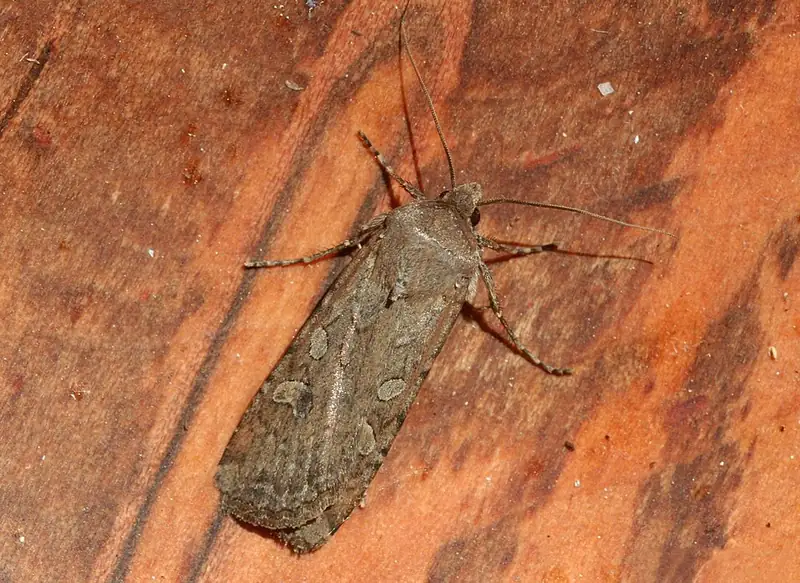 Invertebrate
Army cutworm moth
Euxoa auxiliaris
A gray moth that migrates from Great Plains farm fields to high mountain talus, where grizzly bears flip rocks to eat it by the thousands each summer.
-
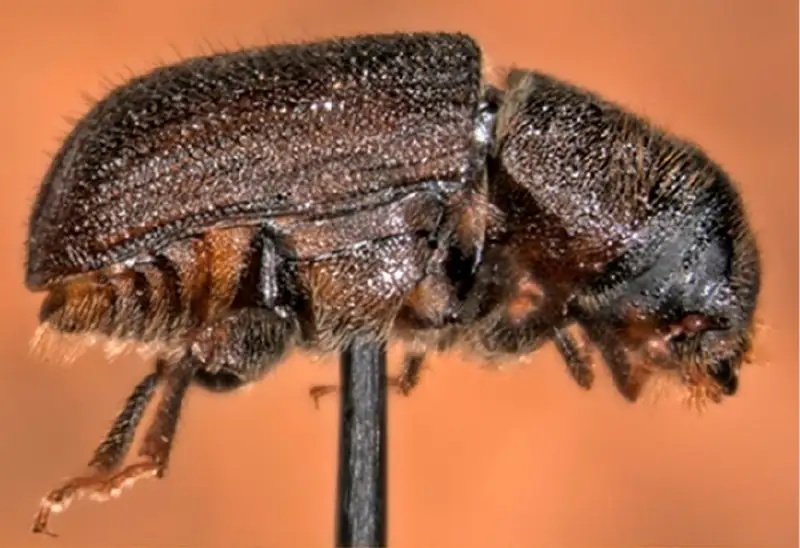 Invertebrate
Mountain pine beetle
Dendroctonus ponderosae
A beetle about the size of a grain of rice that tunnels under pine bark and can turn a mountainside red at Yellowstone, Glacier, and Rocky Mountain.