They sold the barracks for a dollar apiece
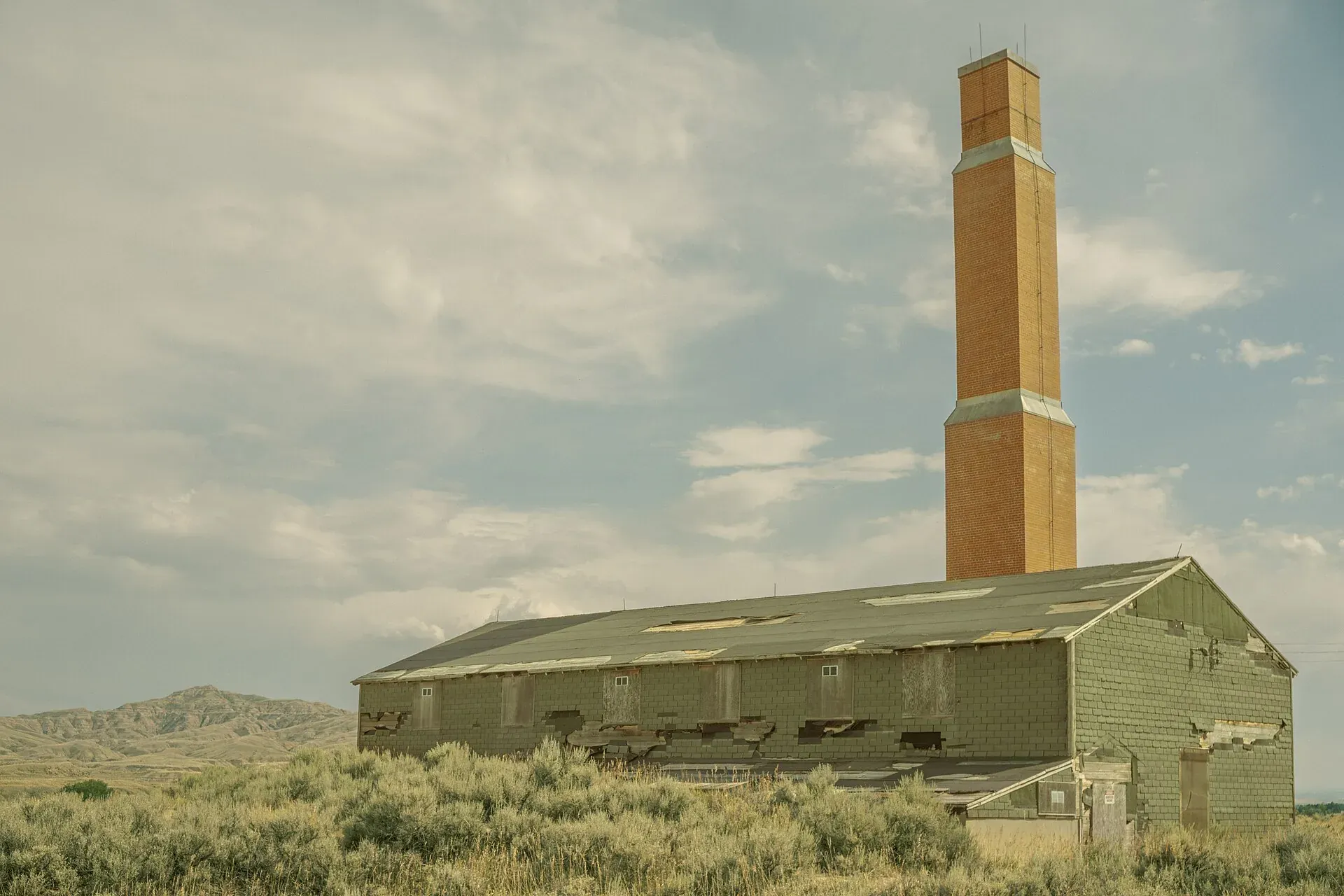
We drove out from Cody on Highway 14A on September 4th, Powell ahead of us, and the first thing you see is a red brick chimney standing by itself on a rise. It was the boiler house chimney for the camp hospital. Little asked what the building was, and I gave her the honest version: the hospital ran to seventeen wings around a long corridor, and three of those buildings are still standing. The chimney is just the one you can see from the road.
The Heart Mountain Interpretive Center sits on the site of the Heart Mountain Relocation Center, where more than 14,000 Japanese Americans were held between 1942 and 1945, most of them American citizens, removed from the West Coast under an executive order. For three years it was one of the largest communities in Wyoming, and at its peak in January 1943 it was the third largest town in the state. When the camp closed, farmers bid for the buildings and equipment at auction, and a barrack went for a dollar to anyone who could haul it away. About four hundred and fifty barracks had been built, and the ones that got carted off scattered across the Bighorn Basin as sheds and farmhouses. Within a few years there was hardly anything here at all. The center opened in 2011, inside the old camp grounds.
We started inside. The museum walks you through it in order: the prejudice that came before Pearl Harbor, the removal, the trains, the tarpaper barracks with gaps in the wallboards and a Wyoming winter coming. There are oral histories you can sit with on headphones. I don’t have a tidy answer for most of what Big and Little asked, and I’ve stopped thinking that’s a failure. The question is the lesson.
The ground is the second half. Download the free Heart Mountain AR app before you go; there are sixteen signs around the site and inside the barrack, and when you point your phone at one, a scene plays out on the empty field in front of you. A dance in the barracks. The Heart Mountain Eagles running a football practice. Two Boy Scouts meeting at the camp in 1943, one of them incarcerated and one visiting from Cody, who grew up to be Norman Mineta and Alan Simpson, a congressman and a senator who stayed friends across the aisle for the rest of their lives. The guide through the app is the animated avatar of Takashi Hoshizaki, who was imprisoned here and imprisoned again in 1944 for refusing the draft. Big ran the phone. Little wanted to find every sign before we were allowed to leave. The part neither of them expected was the buildings. You point the phone at bare ground and the barracks come up in three dimensions around you, and then you walk into them, room by room, the rooms they were actually divided into, and wander out through the mess hall and across the yard. The site was mostly gone. On the phone it wasn’t, and after four days of looking at the real thing under a real sky they took the phone everywhere for the rest of the trip.
One original 1942 barrack was tracked down and brought back to the site, and you can walk through it. It’s the part I’d tell any family not to skip. The exhibits explain; the barrack is cold and thin and small, and you understand something in your body that the placards can’t give you.
Across the road from the hospital site is the Setsuko Saito Higuchi Interpretive Trail, a quarter-mile paved loop past the surviving features of the camp, and a short walk out to a replica guard tower. The camp had nine of them around the perimeter. Little looked up at it for a long time and then asked who they were guarding against. We’re still talking about that one.
What I’d do differently: we went to the barrack first because the kids wanted to see it, and I’d flip that. Do the museum, then the ground. The exhibits are what make an empty field mean something.
It’s about an hour east of Yellowstone’s East Entrance, fifteen minutes from Cody, ten from Powell, open daily from mid-May to early October and on shortened days in between. Kids under ten are free. Plan a couple of hours. Bring a jacket for the barrack even in summer. It is not a National Park Service site, so there is no annual pass and no America the Beautiful card; a nonprofit charges $14 for an adult.
We drove on toward Powell with the chimney in the mirror. Big asked whether any of the barracks were still out there as somebody’s barn. Some are. In 2020 the foundation ran a project to catalogue the ones still standing.
Where this happened: Heart Mountain