[Detour] West Yellowstone Grizzly & Wolf Discovery Center | Why can't you feed a bear?
Listen now on: Apple Podcasts
Summary
A short written summary of the episode — not the full transcript. Press play above for the whole thing.
The bleachers faced the dump. Families sat in them every evening to watch grizzlies eat garbage, and the park put up a sign: Lunch Counter — For Bears Only. That was Old Faithful, from 1921 into the 1930s, and it is the strangest thing we learned on the whole trip. The park was not hiding the problem. It was selling tickets to it.
By 1931 Yellowstone was keeping records. An average of 48 people a year were injured by bears, and there were more than 100 incidents of property damage a year. Bears begged beside horse-drawn wagons. Hotel garbage was the buffet. NPS’s history of bear management tells it in the flat language of annual reports, which somehow makes it worse.
Then came 1970. The open dumps inside the park closed. Every garbage can in the park got a bear-proof lid. The rule against feeding bears was, at last, actually enforced. It went wrong first — the grizzly populations of the Lower 48 were listed as threatened in July 1975 — and then it worked. After 1972, bear-human conflicts averaged about ten a year. Injuries fell from 45 a year in the 1960s to roughly one a year in the 2000s.
Big worked it out before we did. None of those fixes were about the bears. They were about us: the lids, the rule, the distance, the food we stopped leaving out.
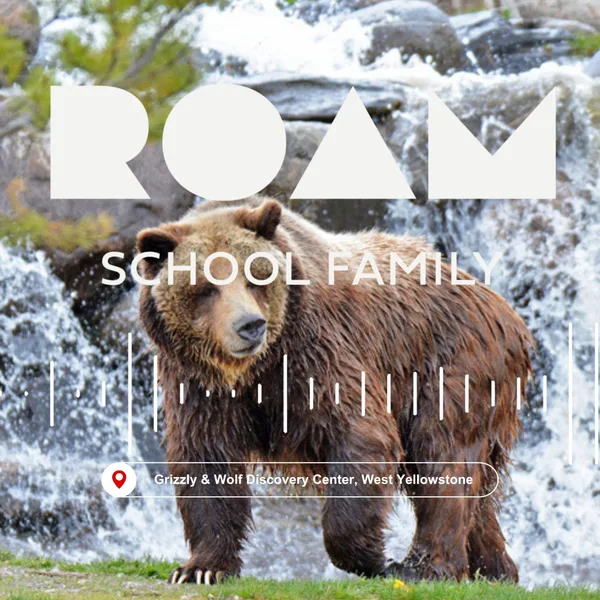
Twelve minutes out the west gate, the Grizzly & Wolf Discovery Center keeps the animals that lost that argument. Bo got into a cooler, then a pickup, then a tent, and finally onto a car with people inside, which is the end of the road for a bear in Yellowstone. Coram had three strikes and a town’s worth of dog food. Neither one is a cautionary tale on a plaque. They are bears in a yard with a pool and a waterfall, watched by people standing at a rail.
Before the gates opened, Big and Little walked into the grizzly pen with a bucket of food and hid it under rocks and branches so the bears had to work for it. A grizzly flipped a rock the size of a basketball with one paw and then sat on it. Nobody in the crowd said anything for a second.
The yard has a second job, and it is the reason for this detour. It is one of two facilities in the country approved to test bear-resistant coolers, canisters, and trash cans for the Interagency Grizzly Bear Committee. The protocol is simple and brutal: put the container in the habitat, bait it, and give the bears sixty minutes. That is roughly how long a wild bear will keep trying before it gives up and walks away. The pass rate has hovered around half. When the hour runs out, the bear gets the food and the manufacturer gets a report.
That hour is the promise the episode closed on, so here is the list of what we would carry. Every product below holds a current IGBC certification, which means a bear at one of the two approved test facilities spent an hour on it. Before you buy anything, check the model against the commission’s certified-products registry; the center’s testing page lays out what passing and failing actually look like.
- A hard cooler for the van. The YETI Tundra 45 is the hard cooler we would put behind the seat: rotomolded, two rubber latches, a drain. YETI Tundra 45
- A canister for the backpack. The BearVault BV500 holds about a week of food for one person and screws open without a tool, which matters at seven in the morning. BearVault BV500
- A soft bag for a day pack. The Ursack Major XL is fabric and Kevlar rather than plastic, so it collapses into a pack and still carries an IGBC certification number. Ursack Major XL
A container that fails can be changed and brought back for another hour. A certification is a number to check on a specific model, not a brand to trust.
West Yellowstone sits in the homelands of the Shoshone-Bannock Tribes and the Eastern Shoshone, two of the 27 nations the National Park Service lists as associated with Yellowstone. The bears were here first. So was everybody else.
The morning closed with five rules for the rest of our trip — food stored, distance kept, noise made on the trail. Not one of the five asked the bear to do anything.
The place
Grizzly & Wolf Discovery Center — West Yellowstone's yard for bears that can't live wild, and the coolers they spend an hour trying to open.