Rosebud Sioux Tribe
A nation today

Background
The Rosebud Sioux Tribe gives its own name as Sicangu Lakota Oyate and renders it in English as Burnt Thigh People. Its history page calls the Tribe descendants of the Sicangu of the Tetonwan division of the Oceti Sakowin, the Seven Council Fires, and one of the seven bands of the Lakota. The same page gives a land area of 882,416 acres, with the tribal headquarters at Rosebud, South Dakota. Chief Spotted Tail, Sinte Gleska, signed a peace treaty in June 1866 that allowed his people to hunt buffalo along the Republican River. The 1868 treaty ceded Lakota lands along the Republican and Platte rivers and moved the Tribe thirty miles west, and an agreement reached in 1870 allowed the Lakota to move to the upper White River. The Tribe publishes the Wolakota, its code of behaviour, on the same history page.
Visit and learn
Sicangu Heritage Center
A Sicangu heritage museum at Sinte Gleska University, listed on the Tribe's own history and culture page.
Rosebud Fair
The Tribe's annual fair, held each summer. The Tribe posts the current dates on its own site.
Tribal lands have their own laws. Check the nation's site before you visit.
Parks on its homelands
Arches National Park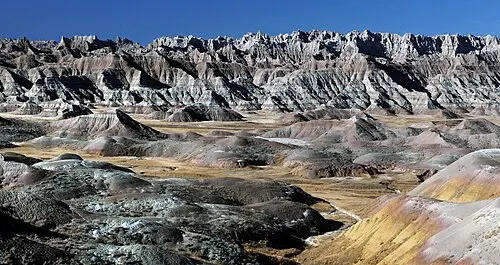 Badlands National Park
The Ben Reifel Visitor Center at Badlands is named for Ben Reifel, a Sicangu Lakota born on the Rosebud Indian Reservation, who was the first Lakota elected to Congress and served from 1961 to 1971. Source
Programs
Game, Fish, and Parks / Natural Resources
The Tribe's Department of Natural Resources and Game, Fish and Parks issues hunting and fishing licences and permits, publishes season dates and licence prices, and maintains harvest reports.
Sources
- https://www.govinfo.gov/content/pkg/FR-2026-01-30/html/2026-01899.htm
- https://www.rosebudsiouxtribe-nsn.gov/history-culture
- https://www.rstgfp.net/
Checked September 2026.