Reptiles of Theodore Roosevelt National Park
The 4 reptiles of Theodore Roosevelt National Park. Their profiles carry sizes, diets, and whether you should worry.
Common questions
Which Theodore Roosevelt National Park reptiles demand distance from a kid?
Bullsnake, Greater short-horned lizard, Prairie rattlesnake, and Western painted turtle carry a rule worth reading. Bullsnake: Not dangerous at all — it has no venom. Greater short-horned lizard: Not dangerous. Prairie rattlesnake: It is the only dangerously venomous snake at Yellowstone, Badlands, Theodore Roosevelt, and Wind Cave. Western painted turtle: It will slide off its log and vanish into the water long before anyone gets close. (per NPS species pages).
What do Theodore Roosevelt National Park reptiles eat?
Bullsnake eats mice, ground squirrels, pocket gophers, rabbits, bird eggs. Greater short-horned lizard eats ants, beetles, bees, grasshoppers. Prairie rattlesnake eats mice, prairie dogs, ground squirrels, young rabbits, birds. Western painted turtle eats pond weeds, algae, insects, tadpoles, small fish, snails. (per NPS species pages).
The strangest true thing about Theodore Roosevelt National Park's reptiles.
Bullsnake: A bullsnake has no rattle and no venom, but it can hiss, flatten its head, and shake its tail in dead grass well enough to fool people into thinking it's a rattlesnake. Greater short-horned lizard: A greater short-horned lizard can squirt blood out of the corners of its eyes at a coyote or fox that gets too close — a taste so unpleasant to canines that many let go and back off. (per NPS species pages).
-
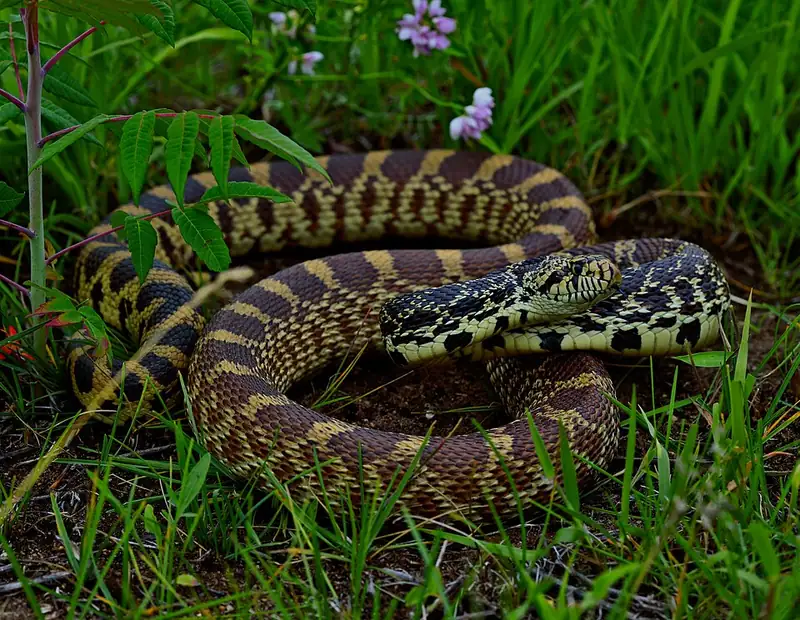 Reptile
Bullsnake
Pituophis catenifer sayi
A big, harmless snake that fakes being a rattlesnake — hissing, flattening its head, and shaking its tail in dry grass — to talk its way out of trouble.
-
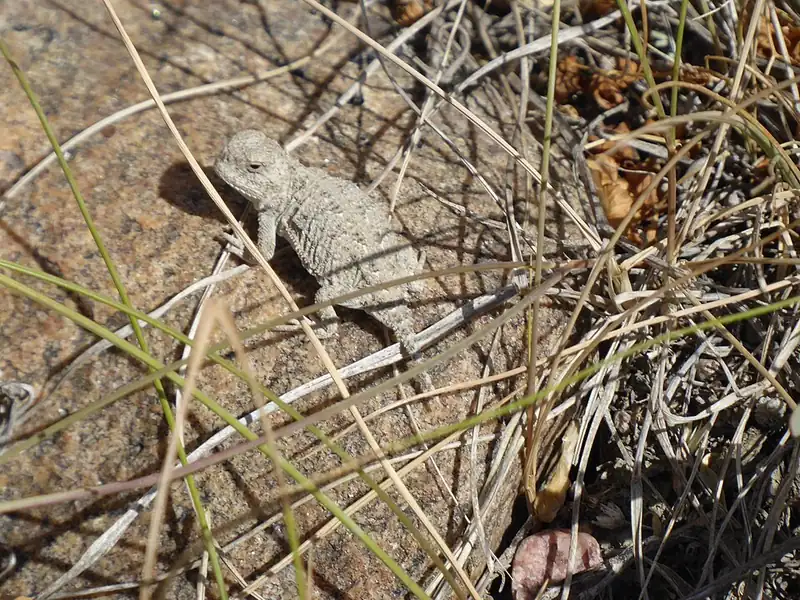 Reptile
Greater short-horned lizard
Phrynosoma hernandesi
A flat, spiky, dirt-colored lizard, sometimes called a horned toad, that can squirt blood from its eyes at a coyote and gives birth to live young.
-
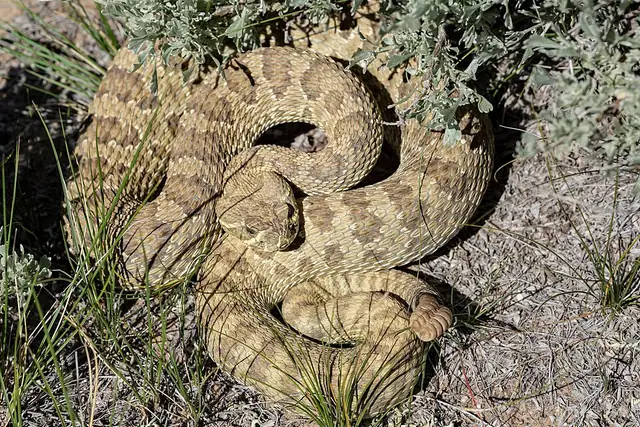 Reptile
Prairie rattlesnake
Crotalus viridis
A gray-green pit viper with a buzzing rattle, the only venomous reptile at several of the parks it shares with prairie dogs and badgers.
-
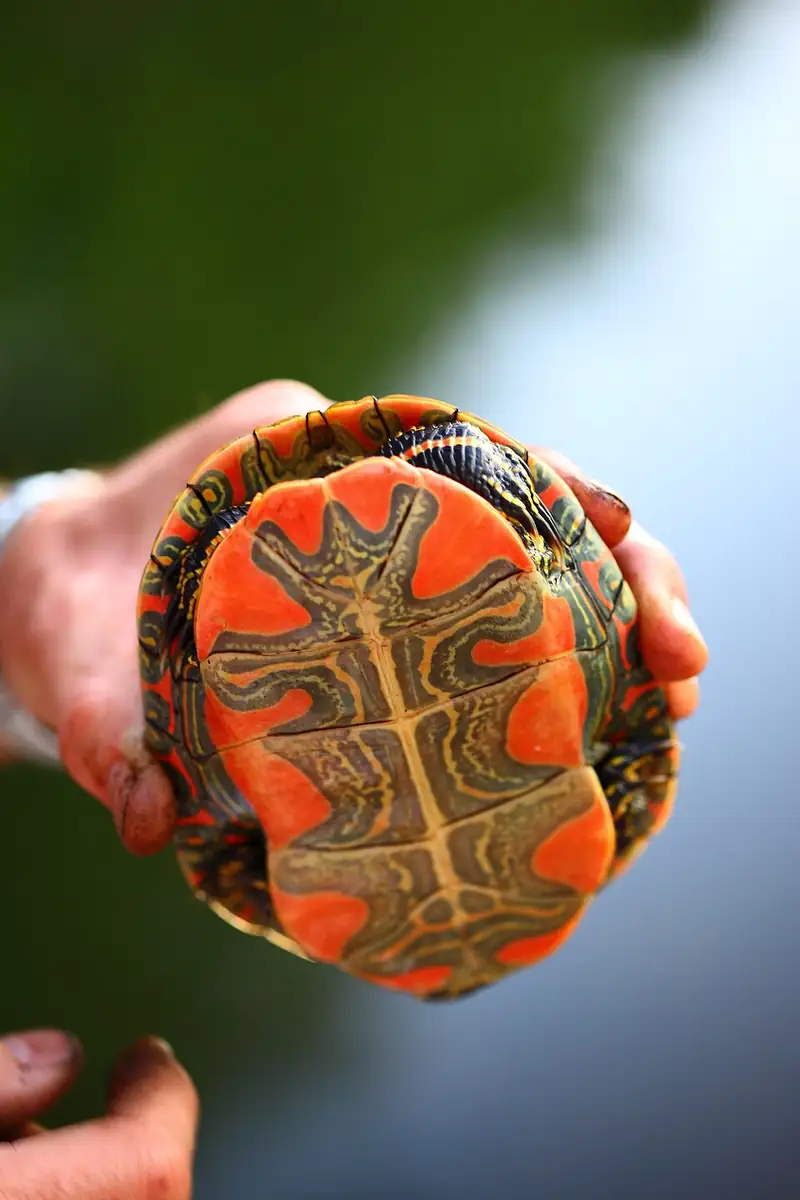 Reptile
Western painted turtle
Chrysemys picta bellii
A smooth-shelled turtle with red-striped legs that basks on logs in northern lakes and survived being nearly frozen as a hatchling.