Mammals of Shenandoah National Park
The 3 mammals of Shenandoah National Park. Their profiles carry sizes, diets, and whether you should worry.
Common questions
Which Shenandoah National Park mammals demand distance from a kid?
American black bear, Eastern gray squirrel, and White-tailed deer carry a rule worth reading. American black bear: Black bears are usually shy and would rather leave than meet you. Eastern gray squirrel: Nearly none. White-tailed deer: White-tailed deer normally run from people. (per NPS species pages).
What do Shenandoah National Park mammals eat?
American black bear eats berries, acorns, nuts, insects, roots, sometimes carrion. Eastern gray squirrel eats acorns, hickory nuts, walnuts, beechnuts, buds, mushrooms, insects. White-tailed deer eats leaves, twigs, buds, acorns, grasses, farm crops. (per NPS species pages).
The strangest true thing about Shenandoah National Park's mammals.
American black bear: Great Smoky Mountains National Park has about two black bears per square mile, roughly 1,900 bears, one of the thickest black-bear populations anywhere. Eastern gray squirrel: Black squirrels aren't a different species; they're eastern gray squirrels with a dark color form called melanism. (per NPS species pages).
-
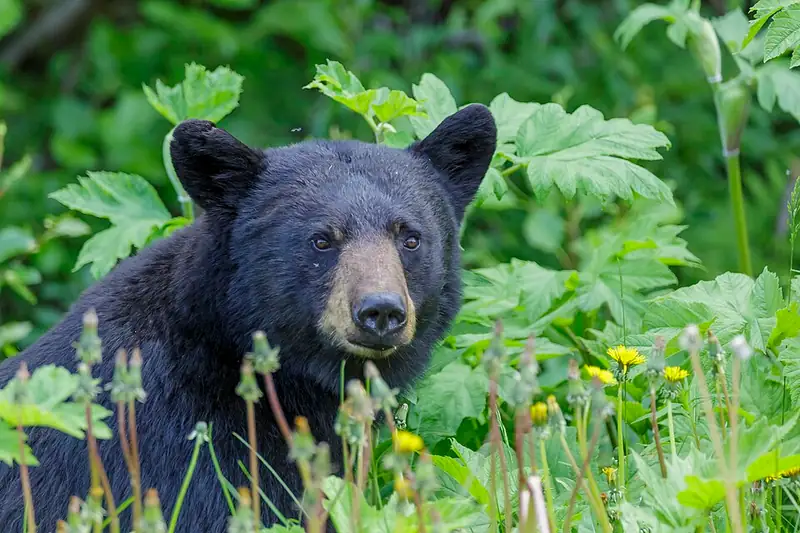 Mammal
American black bear
Ursus americanus
The bear you're most likely to meet east of the Rockies, a strong tree-climber that eats mostly plants and comes in black, brown, or cinnamon.
-
 Mammal
Eastern gray squirrel
Sciurus carolinensis
A gray acrobat of the oak woods that buries nuts one by one and sometimes forgets where, sprouting new forests by accident.
-
 Mammal
White-tailed deer
Odocoileus virginianus
The most common large mammal in many parks, from eastern woods to the desert sky islands, where the small Coues subspecies flags its white tail along the drive.