Birds of Mount Rainier National Park
The 9 birds of Mount Rainier National Park. Their profiles carry sizes, diets, and whether you should worry.
Common questions
Which Mount Rainier National Park birds demand distance from a kid?
American dipper, Canada jay, Clark's nutcracker, Harlequin duck, and Peregrine falcon carry a rule worth reading. American dipper: None. Canada jay: None. Clark's nutcracker: Harmless to people. Harlequin duck: None. Peregrine falcon: A peregrine falcon hunts other birds, not people, and nests high on cliffs specifically to stay away from ground predators, including hikers. 4 more species carry a rule worth reading. (per NPS species pages).
What do Mount Rainier National Park birds eat?
American dipper eats caddisfly and mayfly larvae, aquatic insects under rocks, small fish, fish eggs, flying insects. Canada jay eats insects, berries, seeds, mushrooms, small vertebrates, carrion, whatever it can find at a picnic table. Clark's nutcracker eats pine seeds, whitebark pine seeds, insects, berries, small animals. Harlequin duck eats aquatic insect larvae, snails, small fish eggs, crabs and other crustaceans, mussels and snails (winter, on the coast). 5 more species have menus worth reading. (per NPS species pages).
The strangest true thing about Mount Rainier National Park's birds.
American dipper: A dipper's eyelids are lined with white feathers, so each blink flashes a bright white wink, which biologists think may double as a signal to other dippers over the roar of a rapid. Canada jay: A Canada jay's spit glands are so much bigger than a typical songbird's that scientists have compared them to a woodpecker's, all so it can coat food in sticky saliva and stick it to a tree. (per NPS species pages).
-
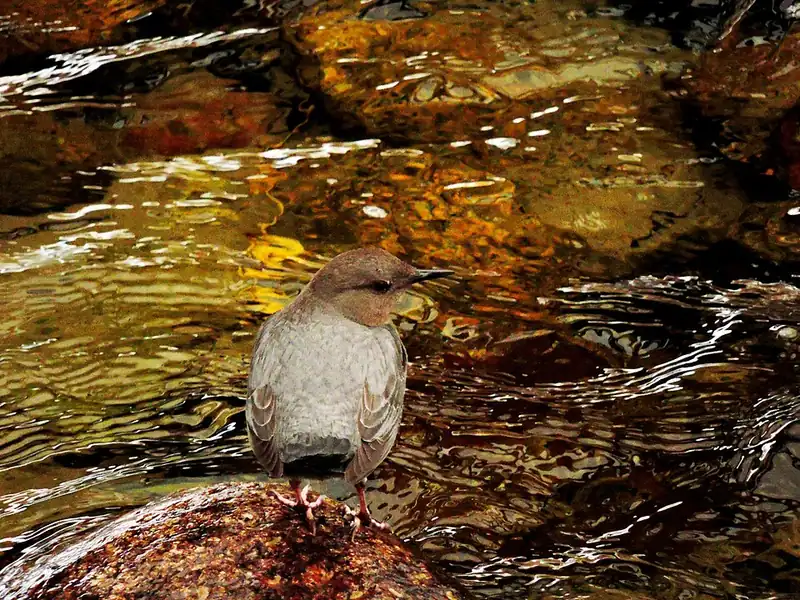 Bird
American dipper
Cinclus mexicanus
A stream-gray songbird that walks along the bottom of cold mountain creeks to hunt, the only songbird in North America that does.
-
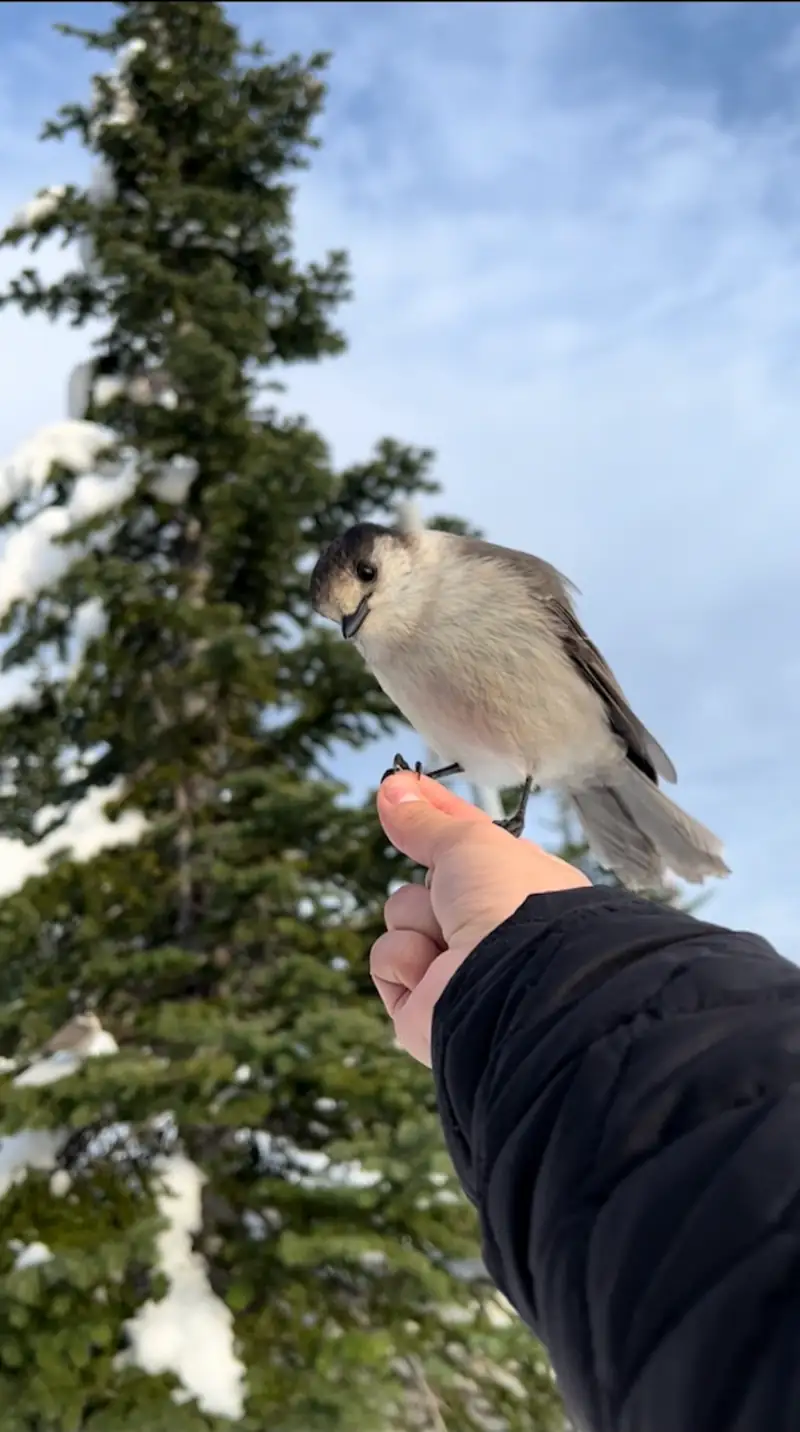 Bird
Canada jay
Perisoreus canadensis
A fearless, fluffy gray bird that glues thousands of food scraps into tree bark with its own sticky spit and remembers nearly all of them through winter.
-
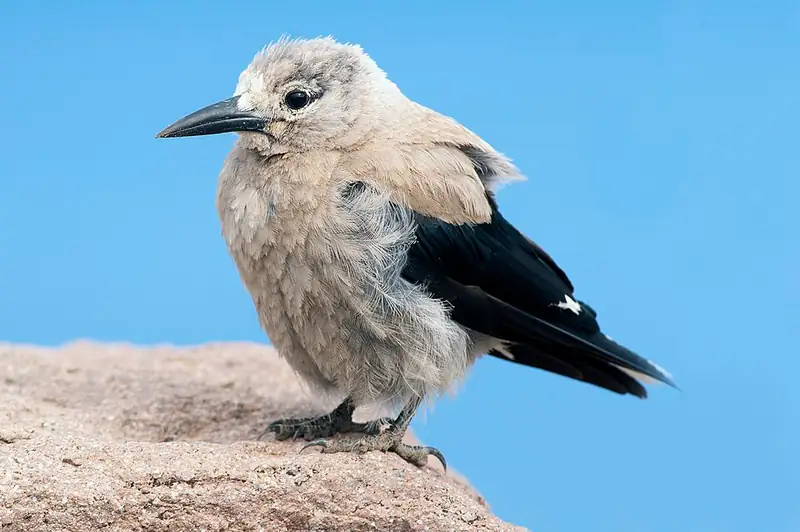 Bird
Clark's nutcracker
Nucifraga columbiana
A pale-gray, black-winged cousin of the crow that hides tens of thousands of pine seeds each fall and remembers where to find them again.
-
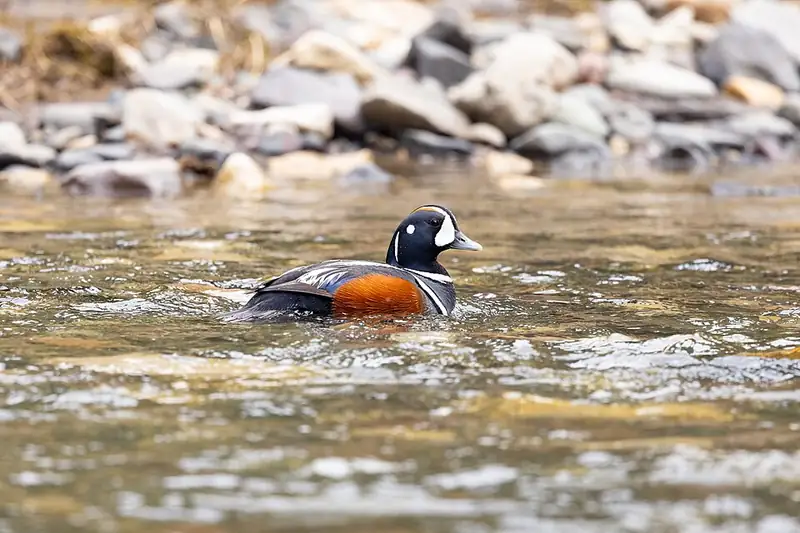 Bird
Harlequin duck
Histrionicus histrionicus
A slate-blue and chestnut sea duck that breeds by diving and bracing in fast mountain whitewater instead of calm water.
-
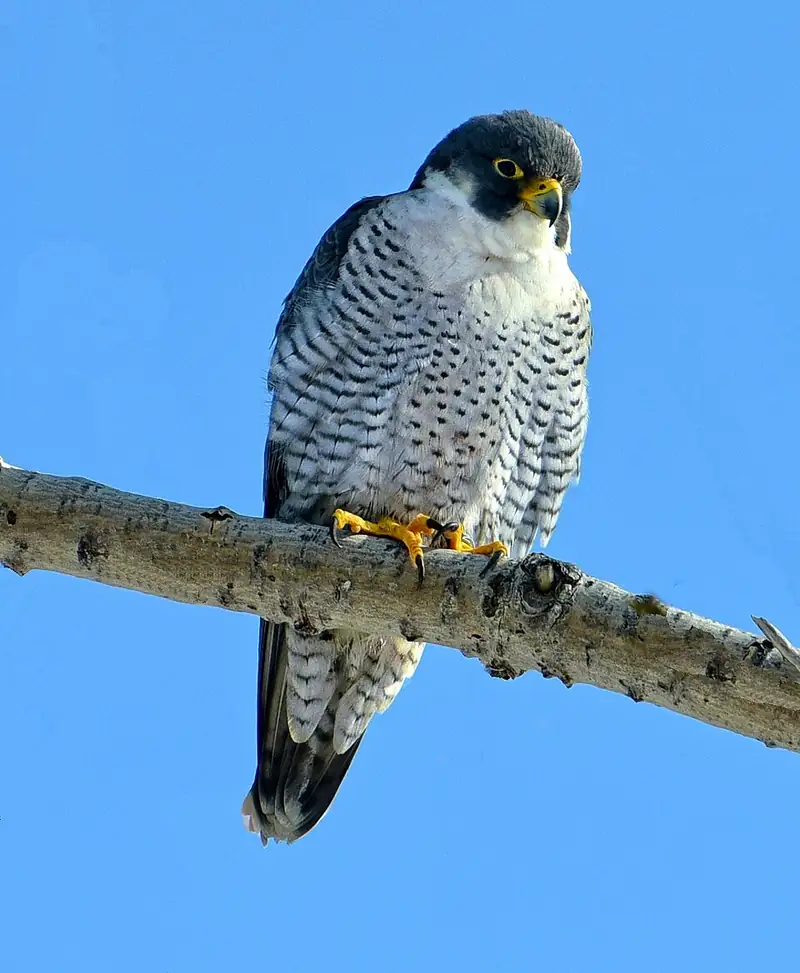 Bird
Peregrine falcon
Falco peregrinus
The fastest animal alive, a crow-sized falcon that folds its wings and stoops on other birds in midair, and a species that nearly vanished before recovering.
-
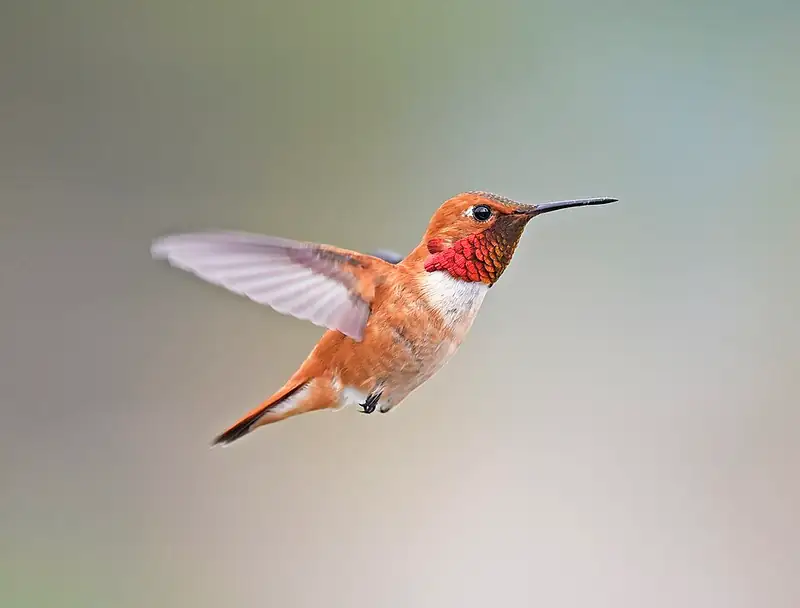 Bird
Rufous hummingbird
Selasphorus rufus
A copper-orange hummingbird that flies farther, relative to its size, than almost any other bird on Earth, from Mexico to Alaska and back every year.
-
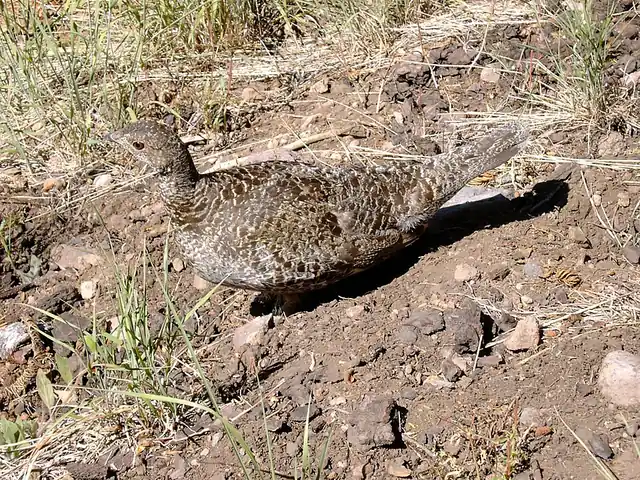 Bird
Sooty grouse
Dendragapus fuliginosus
A large, dark forest grouse whose male hoots from bare yellow neck patches in spring, then walks itself uphill each fall to spend winter eating conifer needles.
-
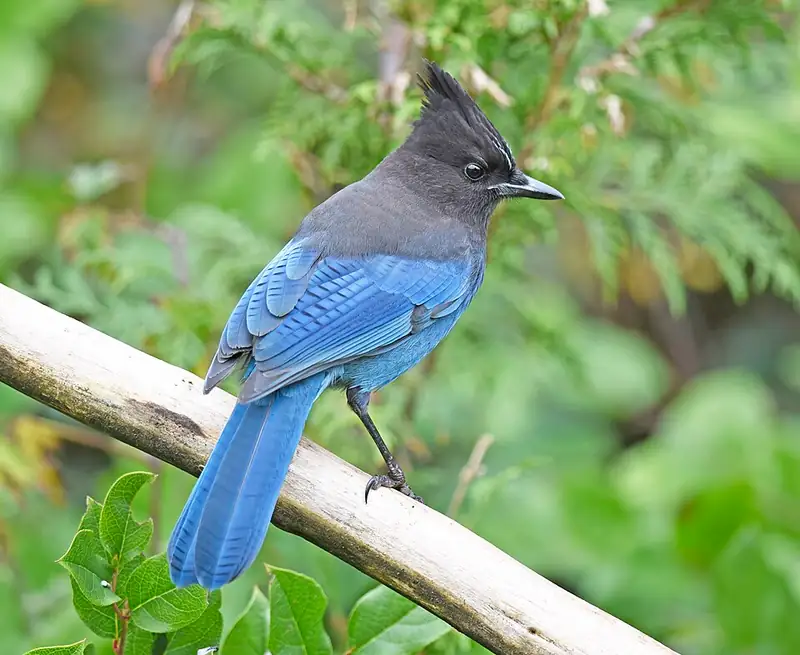 Bird
Steller's jay
Cyanocitta stelleri
A deep-blue mountain jay with a black crest and a loud voice, the campground bird that will eye your sandwich at Yosemite, Sequoia, and Crater Lake.
-
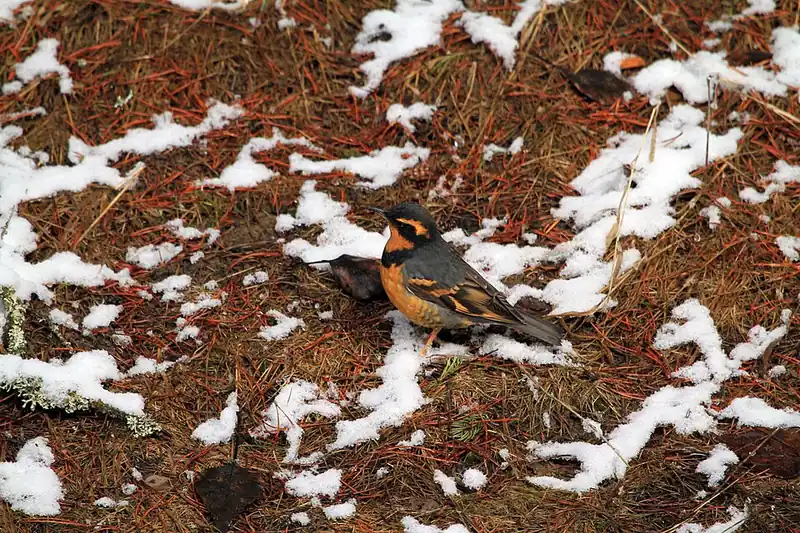 Bird
Varied thrush
Ixoreus naevius
A ringing single whistle from deep, shaded old-growth forest, and a bird so well hidden most visitors only ever hear it.