Amphibians of Mount Rainier National Park
The 3 amphibians of Mount Rainier National Park. Their profiles carry sizes, diets, and whether you should worry.
Common questions
Which Mount Rainier National Park amphibians demand distance from a kid?
Cascades frog, Rough-skinned newt, and Western toad carry a rule worth reading. Cascades frog: Completely harmless, no bite or poison worth worrying about. Rough-skinned newt: Never put one near your mouth or an open cut. Western toad: Harmless to touch, but the two glands behind its eyes ooze a thick white poison meant to deter predators, so wash hands after handling and don't touch your eyes or mouth first. (per NPS species pages).
What do Mount Rainier National Park amphibians eat?
Cascades frog eats insects, other invertebrates, tadpoles, small frogs. Rough-skinned newt eats insects, worms, slugs, salamander and frog eggs, small fish. Western toad eats ants, beetles, bees, spiders, sowbugs, grasshoppers. (per NPS species pages).
The strangest true thing about Mount Rainier National Park's amphibians.
Cascades frog: A Cascades frog spends the winter tucked into unfrozen mud or spring-fed water at the bottom of a meadow pond, even while the pond's surface freezes over. Rough-skinned newt: One rough-skinned newt carries enough tetrodotoxin in its skin to kill an estimated 25,000 mice, or, on record, one adult human who swallowed one in 1979. (per NPS species pages).
-
 Amphibian
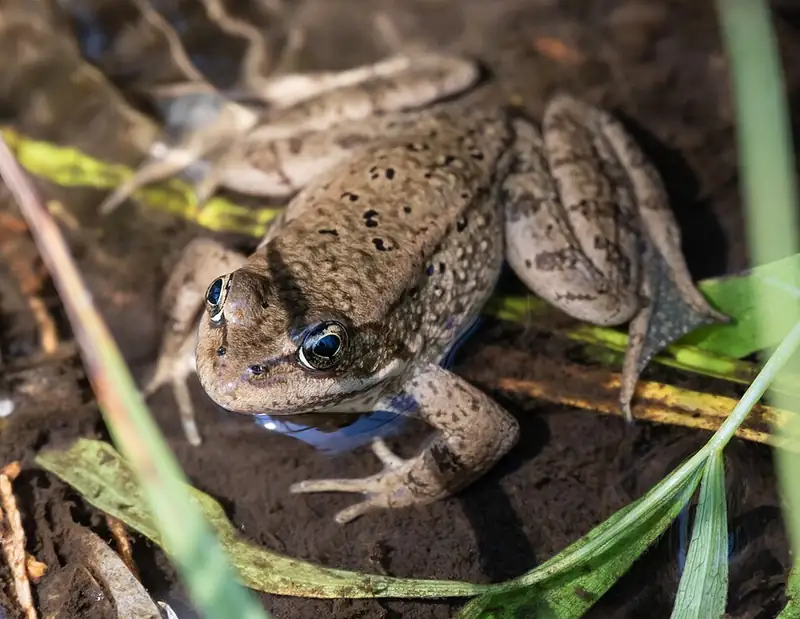
Cascades frog
Rana cascadae
A brown, black-spotted frog of cold high-mountain meadow ponds, once common through the Cascades and now vanishing from parts of its range.
-
 Amphibian
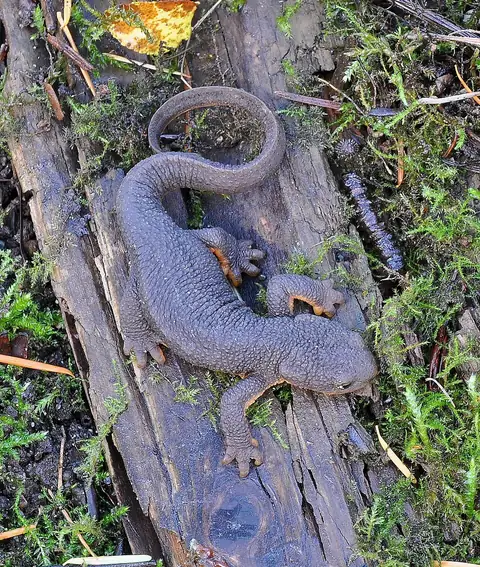
Rough-skinned newt
Taricha granulosa
A brown, warty-skinned newt with a bright orange belly that carries enough poison to kill a person, found in ponds and wet forests across the Pacific Northwest.
-
 Amphibian
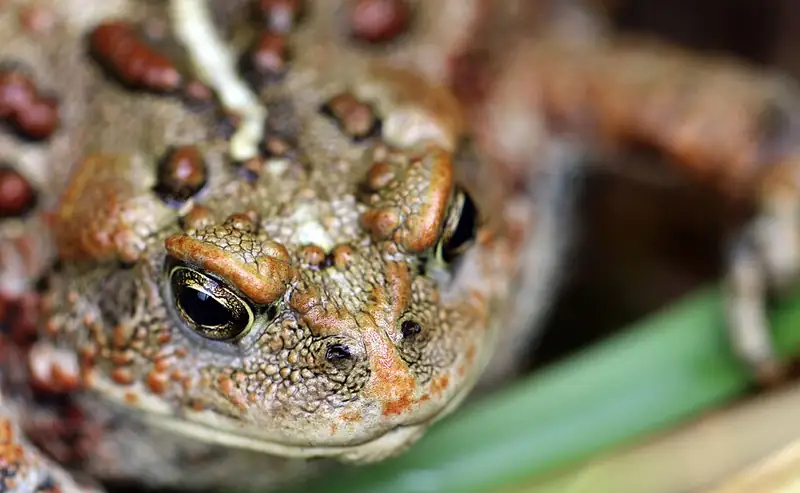
Western toad
Anaxyrus boreas
A stout, warty toad that walks instead of hopping, with poison glands behind each eye, ranging from lowland ponds to mountain lakes across the Cascades.