Invertebrates of Joshua Tree National Park
The 2 invertebrates of Joshua Tree National Park: Giant desert hairy scorpion and Tarantula hawk.
Common questions
Which Joshua Tree National Park invertebrates demand distance from a kid?
Giant desert hairy scorpion and Tarantula hawk carry a rule worth reading. Giant desert hairy scorpion: Its sting hurts, but it is not dangerous to a healthy person. Tarantula hawk: It has one of the most painful stings of any insect, but it is not aggressive and will not chase or attack you. (per NPS species pages).
What do Joshua Tree National Park invertebrates eat?
Giant desert hairy scorpion eats insects, spiders, other scorpions, small lizards. Tarantula hawk eats flower nectar (adults), one paralyzed tarantula (each larva). (per NPS species pages).
The strangest true thing about Joshua Tree National Park's invertebrates.
Giant desert hairy scorpion: Under a blacklight (ultraviolet light) the whole scorpion glows a bright blue-green. Chemicals in its hard shell soak up the invisible light and give it back as color, and scientists use blacklights to find scorpions in the dark. Tarantula hawk: Its sting is rated one of the two most painful of any insect on Earth, so intense that the advice is simply to lie down and scream until it passes, which takes only a few minutes. (per NPS species pages).
-
 Invertebrate
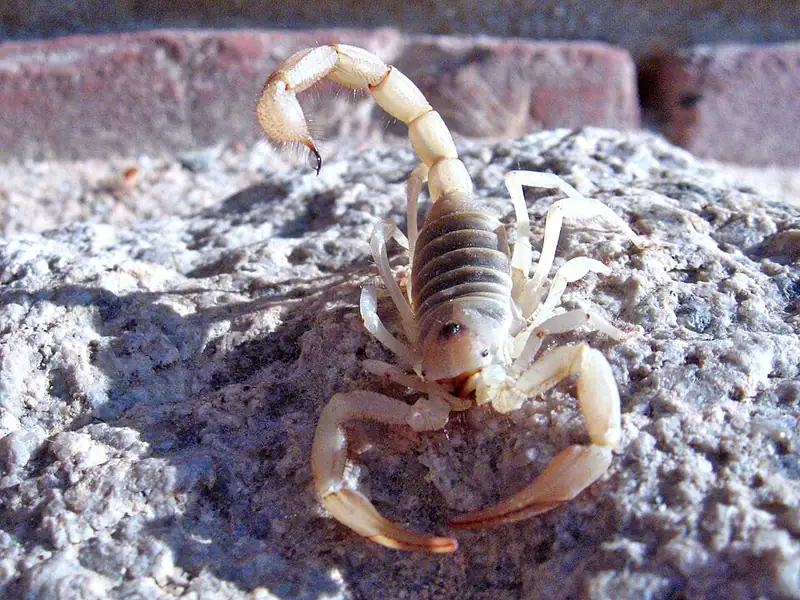
Giant desert hairy scorpion
Hadrurus arizonensis
The largest scorpion in North America, a sandy-colored desert digger covered in sensing hairs that glows blue-green under ultraviolet light.
-
 Invertebrate
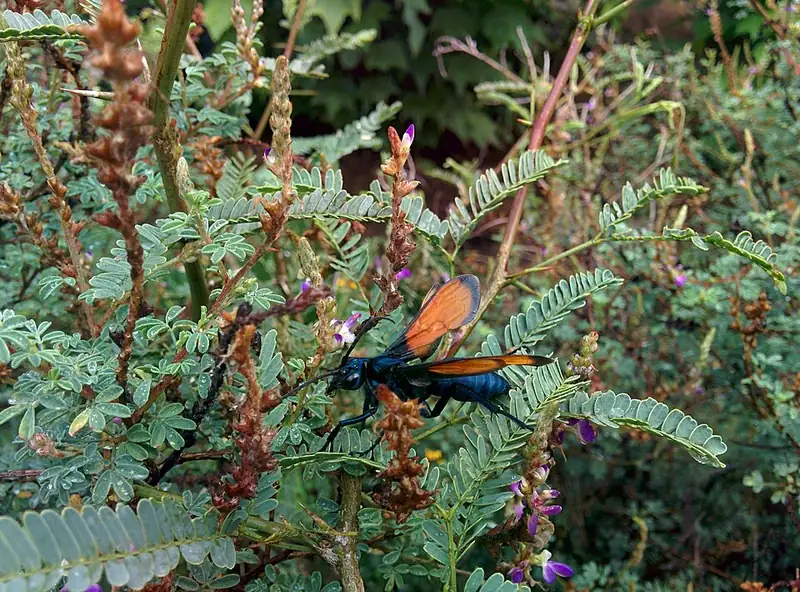
Tarantula hawk
Pepsis
A big black desert wasp with orange wings that hunts tarantulas, delivers one of the most painful stings on Earth, and almost never bothers people.