Reptiles of Capitol Reef National Park
The 5 reptiles of Capitol Reef National Park. Their profiles carry sizes, diets, and whether you should worry.
Common questions
Which Capitol Reef National Park reptiles demand distance from a kid?
Bullsnake, Greater short-horned lizard, Plateau fence lizard, Sagebrush lizard, and Western terrestrial garter snake carry a rule worth reading. Bullsnake: Not dangerous at all — it has no venom. Greater short-horned lizard: Not dangerous. Plateau fence lizard: No venom, and harmless if left alone. Sagebrush lizard: This lizard has no venom, and its main defense is running. Western terrestrial garter snake: Essentially harmless. (per NPS species pages).
What do Capitol Reef National Park reptiles eat?
Bullsnake eats mice, ground squirrels, pocket gophers, rabbits, bird eggs. Greater short-horned lizard eats ants, beetles, bees, grasshoppers. Plateau fence lizard eats ants, beetles, grasshoppers, spiders, occasionally a smaller lizard. Sagebrush lizard eats ants, beetles, grasshoppers, flies, spiders and other small arachnids. 1 more species have menus worth reading. (per NPS species pages).
The strangest true thing about Capitol Reef National Park's reptiles.
Bullsnake: A bullsnake has no rattle and no venom, but it can hiss, flatten its head, and shake its tail in dead grass well enough to fool people into thinking it's a rattlesnake. Greater short-horned lizard: A greater short-horned lizard can squirt blood out of the corners of its eyes at a coyote or fox that gets too close — a taste so unpleasant to canines that many let go and back off. (per NPS species pages).
-
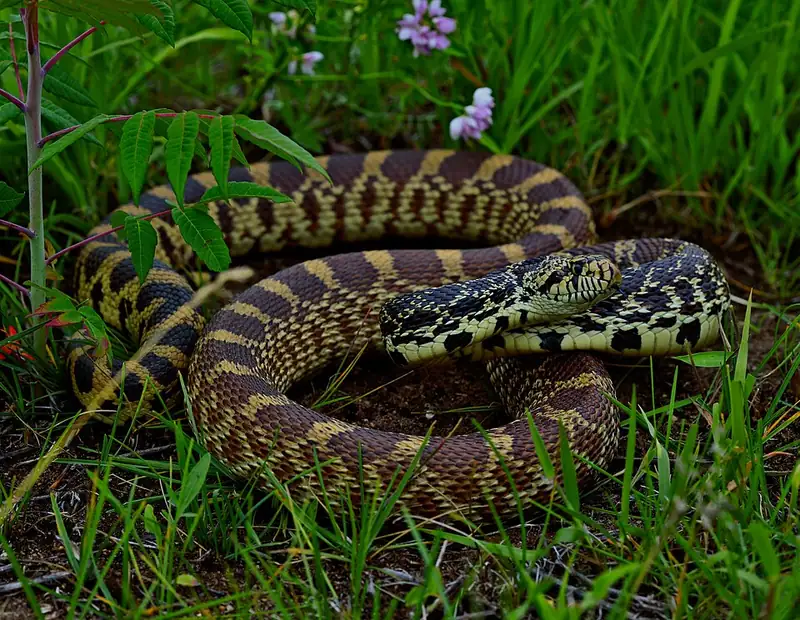 Reptile
Bullsnake
Pituophis catenifer sayi
A big, harmless snake that fakes being a rattlesnake — hissing, flattening its head, and shaking its tail in dry grass — to talk its way out of trouble.
-
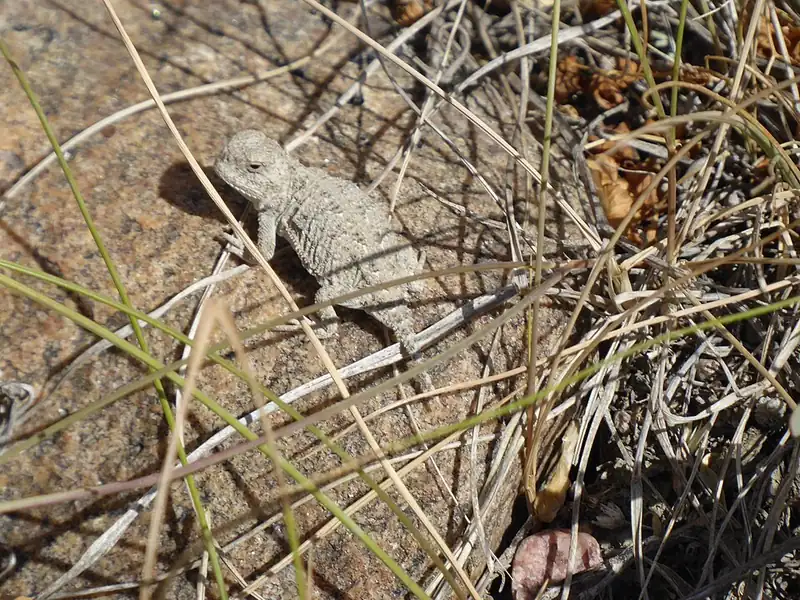 Reptile
Greater short-horned lizard
Phrynosoma hernandesi
A flat, spiky, dirt-colored lizard, sometimes called a horned toad, that can squirt blood from its eyes at a coyote and gives birth to live young.
-
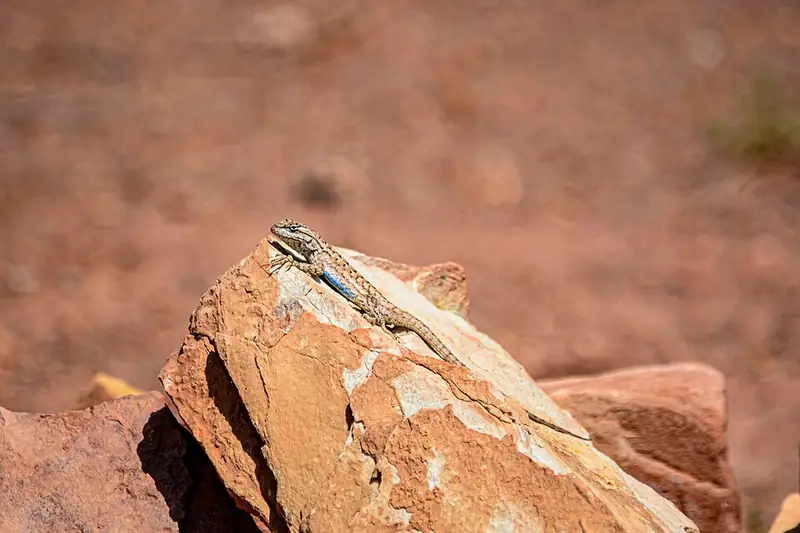 Reptile
Plateau fence lizard
Sceloporus tristichus
A gray-brown lizard with blue belly patches on males, smaller than the flashier collared lizard on the same sunny rock at Mesa Verde, Arches, and Black Canyon.
-
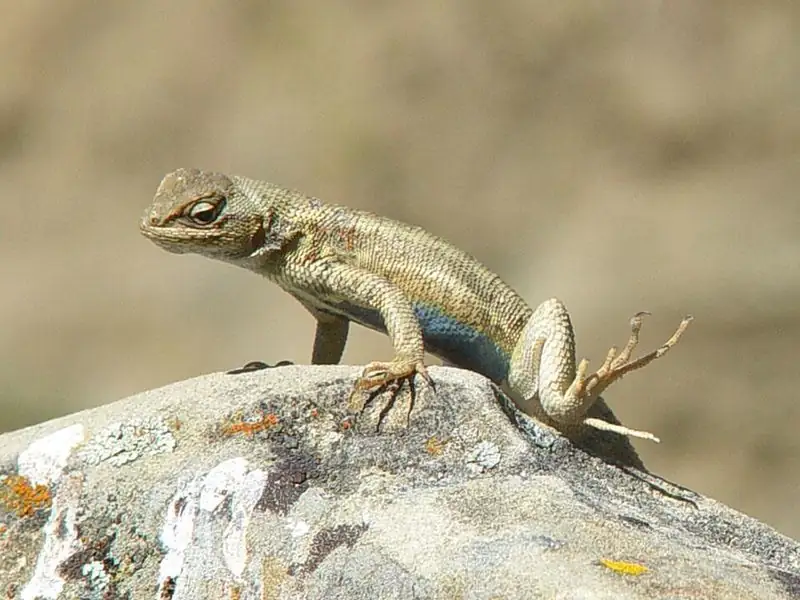 Reptile
Sagebrush lizard
Sceloporus graciosus
A small, slender, high-country lizard, the fence lizard's cousin, whose males flash blue belly and throat patches in a push-up display.
-
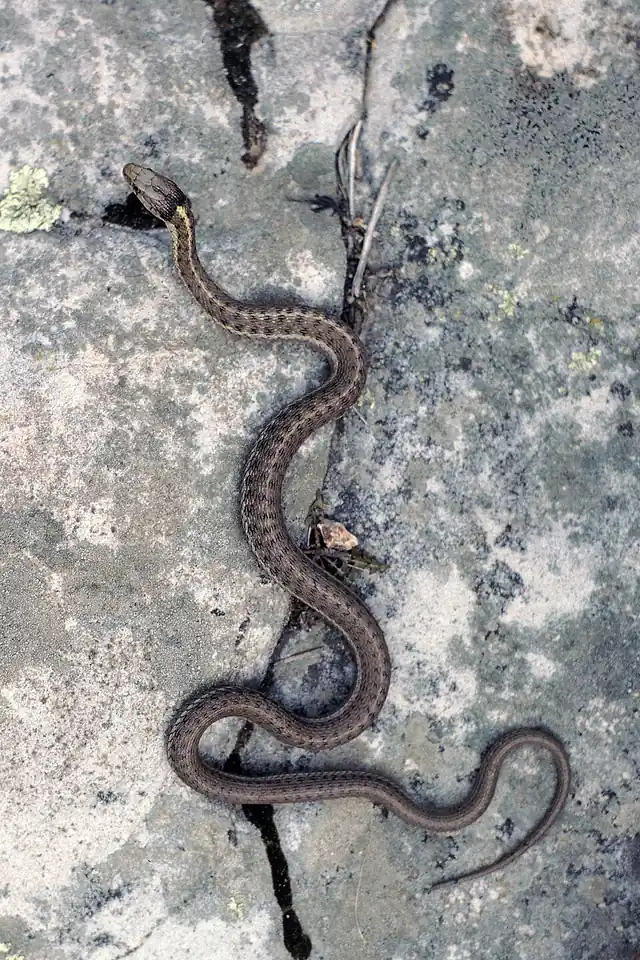 Reptile
Western terrestrial garter snake
Thamnophis elegans
A slim, striped snake found from stream banks to talus slopes across ten of these parks, and the most commonly seen reptile in several of them.