Plants of Capitol Reef National Park
The 6 plants of Capitol Reef National Park. Each carries a fun fact and a note on whether a kid should worry about it.
Common questions
Which Capitol Reef National Park plants demand distance from a kid?
Apple, Claret cup cactus, Fremont cottonwood, Gambel oak, and Two-needle pinyon carry a rule worth reading. Apple: Nothing to worry about. Claret cup cactus: This cactus is covered in stiff spines, so the rule is look, do not touch. Fremont cottonwood: Nothing to worry about. Gambel oak: Nothing to worry about. Two-needle pinyon: The needles aren't sharp enough to worry about, though the trunk and cones can be sticky with resin. 1 more species carry a rule worth reading. (per NPS species pages).
What do Capitol Reef National Park plants eat?
Apple eats sunlight, water, soil nutrients. Claret cup cactus eats sunlight, rainwater, carbon dioxide, soil nutrients. Fremont cottonwood eats sunlight, water, soil nutrients. Gambel oak eats sunlight, water, soil nutrients. (per NPS species pages).
The strangest true thing about Capitol Reef National Park's plants.
Apple: Fruita's settlers planted thousands of fruit trees from the 1880s into the 1960s, and the park still waters the surviving orchards with gravity-fed ditches. Claret cup cactus: The claret cup gets its name from its flowers, which are shaped like little cups and are a deep red, the color of a drink called claret. A single mound can hold dozens of blooms at once in spring. (per NPS species pages).
-
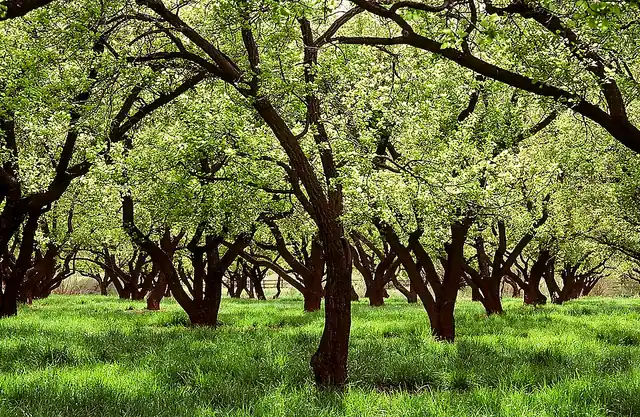 Plant
Apple
Malus domestica
The orchard tree people planted at Fruita in the 1880s, still bearing fruit you can pick, weigh and pay for at Capitol Reef.
-
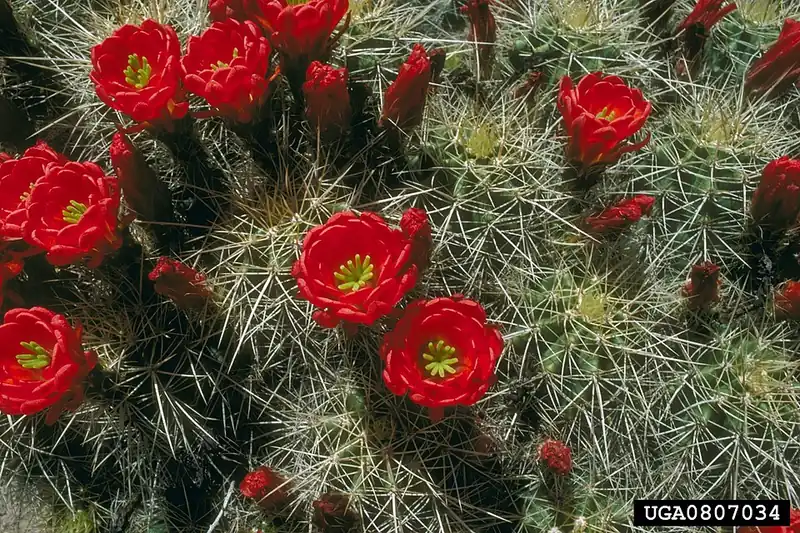 Plant
Claret cup cactus
Echinocereus triglochidiatus
A low, mounding desert cactus that bursts into bright red, cup-shaped flowers each spring on rocky ground across the Southwest.
-
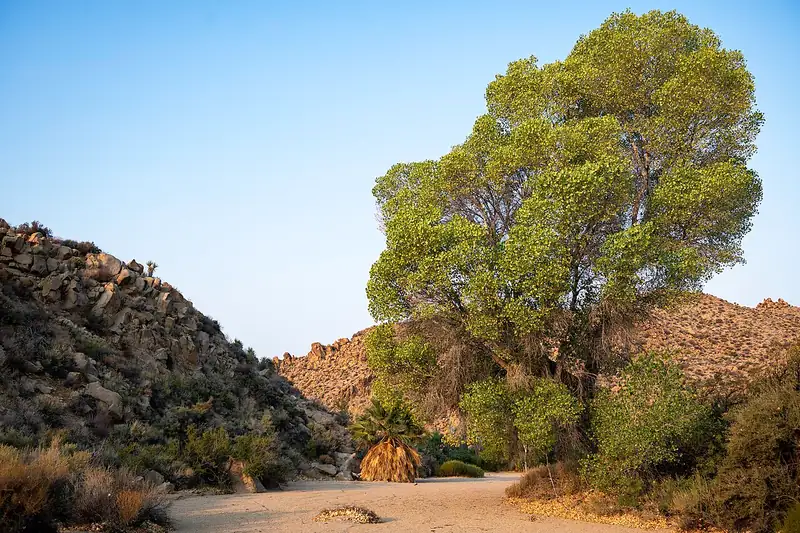 Plant
Fremont cottonwood
Populus fremontii
The big tree of Capitol Reef's river bottoms: 75 feet tall, triangular leaves, and cotton fluff that carries its seed downstream.
-
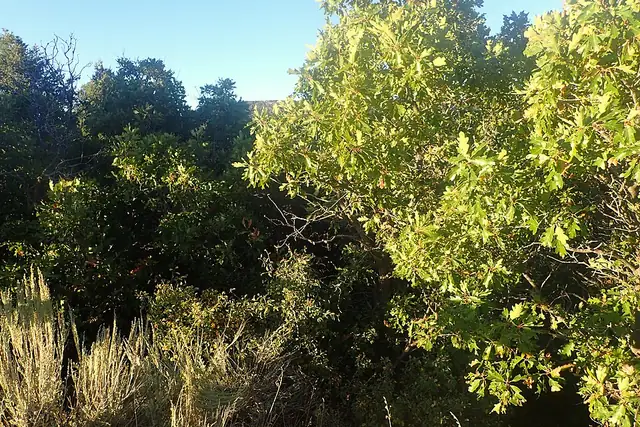 Plant
Gambel oak
Quercus gambelii
The shrub oak that forms thickets across Black Canyon's rim, with underground buds that resprout after fire.
-
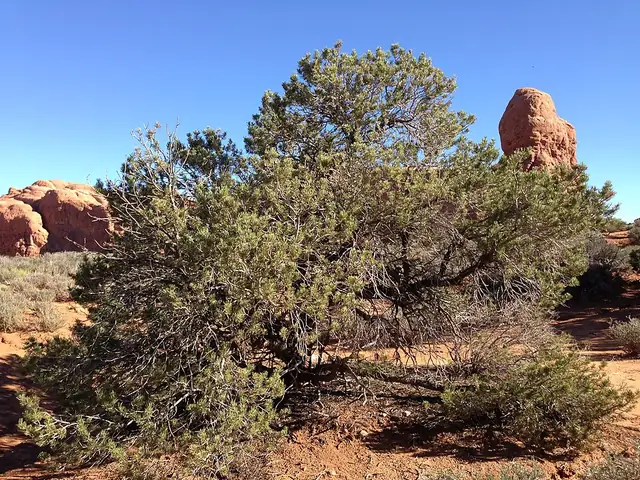 Plant
Two-needle pinyon
Pinus edulis
A short, gnarled pine of the drier Southwest, growing at Mesa Verde, Black Canyon, and Great Sand Dunes, with nuts a jay plants by forgetting them.
-
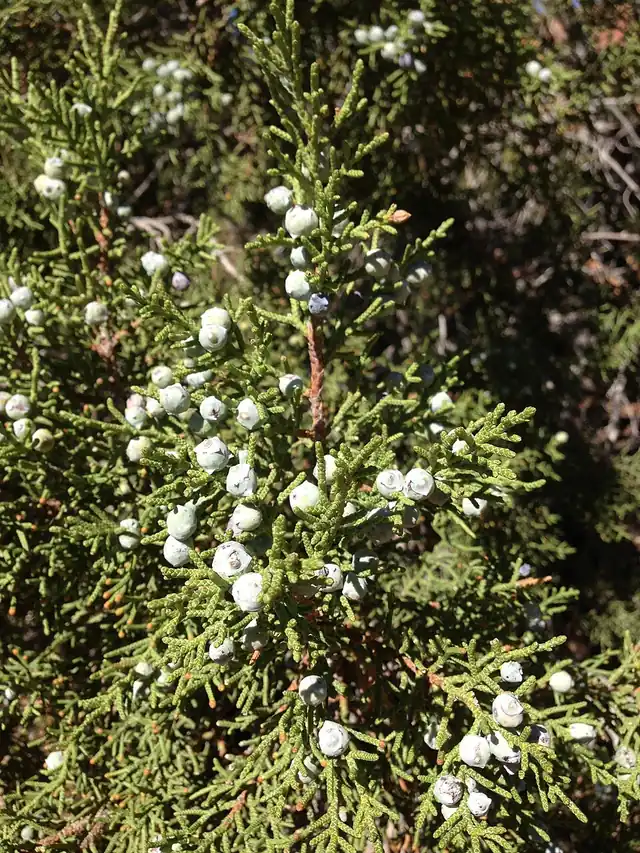 Plant
Utah juniper
Juniperus osteosperma
A short, twisted evergreen of dry canyon country, rooting in cracked rock at Mesa Verde, Black Canyon, Arches, Canyonlands, and Craters of the Moon lava fields.