Elegant trogon
A metallic-green, red-bellied bird of Mexican canyon woodlands that breeds north into the Chiricahua Mountains, the park's specialty trogon.

Elegant trogon at a glance
Trogon elegans EL-eh-gunt TROH-gon; Trogon elegans is TROH-gon EL-eh-ganz
- Type
- Bird · trogon
- Diet
- Omnivore
- Size
- Stout-bodied and square-tailed, about a foot long, a little longer than a robin.
Eats insects, berries, small fruit
It sits motionless on a shaded perch, then sallies out to snatch insects and fruit from leaves and branches.
Should you worry?
None. A trogon is a shy forest bird that keeps to the canopy. Look up, stay quiet, and let it sit.
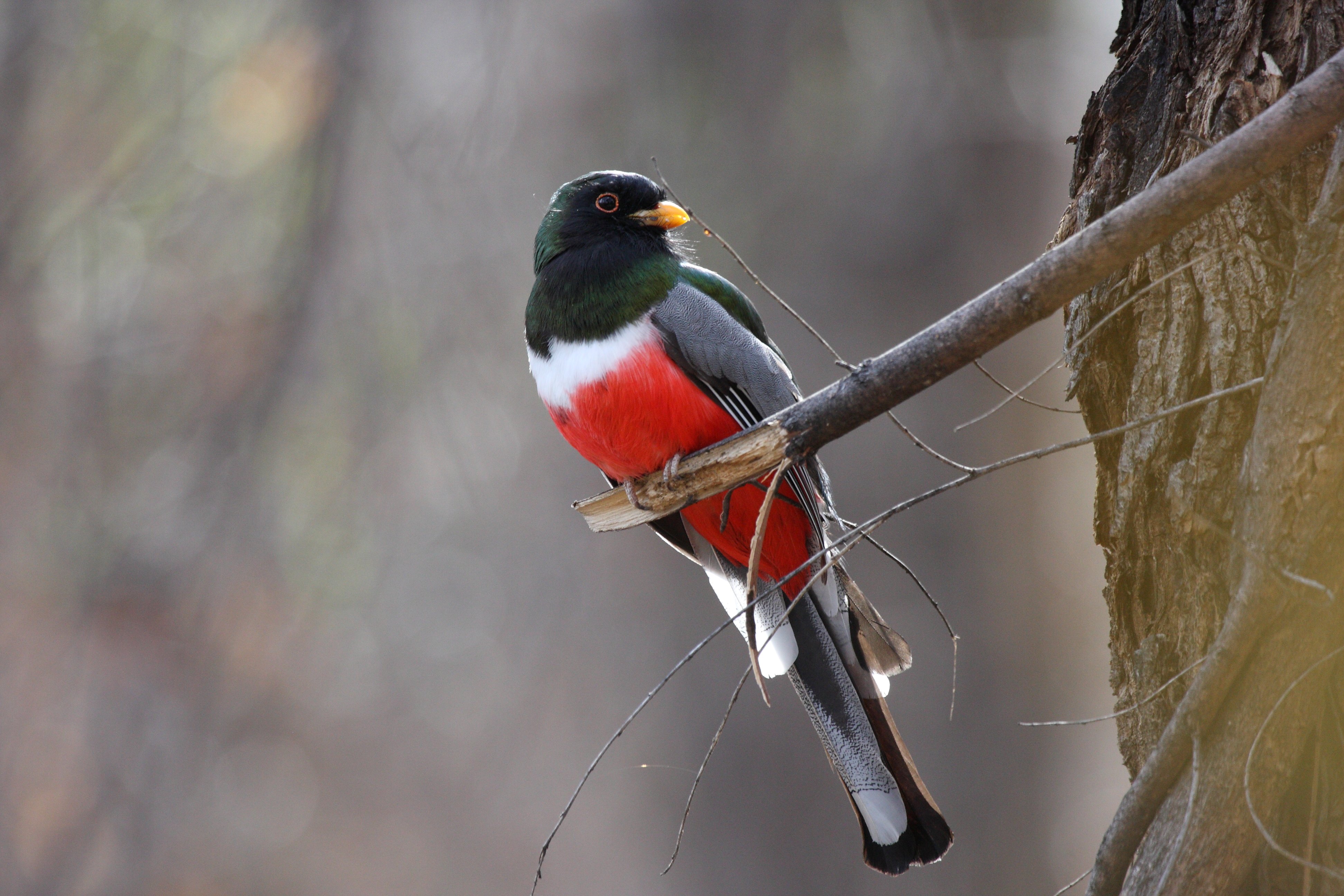
The bird sits so still that the branch seems to have grown a decoration. Green back, red belly, a white band between, and a long tail hanging straight down. Then it turns its head, and the decoration is a bird.
NPS names the elegant trogon among the Mexican species the park’s southern location brings across the border. The Chiricahua Mountains are a sky island, and the canyon creeks grow the sycamores and oaks the trogon breeds in, a few miles north of the range it usually keeps to. Most arrive in April and depart in November. A few stay year-round, but the canyon is quieter in winter.
So the way to look for one is the way the bird behaves. Find shade over water, get quiet, and watch the middle branches, not the treetops. A trogon sallies out for insects and fruit and returns to the same perch, over and over, like a commuter. If you see a flash of red under green, do not reach for the binoculars fast. Reach slow. The bird will still be there, sitting like a decoration, waiting for you to notice.
Did you know?
- NPS names it among the Mexican species the park's southern location brings across the border.
- The male wears a white breast band. The female's is gray, and her back is bronze instead of green.
- Trogons sit so still that finding one is a patience contest, not a scanning contest.
Common questions
Why is the elegant trogon a big deal at Chiricahua?
It is a Mexican species at the northern edge of its range. The American Bird Conservancy names the Chiricahua Mountains an Important Bird Area, and NPS lists the trogon among the borderland birds that cross into the park.
When should we look for one?
Most arrive in April and depart in November, and a few stay year-round. Early morning is the listening window: the repetitive, resonant call carries through the canyon forest.
Why do some guides call it a Coppery-tailed Trogon?
In 2025 ornithologists split Elegant Trogon in two. Cornell now calls the Arizona bird Coppery-tailed Trogon, Trogon ambiguus, and keeps Elegant Trogon for the Central American populations. NPS still lists the park's bird as elegant trogon, so that is the name this page uses.
What does it look like in the trees?
A long-tailed bird sitting upright and still: metallic green above, red below, a white band between. The female is duller, bronze and gray.
Is it guaranteed?
No. It is a specialty, not a common bird. Treat a sighting as a good day, not a plan.