We got up early for the Skyline Trail
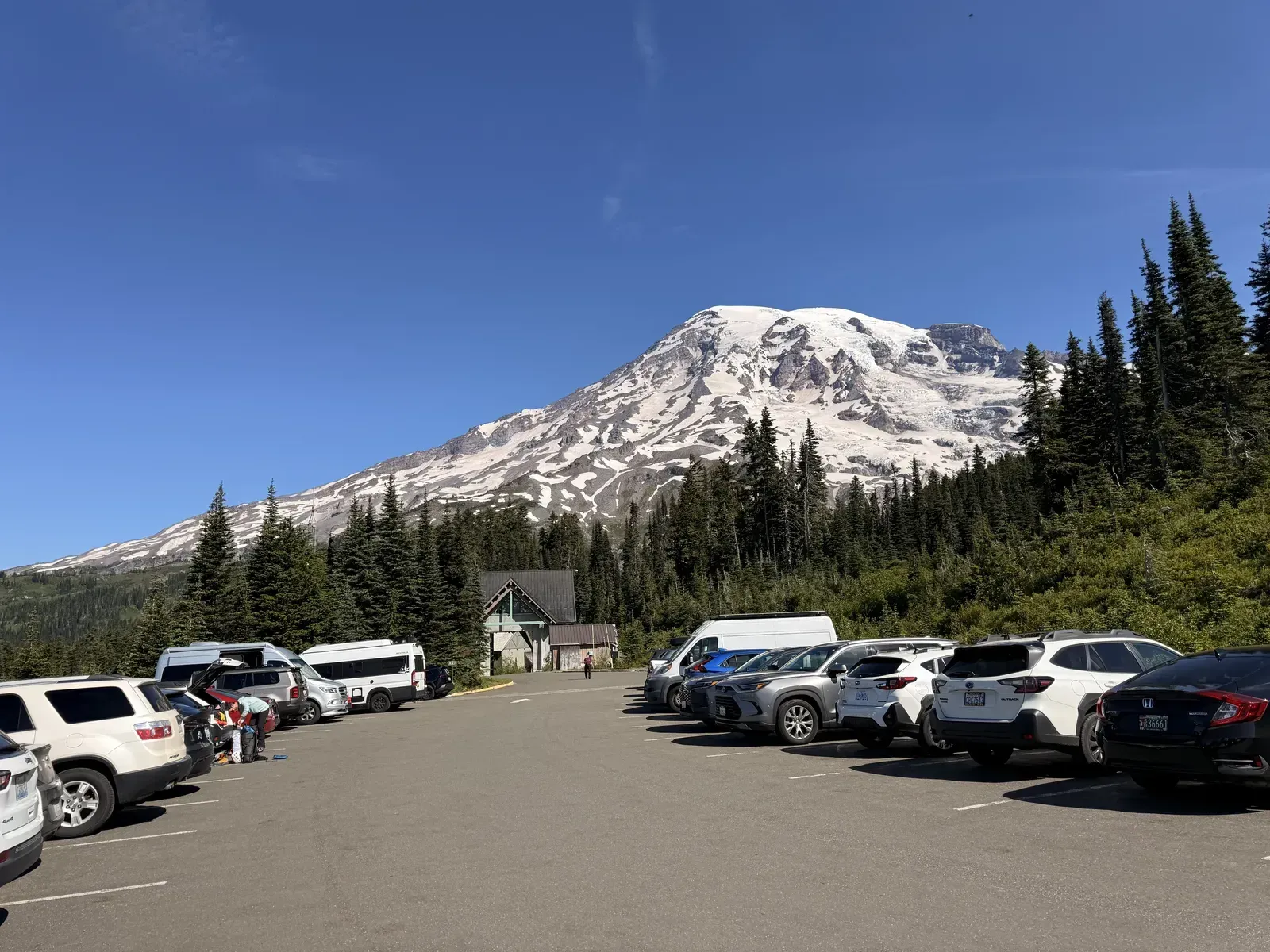
The sign at the Nisqually entrance on Sunday said the park was full. We had wanted the Paradise lot, high up where the trails leave from, and instead we got a line of cars and a ranger waving people back down. So we took what the day would give us. Reflection Lakes held the mountain upside down in the water, a second Rainier hanging under the first, and at Narada Falls the spray came up over the railing and cooled everybody down. Both worth the stop. Both shoulder to shoulder with everyone else who’d had the same Sunday idea. Erika did the math out loud in the van on the way down. If we wanted the lot, we’d have to beat it.
So Monday we were up before Big and Little had opinions about being up, on the road to have the Paradise lot by eight. There was a space when we got there. We took it like we’d won something.
We ate breakfast in the dining room at the Paradise Inn, which is not the Paradise Lodge, whatever my notes say. They broke ground on it in 1916 and opened the doors on July 1, 1917, and spent the twenties and thirties turning it into the building it is
now, part of a National Historic Landmark district held up by a frame of exposed timber you can crane your neck at while you wait for pancakes. Little counted the beams and lost her place twice. The food was good, all of it, which is what you want in front of a hike that climbs the better part of two thousand feet.
We had thrown the spare child-carrier in the van for Little, worried the elevation would be more than her legs wanted. It earned its ride up the mountain.
The Skyline Trail leaves right from Paradise and starts climbing into the meadows. Rainier stands over most of it, an active volcano, 14,410 feet, and the most glaciated peak in the Lower 48, with twenty-eight named glaciers still working the rock. The mountain the associated tribes, the Nisqually, Puyallup, Cowlitz, Muckleshoot, Squaxin Island, and Yakama among them, have long known as Takhóma. You can’t walk that trail without looking up at it. The rest of the walk works on you lower down: alpine creeks running hard, meltwater sheeting off the rock, the subalpine meadows all going off at once because up here the snow only clears for a few weeks and every flower has to make its whole year happen in that window.
Higher up there was still snow in the shaded folds of the trail. Big found a patch and packed a snowball in July and looked pleased with the whole arrangement. Little sat down in another one and made a small angel and got up soaked and did not care.
We spent a while near a family of hoary marmots, the big whistling rodents of the high country, who watched us the way you watch weather, without much concern. Enough hikers pass this trail that the marmots have stopped reading us as anything worth running from. Then, resting a stretch later with a few other people, we looked down instead of up, onto a glacier below the trail, and there were three mountain goats bedded in the snow, not doing anything, just being goats on a mountain they are built for.
It was hard for Little and mostly a stroll for the rest of us. We carried food and something like eight liters of water and stopped to eat whenever anyone asked. She did the uphill on her own where she could and rode the carrier where she couldn’t, and neither kid complained the way the day gave them every excuse to. I was proud of both of them, which I’ll say here and not make them sit through out loud.
We meant to see Myrtle Falls on the way back, but the crowd was thick at both ends of it and the viewpoint had a line, and after five miles nobody in our family wanted to stand in one more line to look at one more thing. We’d seen water all day. We let it go.
Then we drove down the mountain, and because we live in the van we got to shower before dinner, which is one of the quiet luxuries nobody tells you about. We ate at Wildberry in Ashford, Himalayan and Nepalese food a few minutes outside the gate. Big had a burger and Little had a Caesar salad and then both of them fell hard for the momos and for the walls, which are hung with old ropes and axes and photographs from high mountains. Our server was also the owner, Lhakpa Gelu Sherpa, a Nepali climber who set a speed record on Everest and has summited it many times and has climbed Rainier dozens of times besides, which is more times than most people drive past it. At the end of the meal Big got up on his own, walked over, and told him, “I’m really impressed by what you achieved.” The man smiled and gave a small bow and went back to running his restaurant.