Halfway up the dune
The lights came up in the visitor center theater and Big was already reaching for his jacket. What I remember is the sand in the film, grains of it lifted and dropped and piled, and Big standing up before the credits finished, ready to go stand on the thing he had just watched.
Outside, the air was cold. That was the surprise. The sun was well up over the Sangre de Cristo, the lot was full of light, and the wind across it had ice in it. We had come in the day before and set up at Piñon Flats, the park’s main campground, in the pinyon and juniper below the dunes, with the chairs still out and the tablecloth still clipped down.
The morning had been the visitor center. A ranger talked about wasps, beneficial ones, and how much of the landscape around here runs on insects doing work nobody notices. Erika took Little and the schoolwork back to the car and stayed there. That was the arrangement, and it was the reason the rest of us got to go out at all.
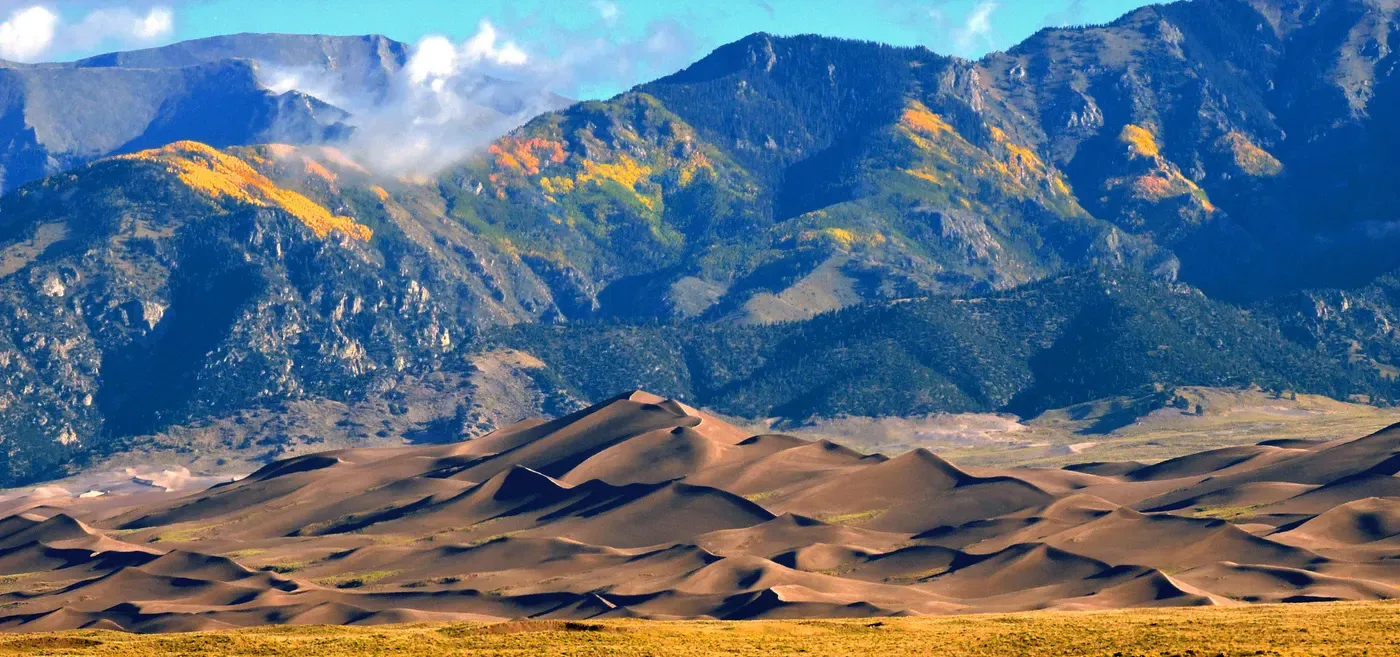
The dunes are the floor of the San Luis Valley, rearranged. Sand comes off the valley and out of the creeks, the wind picks it up, and the Sangre de Cristo catches it in the crook of the range, which is the short version of what the Park Service’s geology page says at more length. They are the tallest dunes in North America, per the park’s FAQ.
Medano Creek runs along the foot of them. In spring it comes down in surges, a wave of water spreading across the sand and draining away and then another one behind it. In October the creek was not running.
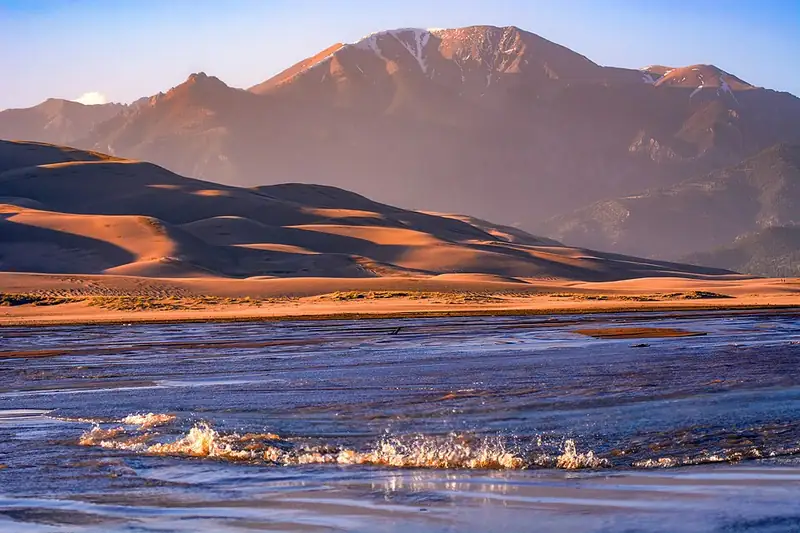
We started up. We were still recovering from the flu. I had been unsure about the climb before we left the van. The first hundred yards are the easy ones, hard sand near the creek, and then the ground goes soft and every step gives back about half of itself. You learn to walk on the ridges where the wind has packed it. You learn it badly, the first time.
The dunes run one way. Turn ninety degrees and there are the mountains, close enough that the snow in the gullies is legible, the rock brown and gray under it. Turn again and there is a hillside of aspens in fall, yellow going to orange, with the dark pines behind them. Three places in one place. Big kept turning. He wanted the edge where sand stops and something else starts, and he walked the ridgeline looking for it.
The sun was on the sand and the sand was not cold. I had read the park’s summer warning before we came, that surface sand can reach about 150 degrees on a summer afternoon, per the park’s FAQ, and I had filed it under July. This was October and the air was cold and my hands were cold, and the sand under my palm when I sat down was warm, then warmer, then hot enough that I moved my hand.
I stopped before the top. Not at the top of anything. The climb had stopped being a walk and become a negotiation, and I sat down in the lee of a ridge to catch my breath. Big went on ahead and came back. Down at the bottom the van was the size of a beetle. The dry creek bed was a bright line. Erika and Little were in the lot with the windows down, and from where I sat I could not see either of them, only the van.
We came down in long sliding steps, sand filling our shoes at the heel, and drove back to the campground. I was tired in a way that felt out of proportion to the distance.
This valley is Ute, Jicarilla Apache, Diné, and Pueblo country. The park’s affiliated tribes page lists 29 tribes and pueblos with ties here, and the dunes carry their own names in Ute, Jicarilla Apache, and Diné. The sand that stopped me is not new sand.
That night we made a plan for the morning. Big wanted the top. Before sunrise Erika and Big went out with the headlamps and a bottle each, and Little and I stayed behind to clean the campground and the car, which expands to fill whatever time you give it. We folded the tablecloth. We swept sand out of the footwells with a dustpan and put it in a bag, which felt ridiculous and was the only thing that worked.
Then we made lunch. Little made the sandwiches and I did the cutting, and she lined them up on the board in rows and counted them over.
Erika and Big came back down with sand in their hair and up their sleeves and the particular quiet of people who have been up there and back. They had reached the top of the dunefield. Big did not say much. He ate a sandwich and then another one.
We went back to the visitor center after that, and the junior ranger badges were handed over. The wetlands were out of season. We read the sign anyway, and then we went out and looked at them.
On the way out we stopped at Colorado Gators Reptile Park. Big held a crocodile. Little held it after him and fed it, and then both of them helped carry turtles outside to a pen.
We drove out with the windows down. There is still sand in the van. It comes out of the mats when you lift them and out of the seams of the seats when you press them, and it will be in there when we get to the next park and the one after that. Little handed out the last two sandwiches from the cooler while I drove, one for her, one for Big, and none for me, because I had already had mine.
Where this happened: Great Sand Dunes National Park and Preserve