Plan your visit
Joshua Tree National Park Trip Planner
Tell us how long you have, who's along, and the season. We'll group it by region so you drive less and see more.
Day 1 Pinto Basin & Cholla (transition) + Cottonwood (south low desert)
-
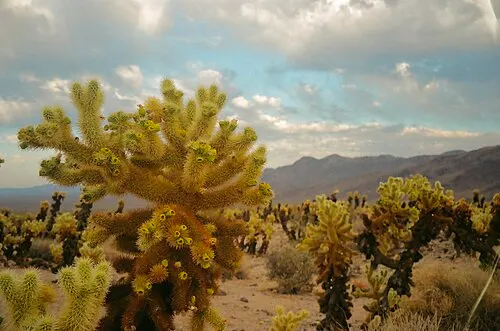
Cholla Cactus Garden
A quarter-mile loop through a dense stand of teddybear cholla that glows when the low sun is behind it, at the transition between the high Mojave and low Colorado desert. Don't touch — the spines detach.
-
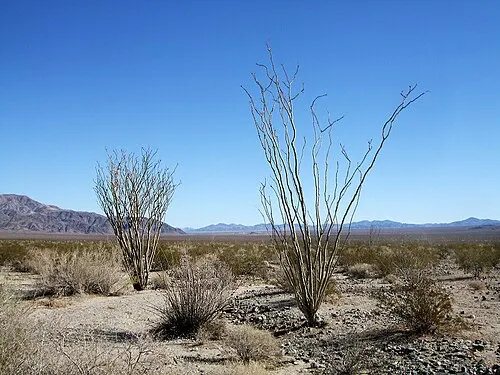
Ocotillo Patch
A roadside stand of ocotillo on Pinto Basin Road that leafs out and tips red with bloom after spring rain — a quick stop that marks the drop into the low Colorado desert.
-
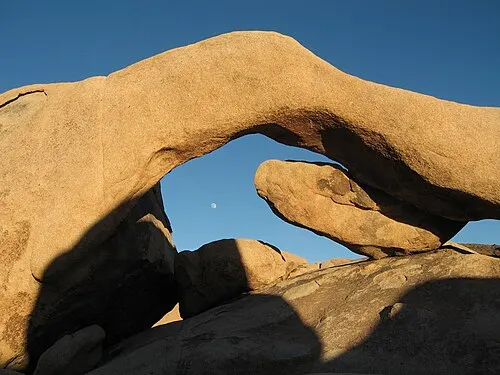
Arch Rock
A short loop from the White Tank area to a granite arch, with more of the park's rounded boulders to scramble along the way. Easy, and doable in a summer morning before the heat.
-
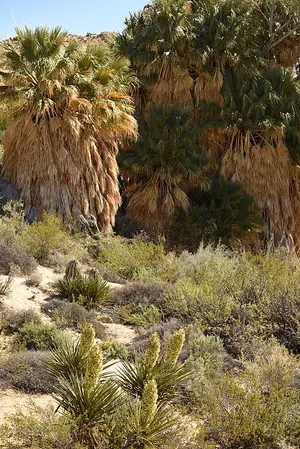
Cottonwood Spring
A fan-palm and cottonwood oasis near the south entrance, a water source used by the Cahuilla and later by prospectors. Bird-rich in the cool months; brutally hot in summer.
Day 2 Park Boulevard (west high desert)
≈50 min drive from Pinto Basin & Cholla (transition)
-
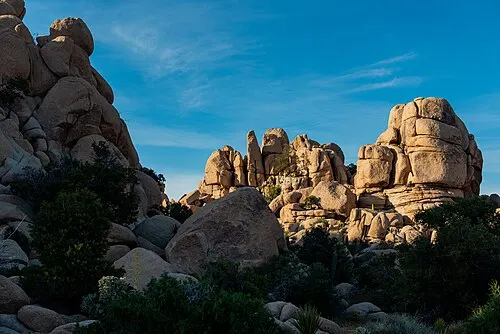
Hidden Valley
A one-mile loop into a bowl ringed by rock, once used to hide rustled cattle — the easiest way into the boulder scenery the park is known for. Start early on a summer morning; there's little shade.
-
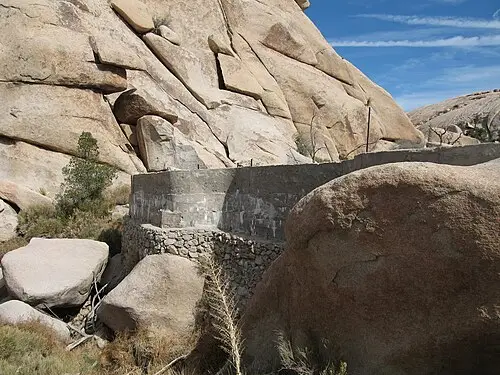
Barker Dam Loop
A short loop past a cattle-era dam that holds rainwater and a panel of Serrano and Chemehuevi petroglyphs. Bighorn sheep sometimes come to the water at dawn.
-
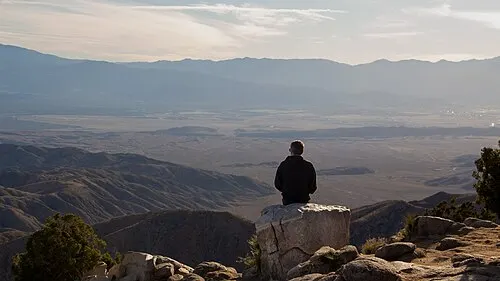
Keys View
A drive-up overlook at 5,185 feet looking across the Coachella Valley to the San Andreas Fault and, on a clear day, the Salton Sea and Mexico. Cooler than the valley floor and a good sunset stop.
-
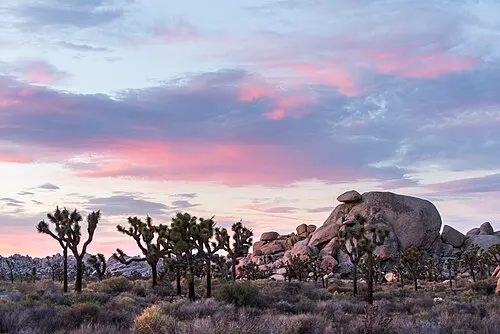
Cap Rock at sunset
A short, mostly accessible loop around a boulder pile capped by a balanced rock, popular for the light at the end of the day. Interpretive signs on the Joshua trees along the way.
-
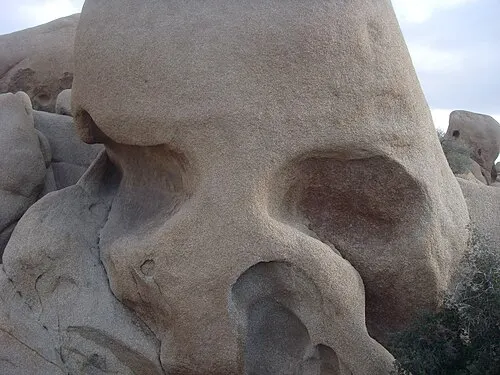
Skull Rock
A roadside boulder eroded into a skull, with a nature trail looping through the rocks on either side of the road — an easy, kid-pleasing stop near Jumbo Rocks.
-
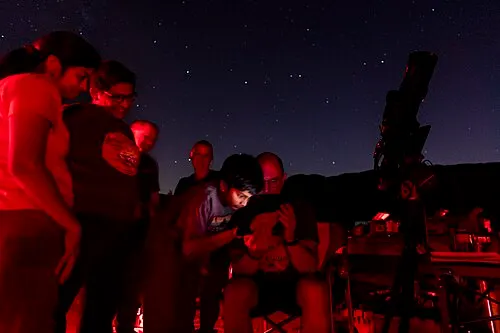
Stargazing
Joshua Tree is an International Dark Sky Park; on a moonless night the Milky Way is easy overhead from any pullout, and the park runs a Night Sky Festival most years. Cap Rock and the open flats near Hidden Valley are easy dark spots.
If you have more time
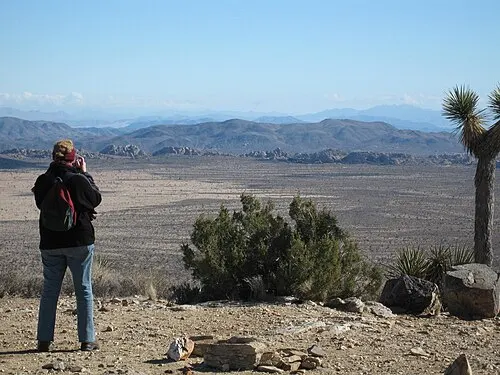
Ryan Mountain
A steep, exposed climb to a 5,457-foot summit with the widest view in the park's high desert. No shade and no water — a cool-season hike; skip it in summer heat.
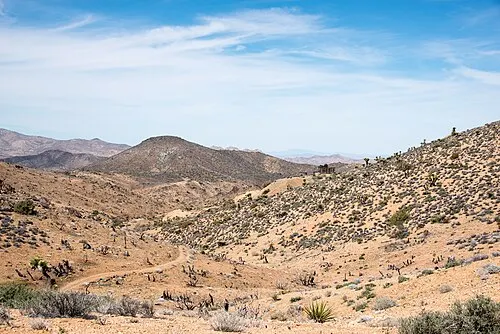
Lost Horse Mine
A loop or out-and-back to one of the best-preserved gold mills in the California desert, worked into the 1930s. Long and exposed — carry water and go in the cool months.
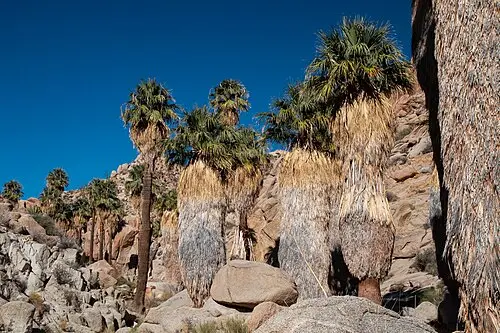
Lost Palms Oasis
A rolling desert hike from Cottonwood Spring to the largest fan-palm oasis in the park, tucked in a canyon. Long, exposed, and waterless — a cool-season outing only.
Plans by trip length
One day in Joshua Tree National Park
In one day, Park Boulevard (west high desert): Hidden Valley, Barker Dam Loop.
Two days in Joshua Tree National Park
Two days adds Pinto Basin & Cholla (transition): Cholla Cactus Garden, Ocotillo Patch; Cottonwood (south low desert): Cottonwood Spring.
Best time to visit Joshua Tree National Park
The best time to visit Joshua Tree National Park is spring, fall and winter, when most of the park is open. Summer heat makes the exposed desert trails risky in the middle of the day — start at dawn or save them for a cooler month.
Trails on this plan
- Cholla Cactus Garden0.25 mi · 10 ft gain · easy · source
- Barker Dam Loop1.1 mi · 50 ft gain · easy · source
- Arch Rock1.4 mi · 50 ft gain · easy · source
- Ryan Mountain3 mi · 1,069 ft gain · strenuous · source
- Lost Horse Mine4 mi · 550 ft gain · moderate · source
- Lost Palms Oasis7.2 mi · 500 ft gain · strenuous · source
Common questions
How many days do you need for Joshua Tree National Park?
Joshua Tree National Park fills about 2 days at an easy pace — Cottonwood (south low desert) & Pinto Basin & Cholla (transition), Park Boulevard (west high desert).
Can you see Joshua Tree National Park in one day?
Yes — pick one area: Park Boulevard (west high desert) (Hidden Valley, Barker Dam Loop, Keys View). You'd skip Cottonwood (south low desert) and Pinto Basin & Cholla (transition), but it's a full day.
What's the best time to visit Joshua Tree National Park?
Aim for spring, fall and winter; that's when its roads and trails are fullest.
Is Joshua Tree National Park good with young kids?
Yes — the easier, shorter stops work well with little kids: Cholla Cactus Garden, Ocotillo Patch, Arch Rock, Cottonwood Spring.
Is Joshua Tree National Park doable with limited mobility?
Several stops are short and low-effort: Cholla Cactus Garden, Ocotillo Patch, Cottonwood Spring, Keys View. Check current trail and road conditions with the park.