Standing Rock Sioux Tribe
A nation today
Background
The Standing Rock Sioux Reservation straddles two states. It covers all of Sioux County in North Dakota and all of Corson County in South Dakota, with smaller parcels in Ziebach and Perkins counties. The Bureau of Indian Affairs records that the Tribe exercises its sovereign rights under the Treaty of April 29, 1868 and under tribal law, and that the reservation's territory is defined by the Act of March 2, 1889. Article 2 of the 1868 treaty set apart a district of country beginning on the east bank of the Missouri where the forty-sixth parallel crosses it and running west to the one hundred and fourth meridian of west longitude. The Tribe's headquarters and the Standing Rock Agency both sit at Fort Yates, North Dakota, which the BIA page describes as a former army post.
Parks on its homelands
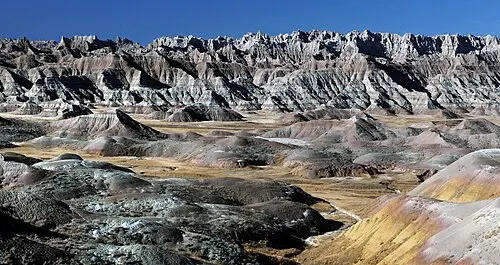
Badlands National ParkStanding Rock's own history records that the Great Sioux Reservation set up by the 1868 Fort Laramie Treaty covered all of present-day South Dakota west of the Missouri River, which is country the park sits in, and that article 11 kept off-reservation hunting rights over a far larger area to the south and east. Source
Sources
- https://www.govinfo.gov/content/pkg/FR-2026-01-30/html/2026-01899.htm
- https://www.bia.gov/regional-offices/great-plains/north-dakota/standing-rock-agency
- https://www.archives.gov/milestone-documents/fort-laramie-treaty
- https://www.nps.gov/badl/associated-tribes.htm
Checked September 2026.