Santa Rosa Band of Cahuilla Indians
A nation today
Background
The Santa Rosa Indian Reservation is four non-contiguous parcels, and the largest of them is at Sew'ia, or New Santa Rosa, also called Vandeventer Flat, where most residents live. It occupies 11,630 acres in Riverside County between Palm Springs and Anza. Elevation runs from 4,200 feet at Sew'ia to 8,700 feet at Toro Peak, where the Band runs a telecommunications relay station. A General Council of adult members elects a Tribal Council for two-year terms, and the council is a chair, a vice-chair, a secretary, a treasurer and three members, with the secretary and treasurer appointed by the chair. The Band counts itself as one of the four Mountain Cahuilla tribes, alongside the Cahuilla Band of Indians, the Ramona Band of Cahuilla Indians and the Los Coyotes Band of Cahuilla and Cupeño Indians, and its culture page records 156 recognized tribal members, of whom about 144 live on the reservation. The Environmental Department, set up in 2000, runs on three federal grants and lists water, land, soil, rock, vegetation, plants, animals and minerals as the resources it protects.
Visit and learn
Santa Rosa Band of Cahuilla Indians's own site
Tribal lands have their own laws. Check the nation's site before you visit.
Parks on its homelands
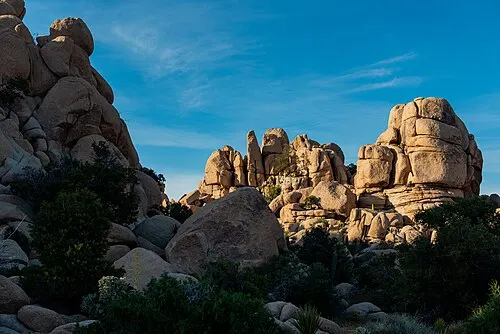
Joshua Tree National ParkThe Santa Rosa Band of Cahuilla Indians says its members descend from three Cahuilla clans that held Toro Peak, Coyote Canyon, the Garner Valley, and the land of the present reservation. Those clans spent the winter in the lower desert canyons and moved up to Toro Peak and the pines in the heat of summer. Source
Programs
Environmental Department
Established in 2000, the office has three staff, an Environmental Director who reports directly to the Tribal Council, an Environmental Assistant and a Water Technician, and states its mission as protecting the health of the people and the environment of the Santa Rosa Indian Reservation. It is funded by three primary federal grants: Indian General Assistance Program, Clean Water Act section 106 and Clean Water Act section 319. It also works with the Natural Resource Conservation Service and other agencies on conservation programs for tribal governments.
Sources
- https://www.govinfo.gov/content/pkg/FR-2026-01-30/html/2026-01899.htm
- https://santarosa-nsn.gov/culture
- https://santarosa-nsn.gov/tribal-government
- https://santarosa-nsn.gov/environmental-department
Checked September 2026.