Las Vegas Paiute Tribe
A nation today
Also known as Las Vegas Tribe of Paiute Indians of the Las Vegas Indian Colony
Background
The Tribe adopted its own tobacco excise tax in 1977 under Resolution 10-27-77B, a right Nevada law later affirmed in NRS 370.0751. Ten tribal departments run out of addresses on Paiute Drive and Paiute Circle, among them Health and Human Services, a police department, a tribal court, an education program, a child development center and an engineering department. The tribal court works under the Tribal Constitution and Tribal Code, with criminal, juvenile, civil and traffic divisions, orders of protection, Indian Child Welfare Act proceedings, a public defender and a guardian ad litem. An education committee of seven volunteer members meets monthly to review financial aid and awards it on academic merit with a 2.0 GPA minimum. The caps are $5,000 a semester at a community or junior college, $8,000 a semester at a university and $6,000 per six-month period at a Las Vegas vocational school. A wellness center in Las Vegas, in a building with a regulation wood floor gym, retractable hoops, workout areas, yoga rooms and a teaching and demonstration kitchen, serves 10,000 Native Americans from tribes across Clark County.
The tribe calls its people Tudinu, the Desert People, part of the Nuwu. Its home in the city began on December 30, 1911, when Helen J. Stewart deeded 10 acres of spring-fed land for the Las Vegas Paiute Colony. The tribal constitution was approved in 1970, and Congress added the Snow Mountain Reservation in 1983. Park Service pages use both the short name and the longer federal name.
Visit and learn
Las Vegas Paiute Tribe's own site
Tribal lands have their own laws. Check the nation's site before you visit.
Parks on its homelands
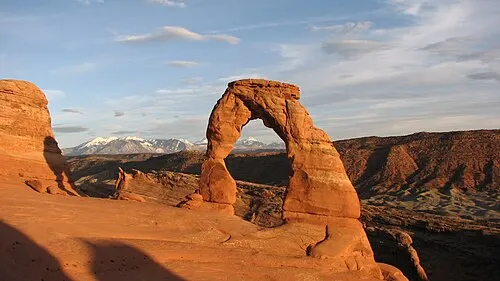
Arches National ParkThe Las Vegas Tribe of Paiute Indians of the Las Vegas Indian Colony is one of the ancestral homelands the park names for Arches. Source
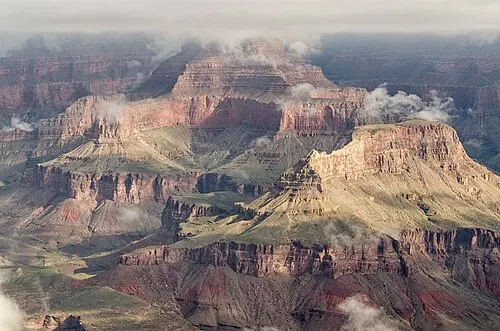 Grand Canyon National Park
NPS counts the Southern Paiute along the southwestern edge of the Colorado Plateau in southern Nevada, southwestern Utah, and northeastern Arizona. Their reservation grew from ten acres given by a ranch owner in 1911 to 3,800 acres added by Congress in 1983. Source
Programs
Health and Human Services
Operated by the Tribe in collaboration with Indian Health Services, the clinic provides medical, dental, optical, pharmacy and behavioral health outpatient care to tribal citizens of any federally recognized tribe, not only to Las Vegas Paiute citizens. It lists illness diagnosis and treatment, adult, geriatric, adolescent and pediatric care, diabetes management, audiology, nutrition counselling, well women exams and podiatry. A prescription refill line answers twenty-four hours a day with next-workday pickup. The department states plainly that it is not an emergency or urgent care facility.
Education Program financial assistance
Awards for tribal citizens, their biological children and grandchildren, with an Education Assistance Agreement that sets out repayment terms if a program is not completed. Funding covers tuition and books at trade schools, community and junior colleges and universities, summer school and academic field trips, and an academic trip award includes campus tours for one student and one chaperone and asks for a one-page essay two to three weeks after the trip.
Affiliations
Arches National Park
Arches states that the park lies within the homelands of ten tribes and governments. Its list carries the Las Vegas Tribe of Paiute Indians of the Las Vegas Indian Colony, the Tribe's longer federal name.
Grand Canyon National Park
Grand Canyon's list of eleven tribes with historic connections to the lands and resources now found inside the park gives Nevada as the Las Vegas Paiute Tribe's state.
Sources
- https://www.govinfo.gov/content/pkg/FR-2026-01-30/html/2026-01899.htm
- https://www.lvpaiute.gov/
- https://www.lvpaiute.gov/tribal-court
- https://www.lvpaiute.gov/education
- https://www.lvpaiute.gov/hhs
Checked September 2026.