Fremont culture
A people
Background
Archaeologists named these people the Fremont culture after the Fremont River that runs through Capitol Reef, and the park's chronology puts them in the area from about 300 to 1300 CE. NPS writes that they lived across Utah and into the adjacent parts of Idaho, Colorado and Nevada, in natural rock shelters and in pit houses dug into the ground and roofed with brush. They hunted and gathered and also farmed corn, beans and squash along waterways and floodplains, in small, loosely organised bands of several families. Their basketry stands out: woven in what NPS calls a one-rod-and-bundle style. The park records that oral traditions associate the Fremont culture with the Hopi, Zuni and Paiute, that Navajo oral traditions link them to the area as well, and that Capitol Reef is also part of the historic Ute territory. NPS words it as association, not descent. Great Basin National Park's own Fremont page records that the connection between the Fremont and the modern tribes of the Great Basin is unclear.
Parks on its homelands
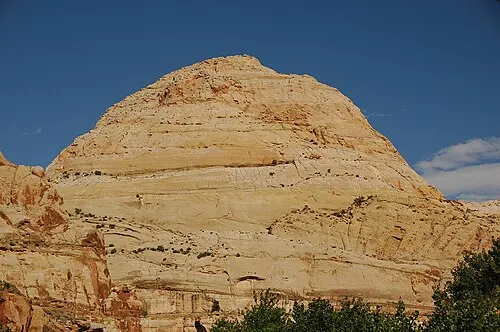
Capitol Reef National ParkArchaeologists call these people the Fremont Culture, named for the Fremont River that runs through Capitol Reef. They lived in pit houses and rock shelters in the park from about 300 to 1300 CE, farming corn, beans and squash along the waterways and floodplains. Source
Sources
- https://www.nps.gov/care/learn/historyculture/fremont.htm
- https://www.nps.gov/grba/learn/historyculture/fremont-culture.htm
Checked September 2026.