Colorado River Indian Tribes
A nation today
Background
The reservation was created in 1865 by the federal government for Indians of the Colorado River and its tributaries, originally for the Mohave and Chemehuevi, and Hopi and Navajo people were relocated there in later years. Government sits with a nine-member Tribal Council led by a chairman and a vice-chairman, elected by the membership to four-year terms, and the Tribe's own department list runs to more than three dozen offices, among them a Tribal Historic Preservation Office, an Environmental Protection Office, a Fish and Game Department, a library, a museum and a senior citizens program. Its Environmental Protection Office describes the reservation as 45 miles long and 12 miles wide, with 114 linear miles of Colorado River shoreline across California and Arizona, more than 200 acres of wetlands, 240 miles of irrigation canals and 152 miles of drains. The Tribe's economic base has long been agriculture on the river's banks, where it grows cotton, alfalfa and sorghum.
Visit and learn
Ahakhav Tribal Preserve
Established in 1995, the preserve is 1,253 acres of wilderness with a 3.5 acre park around a reconstructed Colorado River backwater. The Tribe says it offers fishing, canoeing, birding and swimming, a 4.6 mile fitness trail, and playground and picnic facilities, and that it exists both to give the surrounding community and visitors a place to learn and to serve as a revegetation area for endangered and threatened plants and animals native to the Lower Colorado River Basin.
CRIT Museum and Gift Shop
The Tribe's museum and gift shop is at 133 West Riverside Drive, inside the Moovalya Shopping Plaza in Parker. The Tribe lists its hours as Monday to Friday, 8 a.m. to 5 p.m., closed weekends and holidays.
Colorado River Indian Tribes's own site
Tribal lands have their own laws. Check the nation's site before you visit.
Parks on its homelands
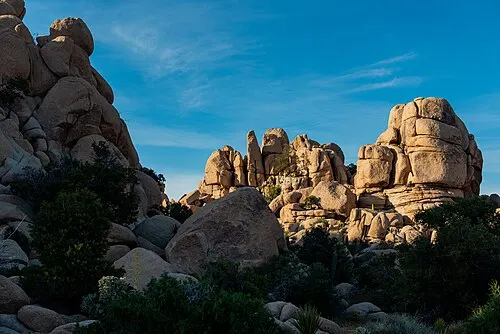
Joshua Tree National ParkThe Colorado River Indian Tribes are four tribes in one government, the Mojave, Chemehuevi, Hopi, and Navajo, and the reservation covers almost 300,000 acres along both banks of the Colorado River. Its main community is Parker, Arizona. Source
Programs
Environmental Protection Office
Based in Poston, Arizona, the office states its mission as preserving, protecting and maintaining the quality of the environment on the Colorado River Indian Reservation, and works at tribal, state, local and federal level to hold to environmental standards. It is developing a Nonpoint Source Control Program under Section 319 of the Clean Water Act, which would let the Tribes write their own nonpoint source regulations into tribal law, and it notes that most water quality problems on the reservation now come from nonpoint sources such as agriculture, urban development, mining, construction and land disposal.
Water Resources
The Tribe's Water Resources program works under the Indian Self-Determination and Education Assistance Act and describes its role as sustainable river stewardship through measurement, monitoring and management of the Tribe's water resources.
Tribal Public Library and Archive
The library sits in the Tribal Administrative Center at the junction of 2nd Avenue and Mohave Road in Parker, Arizona, and the Tribe states that the facility is open to tribal members and to the general public. Hours are Monday to Friday 8:00 a.m. to 5:00 p.m. and Saturday 9:00 a.m. to noon, closed Sunday. Services include free Wi-Fi and library cards, a computer lab with desktops, tablets and laptops, books, movies and magazines, and STEM programs, arts and crafts, and cultural activities held monthly.
Sources
- https://www.govinfo.gov/content/pkg/FR-2026-01-30/html/2026-01899.htm
- https://crit-nsn.gov/crit_contents/about/
- https://crit-nsn.gov/crit_contents/government/
- https://crit-nsn.gov/crit_contents/departments/
- https://crit-nsn.gov/critepo/index.shtml
Checked September 2026.