Cahuilla Band of Indians
A nation today
Background
The Band's own history page places its traditional territory across a large area of Riverside and San Diego counties that includes the San Jacinto and Santa Rosa Mountains, and states that the Cahuilla language is still spoken by some members. Its culture page describes the Mountain Cahuilla as living in small, dispersed communities with a communal approach to decision-making and resource management, and as skilled basket weavers whose baskets were used for food storage and transportation. The Band runs a Cultural Department whose stated purpose is to preserve and protect cultural resources inside Cahuilla's traditional territories, working alongside its Tribal Historic Preservation Officer when developers and agencies need to avoid or mitigate adverse effects, and it field cultural monitors. Its Tribal Environmental Protection Office, founded in 2005, is funded by General Assistance, Clean Water Act Section 106 and Non-Point Source Section 319 grants, and the Band passed an ordinance in November 2005 against discharging pollutants into the waters of the Cahuilla Reservation.
Visit and learn
Cahuilla Band of Indians's own site
Tribal lands have their own laws. Check the nation's site before you visit.
Parks on its homelands
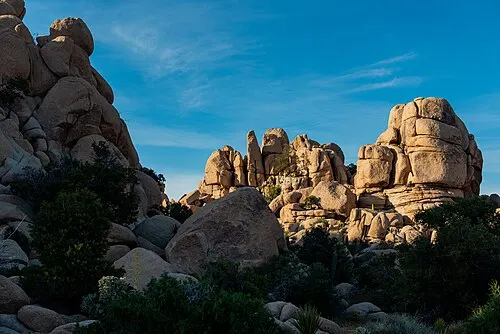
Joshua Tree National ParkThe Cahuilla Band of Indians says it is Mountain Cahuilla, Qawishpa Cahuillangnah, one of the original peoples of Southern California. Its government is in Anza, California. Source
Programs
Cahuilla Cultural Department
The department's stated purpose is to preserve and protect cultural resources within Cahuilla's traditional territories. It works alongside the Band's Tribal Historic Preservation Officer in consulting with developers and agencies to avoid or mitigate adverse effects on cultural resources, and its monitoring program places a cultural monitor on projects where it makes a difference. The department publishes a quarterly newsletter and can be reached at 52701 California Highway 371 in Anza, California.
Cahuilla Tribal Environmental Protection Office
Founded in 2005 and funded mainly by federal grants, the office is built around three programs: the General Assistance Program, Clean Water Act Section 106, and Non-Point Source Section 319. Its services include solid waste collection and water monitoring, and it publishes the air quality reading for the reservation along with a monthly newsletter.
Seniors and Elders (Aswet) Committee
The Band describes the committee as promoting cultural awareness of its customs and traditions, improving cultural ties with other tribes, and giving the Band's seniors and elders the chance to attend social and cultural events and gatherings. It also organizes travel and recreational trips and group outings for members.
Sources
- https://www.govinfo.gov/content/pkg/FR-2026-01-30/html/2026-01899.htm
- https://cahuilla-nsn.gov/about/history/
- https://cahuilla-nsn.gov/about/culture/
- https://cahuilla-nsn.gov/tribal-administration/cultural/
- https://cahuilla-nsn.gov/tribal-administration/environmental-protection-agency/
Checked September 2026.