Augustine Band of Cahuilla Indians
A nation today
Background
The Band is Desert Cahuilla, and its own history describes a Cahuilla people divided into two moieties, Wildcat, or Tuktum, and Coyote, or Istam, with each person taking the moiety of their father. The moieties were made up of sibs that could number up to 2,000 and lived in clusters of villages; a village held up to 200 people across three to ten lineages, kept its own territory for gathering and hunting, and handled its own disputes. The Desert Cahuilla dug their own water wells, which the Band calls temakawomal, or earth olla, descending in a series of stair-steps as the water table dropped. A renewable energy operation begun in 2008 grew from a 1.1 megawatt photovoltaic plant at the Augustine Solar Energy Park to about 25,000 panels with a capacity above three megawatts, and the Band also farms 33 acres of tribal land organically.
A timeline in the Nation's own words
1820
Captain Vee Vee Augustine is born
Augustine Band of Cahuilla Indians, published timeline plaques (read 2026-10-03)
mid 1800sCulture
The Tribe flourishes: 22 villages recorded, population estimated in the thousands
Augustine Band of Cahuilla Indians, published timeline plaques (read 2026-10-03)
1856Recognition
US Land Office surveyors record a Cahuilla village that later becomes the Augustine Reservation
Augustine Band of Cahuilla Indians, published timeline plaques (read 2026-10-03)
29 December 1891Recognition
Congress formally establishes the Augustine Reservation
Augustine Band of Cahuilla Indians, published timeline plaques (read 2026-10-03)
1900sDispossession
The Augustine Band of Mission Indians struggles for existence and is almost eradicated from disease brought by Europeans
Augustine Band of Cahuilla Indians, published timeline plaques (read 2026-10-03)
1951Dispossession
The remaining members of the Tribe decrease to only 11
Augustine Band of Cahuilla Indians, published timeline plaques (read 2026-10-03)
1972Dispossession
Roberta Augustine, Captain Vee Vee's great-granddaughter, is the last surviving adult Tribal member; she has three children, Mary Ann, Gregory and Herbert
Augustine Band of Cahuilla Indians, published timeline plaques (read 2026-10-03)
1988Recognition
Mary Ann, Gregory and Herbert sign a resolution that forms, recognizes and sets the terms of the General Council of the Augustine Band of Mission Indians
Augustine Band of Cahuilla Indians, published timeline plaques (read 2026-10-03)
1994Dispossession
Gregory and Herbert pass away, leaving Mary Ann as the sole adult Tribal member
Augustine Band of Cahuilla Indians, published timeline plaques (read 2026-10-03)
2002
Augustine Casino opens
Augustine Band of Cahuilla Indians, published timeline plaques (read 2026-10-03)
2004Name changed
A resolution changes the legal name of the Tribe to the Augustine Band of Cahuilla Indians
Augustine Band of Cahuilla Indians, published timeline plaques (read 2026-10-03)
2008
The Tribe develops a renewable energy operation grown to 25,000 solar panels, more than three megawatts
Augustine Band of Cahuilla Indians, published timeline plaques (read 2026-10-03)
2014
Grading and farm work begins for a 50-acre sustainable farm
Augustine Band of Cahuilla Indians, published timeline plaques (read 2026-10-03)
2016
Mary Ann's daughter Amanda Vance becomes Tribal Chairperson; son William Vance appointed Vice-Chairperson and Treasurer; daughter Ronnie Vance appointed Secretary
Augustine Band of Cahuilla Indians, published timeline plaques (read 2026-10-03)
2016
The Tribe launches a $5 million casino enhancement project
Augustine Band of Cahuilla Indians, published timeline plaques (read 2026-10-03)
2017
Mary Ann Martin passes away
Augustine Band of Cahuilla Indians, published timeline plaques (read 2026-10-03)
2018
Tempalpakh Farm Market construction begins
Augustine Band of Cahuilla Indians, published timeline plaques (read 2026-10-03)
2018
Victoria Martin is appointed Tribal Secretary
Augustine Band of Cahuilla Indians, published timeline plaques (read 2026-10-03)
2019
The Tribe grows to 16 members
Augustine Band of Cahuilla Indians, published timeline plaques (read 2026-10-03)
July 2021
Construction begins on the Tribal Headquarters and Administration Building
Augustine Band of Cahuilla Indians, published timeline plaques (read 2026-10-03)
September 2021
The Tribe announces Hero Pay for frontline employees who worked during the COVID pandemic in 2020
Augustine Band of Cahuilla Indians, published timeline plaques (read 2026-10-03)
November 2021
Tempalpakh Farm and Market open to the public
Augustine Band of Cahuilla Indians, published timeline plaques (read 2026-10-03)
January 2022Recognition
The new Tribal Council is established: Amanda Vance Chair, Victoria Martin Vice-Chair, William Vance Treasurer, Geramy Martin Secretary, Ronnie Vance Member
Augustine Band of Cahuilla Indians, published timeline plaques (read 2026-10-03)
January 2022
The Tribe launches Three7Nine Enterprise Management Corporation
Augustine Band of Cahuilla Indians, published timeline plaques (read 2026-10-03)
Visit and learn
Augustine Band of Cahuilla Indians's own site
Tribal lands have their own laws. Check the nation's site before you visit.
Parks on its homelands
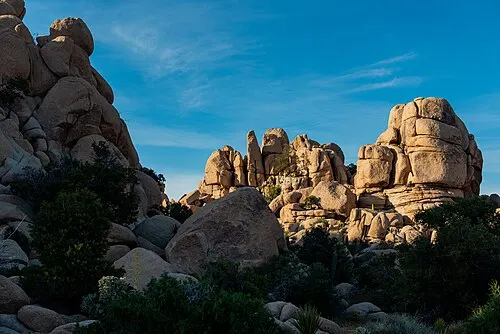
Joshua Tree National ParkCongress set aside the Augustine Reservation on December 29, 1891, and the band's own history says the Cahuilla were the first known inhabitants of the Coachella Valley more than 3,000 years ago. The band descends from Captain Vee-Vee Augustine, born in 1820. Source
Programs
Tribal Environmental Protection Agency
The Band established the TEPA to protect human health and the environment on its lands while allowing sustainable economic development, drawing on federal and tribal funding to build capacity. It runs three programs: a General Assistance Program with components in administration, training, outreach, inter-departmental assistance, climate change resiliency, drinking water source protection and waste management; a Clean Water Act Section 106 program monitoring water quality in selected locations such as shallow groundwater; and a Clean Water Act Section 319 program monitoring and reducing non-point source pollution, including invasive species that raise fire risk, reduce soil cover and add sediment to runoff.
Land stewardship: solar energy and organic farming
The Band says its solar project, approved by the Bureau of Indian Affairs in 2008, was the first major solar energy project in Southern California to win BIA approval, and that the Augustine Solar Energy Park now runs some 25,000 panels capable of producing more than 5,000 megawatt hours a year, the equivalent of the power used by 500 homes. Its organic farming operation covers 33 acres of tribal land and grows crops from romaine lettuce to medjool dates.
Sources
- https://www.govinfo.gov/content/pkg/FR-2026-01-30/html/2026-01899.htm
- https://tribe.augustinetribe-nsn.gov/history-heritage/
- https://tribe.augustinetribe-nsn.gov/stewardship/
Checked September 2026.