Assiniboine and Sioux Tribes of the Fort Peck Indian Reservation
A nation today
Background
The compact between Montana, the United States and the Assiniboine and Sioux Tribes of the Fort Peck Indian Reservation quantifies the Tribes' water right as 1,050,472 acre feet of diversions, a consumptive use of 525,236 acre feet a year. Montana's Department of Natural Resources and Conservation records that the compact was ratified by the 1985 Montana Legislature and signed by Governor Ted Schwinden on May 15, 1985, and that the Montana Water Court issued a final decree for it in August 2001 in Case #WC-92-1. The same state page places the reservation in northeastern Montana, 110 miles long east to west and 40 miles wide north to south, slightly over two million acres, with more than 10,000 tribal members living on it. Reservation lands were allotted beginning in 1908 and surplus land opened to non-Indian homesteaders. Today over half the reservation is owned by non-Indians, with about 550,000 acres held in trust for allottees and another 400,000 held in trust for the Tribes. Rocky Mountain National Park lists the Tribes among the nations whose traditional homelands include what is now the park.
Visit and learn
Assiniboine and Sioux Tribes of the Fort Peck Indian Reservation's own site
Tribal lands have their own laws. Check the nation's site before you visit.
Parks on its homelands
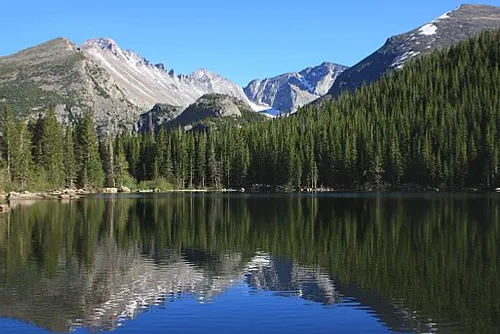
Rocky Mountain National ParkRocky Mountain's country sat inside the extended territory the park attributes to the Lakota, Dakota, Nakota and Nakona peoples, who travelled to these places regularly. The Assiniboine and Sioux Tribes hold the Fort Peck Reservation in Montana today. Source
Sources
- https://www.govinfo.gov/content/pkg/FR-2026-01-30/html/2026-01899.htm
- https://dnrc.mt.gov/Water-Resources/Compacts/Fort-Peck
- https://www.nps.gov/romo/learn/tribal-partners.htm
Checked September 2026.