Akimel O’odham
A people
Background
The Akimel used the Santa Cruz River and the yearly downpours from the monsoons to carve out elaborate acequias, or canals, and basins to water crops. Before European contact the O’odham practiced a combination of hunting and gathering and non-intensive agricultural cultivation, growing squash, beans, cotton, corn and more, gathering cactus, agave, cactus fruit and mesquite, and hunting birds, deer and sheep. The National Park Service's series on the native peoples of the Sonoran Desert gives the Akimel O’odham a section of their own, kept separate from the Tohono O’odham, who lived farther from the rivers and migrated between two village locations in order to follow water sources. It says the various bands of O’odham people are now broken up into four federally recognized tribes, the Tohono O’odham Nation, the Gila River Indian Community, the Ak-Chin Indian Community and the Salt River Pima Maricopa Indian Community. Saguaro National Park links the article from its own history and culture section.
Parks on its homelands
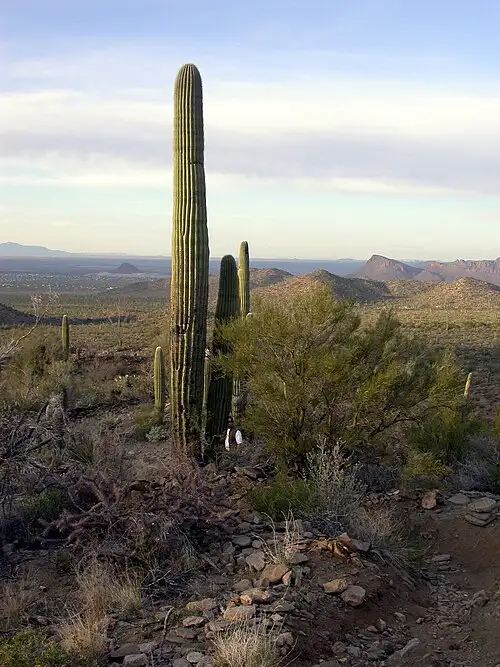
Saguaro National ParkNPS gives the Akimel their name from the O'odham word meaning of the river, and describes them as the canal builders who used the Santa Cruz River and the summer monsoon to cut acequias and basins for their crops, in contrast to the Tohono, or desert O'odham, who moved between two village locations to follow the water. The four federally recognized O'odham tribes today include the Salt River (Pima Maricopa) Indian Community. Source
Sources
Checked September 2026.