Reptiles of Yellowstone National Park
The 4 reptiles of Yellowstone National Park. Their profiles carry sizes, diets, and whether you should worry.
Common questions
Which Yellowstone National Park reptiles demand distance from a kid?
Bullsnake, Prairie rattlesnake, Sagebrush lizard, and Western terrestrial garter snake carry a rule worth reading. Bullsnake: Not dangerous at all — it has no venom. Prairie rattlesnake: It is the only dangerously venomous snake at Yellowstone, Badlands, Theodore Roosevelt, and Wind Cave. Sagebrush lizard: This lizard has no venom, and its main defense is running. Western terrestrial garter snake: Essentially harmless. (per NPS species pages).
What do Yellowstone National Park reptiles eat?
Bullsnake eats mice, ground squirrels, pocket gophers, rabbits, bird eggs. Prairie rattlesnake eats mice, prairie dogs, ground squirrels, young rabbits, birds. Sagebrush lizard eats ants, beetles, grasshoppers, flies, spiders and other small arachnids. Western terrestrial garter snake eats earthworms, insects, small amphibians, fish, rodents. (per NPS species pages).
The strangest true thing about Yellowstone National Park's reptiles.
Bullsnake: It is the largest reptile at Great Sand Dunes and one of the largest at Yellowstone, sometimes topping 5 feet long. Prairie rattlesnake: It is the only venomous reptile in Yellowstone, Badlands, Theodore Roosevelt, and Wind Cave National Parks. (per NPS species pages).
-
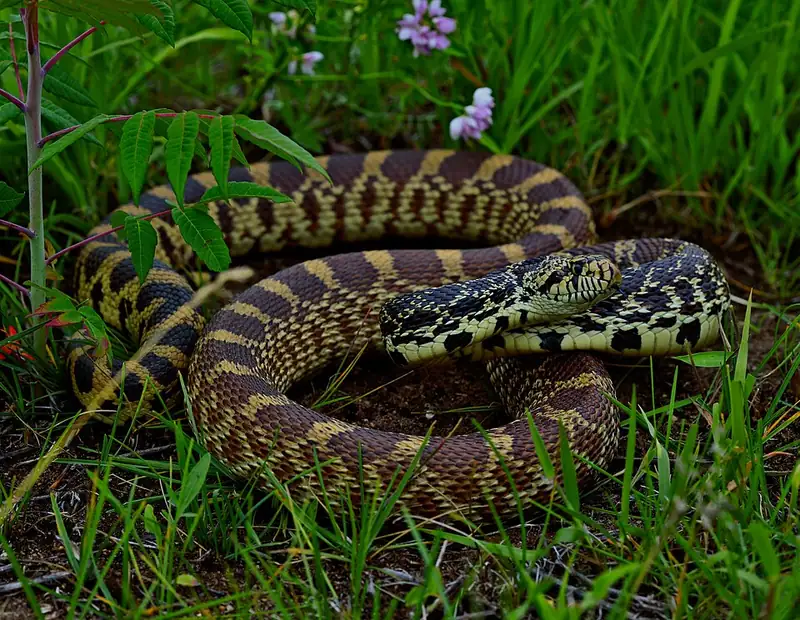 Reptile
Bullsnake
Pituophis catenifer sayi
A big, harmless snake that fakes being a rattlesnake — hissing, flattening its head, and shaking its tail in dry grass — to talk its way out of trouble.
-
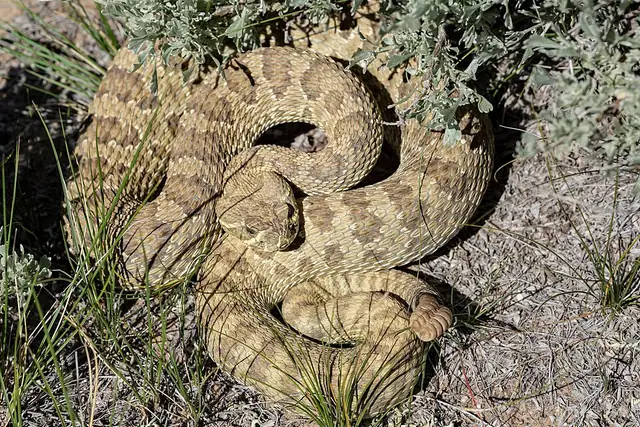 Reptile
Prairie rattlesnake
Crotalus viridis
A gray-green pit viper with a buzzing rattle, the only venomous reptile at several of the parks it shares with prairie dogs and badgers.
-
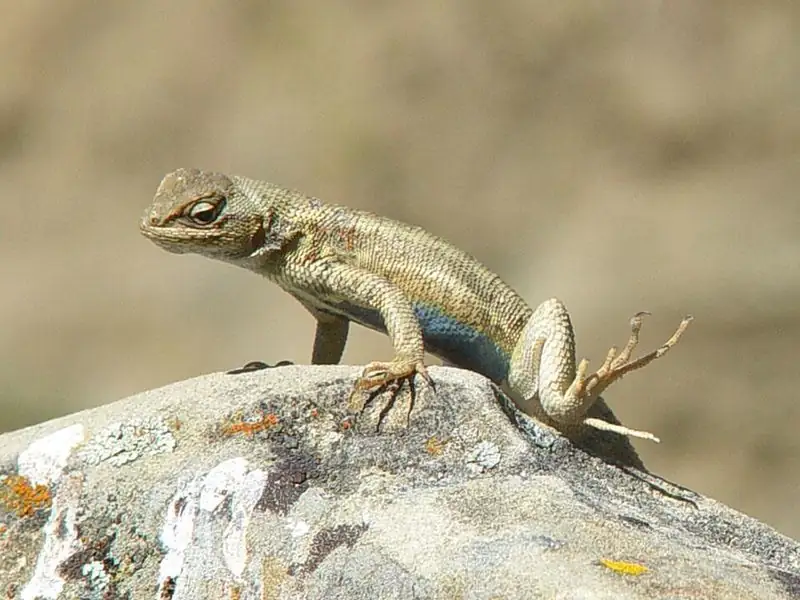 Reptile
Sagebrush lizard
Sceloporus graciosus
A small, slender, high-country lizard, the fence lizard's cousin, whose males flash blue belly and throat patches in a push-up display.
-
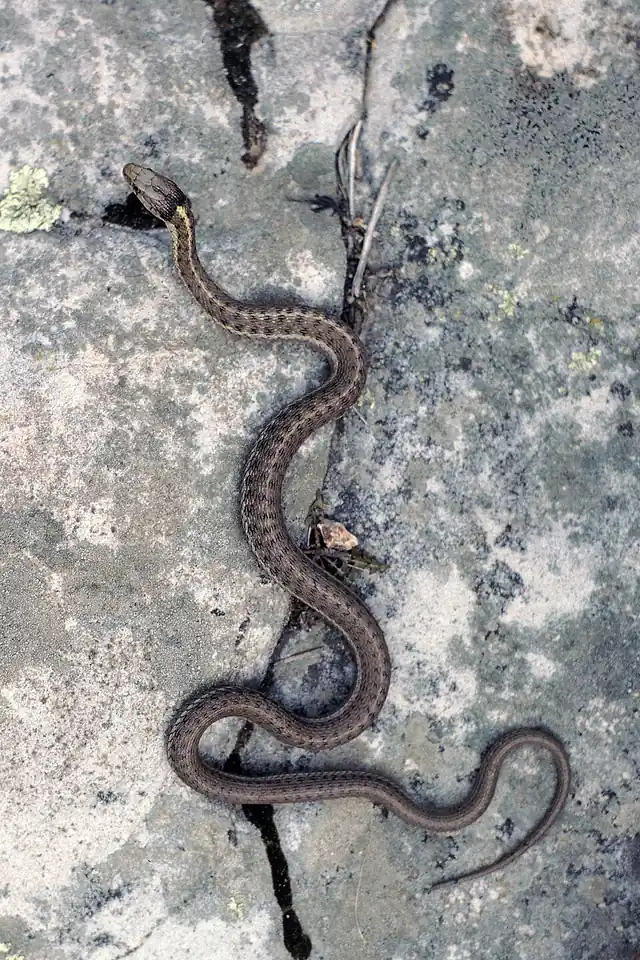 Reptile
Western terrestrial garter snake
Thamnophis elegans
A slim, striped snake found from stream banks to talus slopes across ten of these parks, and the most commonly seen reptile in several of them.