Animals & Plants of Wrangell-St. Elias National Park and Preserve
The 4 animals, plants, and fungi you can find at Wrangell-St. Elias National Park and Preserve, with sizes, diets, and whether you should worry. See the full park guide at Wrangell-St. Elias National Park and Preserve.
Wrangell-St. Elias is the largest national park in the country, a tangle of mountains, glaciers, and river bars few people ever enter. Grizzly bears and moose work the low valleys, American black bears take the brushy slopes, and Dall sheep high-step the cliffs above the ice. Most of its wildlife shows up from a gravel road that dead-ends at the old Kennecott mine.
Anything here that bites?
Keep away
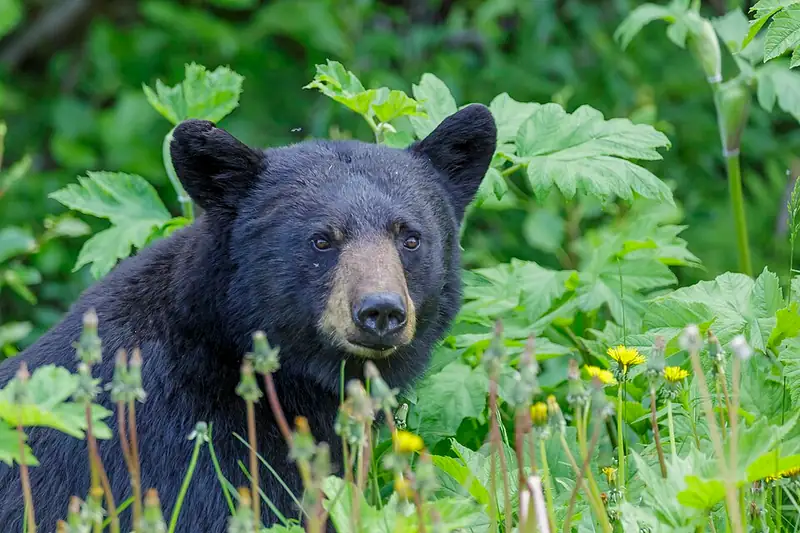
- American black bear: Black bears are usually shy and would rather leave than meet you.
- Dall sheep: Dall sheep are shy and would rather climb than fight, but they are wild and a ram's horns are heavy.
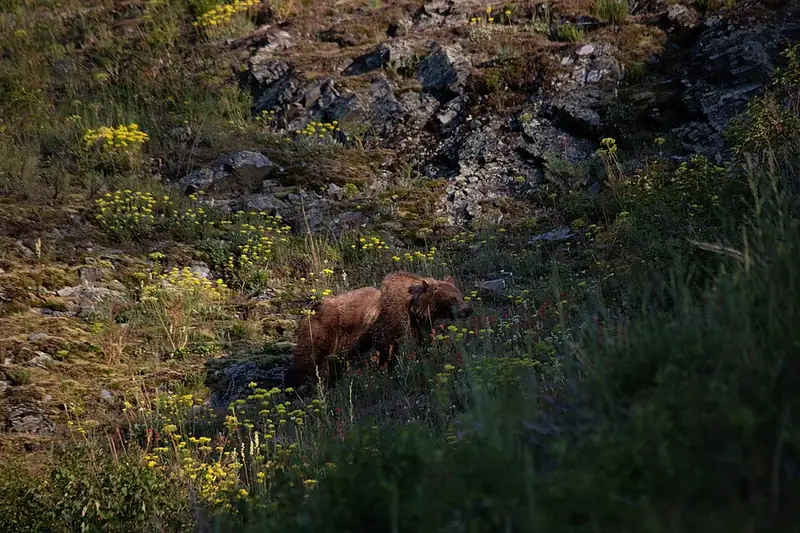
- Grizzly bear: A grizzly is one of the few animals you must give real room.
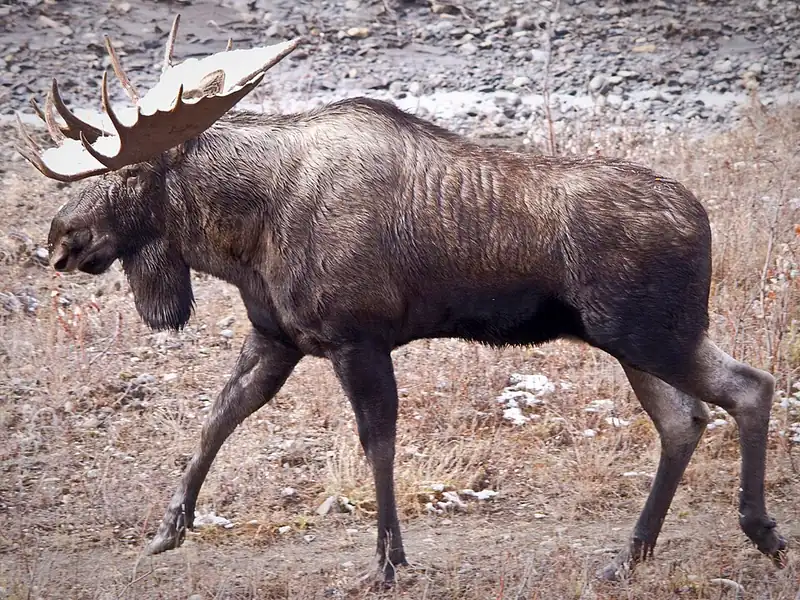
- Moose: A moose looks slow and gentle, but it is one of the most dangerous animals to crowd.
Everything else on this page is harmless. What each group means.
-
 Mammal
 American black bear
Ursus americanus
The bear you're most likely to meet east of the Rockies, a strong tree-climber that eats mostly plants and comes in black, brown, or cinnamon.
-
 Mammal
 Dall sheep
Ovis dalli
A snowy-white wild sheep of Alaska's steepest ridges, where ewes raise lambs on cliffs and rams carry horns that curl a full circle.
-
 Mammal
 Grizzly bear
Ursus arctos horribilis
A big brown bear of the northern Rockies and Alaska, marked by a hump of muscle over its shoulders and long digging claws.
-
 Mammal
 Moose
Alces alces
The largest deer in the world, a long-legged giant you might see wading in ponds at Grand Teton, Isle Royale, Denali, or Rocky Mountain.