Birds of Theodore Roosevelt National Park
The 9 birds of Theodore Roosevelt National Park. Their profiles carry sizes, diets, and whether you should worry.
Common questions
Which Theodore Roosevelt National Park birds demand distance from a kid?
American white pelican, Black-billed magpie, Burrowing owl, Great horned owl, and Mountain bluebird carry a rule worth reading. American white pelican: Pelicans are not aggressive toward people. Black-billed magpie: A nesting pair will scold and dive at anything near the nest, including people, but they do not attack. Burrowing owl: Burrowing owls are harmless to people. Great horned owl: This owl hunts small animals at night and will not come after you. Mountain bluebird: None. 4 more species carry a rule worth reading. (per NPS species pages).
What do Theodore Roosevelt National Park birds eat?
American white pelican eats rough fish, minnows, small schooling fish, salamanders. Black-billed magpie eats insects, carrion, grain, seeds, ticks off elk and deer, other birds' eggs. Burrowing owl eats grasshoppers, beetles, crickets, mice, voles. Great horned owl eats rabbits, mice, skunks, birds, reptiles. 5 more species have menus worth reading. (per NPS species pages).
The strangest true thing about Theodore Roosevelt National Park's birds.
American white pelican: The Molly Islands, where nearly all of Yellowstone's pelicans nest, add up to only 0.7 to 1.2 acres depending on the lake's water level, small enough to flood in a single hard spring. Black-billed magpie: A black-billed magpie's tail makes up about half its total length — cut the tail off and the bird would be barely bigger than a robin. (per NPS species pages).
-
 Bird
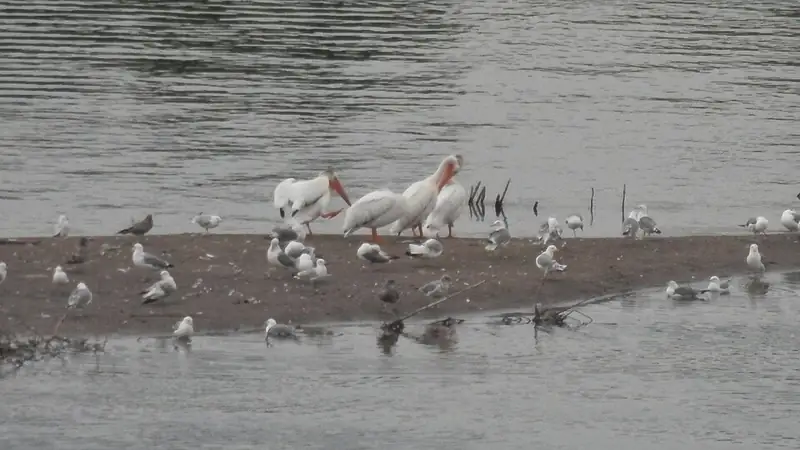
American white pelican
Pelecanus erythrorhynchos
A huge white bird with an orange throat pouch that fishes in groups and nests on tiny islands in Yellowstone Lake and other high-country waters.
-
 Bird
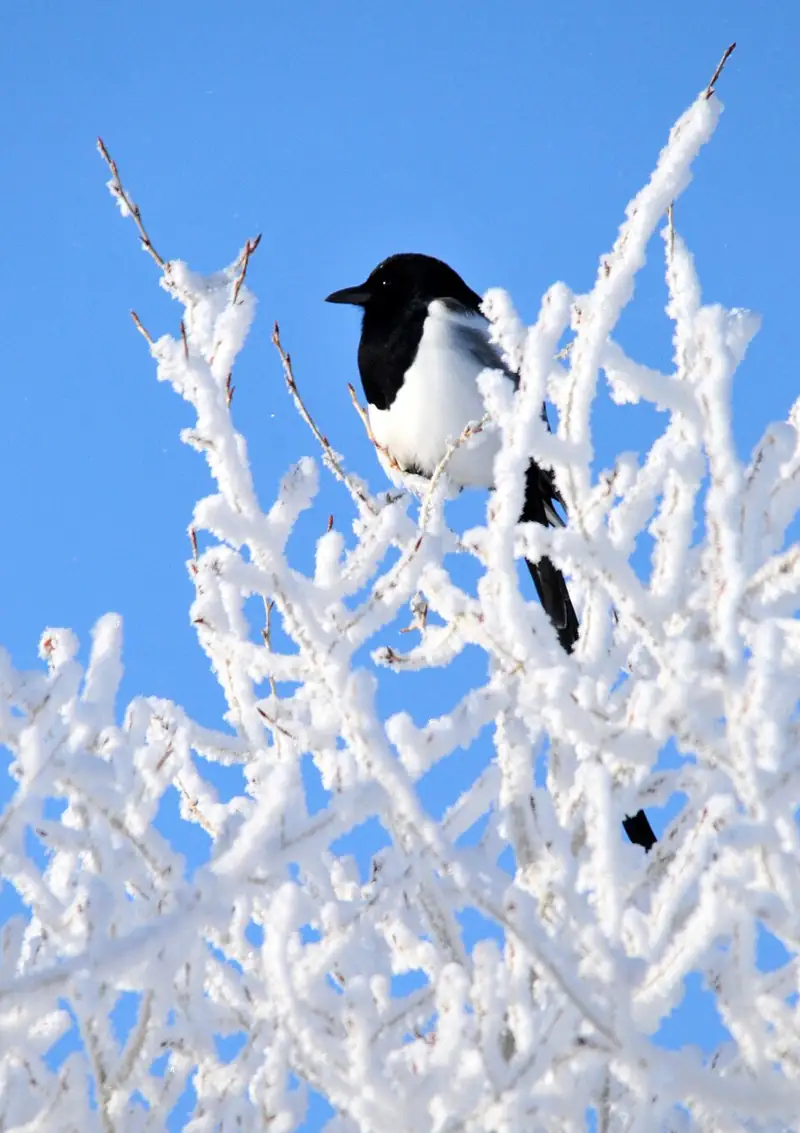
Black-billed magpie
Pica hudsonia
A black-and-white corvid with a tail as long as its body, common on fences and roadsides across the northern Rockies and Great Plains.
-
 Bird
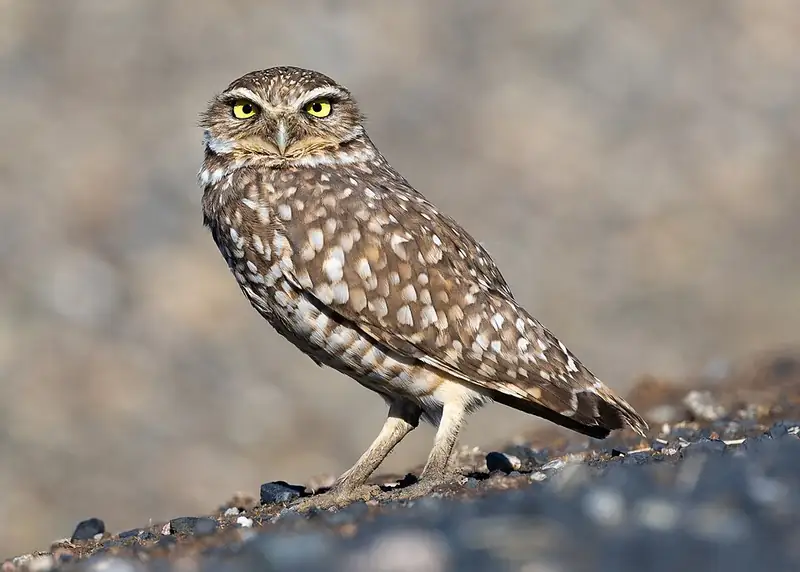
Burrowing owl
Athene cunicularia
A small owl that nests underground in old prairie-dog burrows and hunts in daylight across Western grasslands, unlike most owls.
-
 Bird
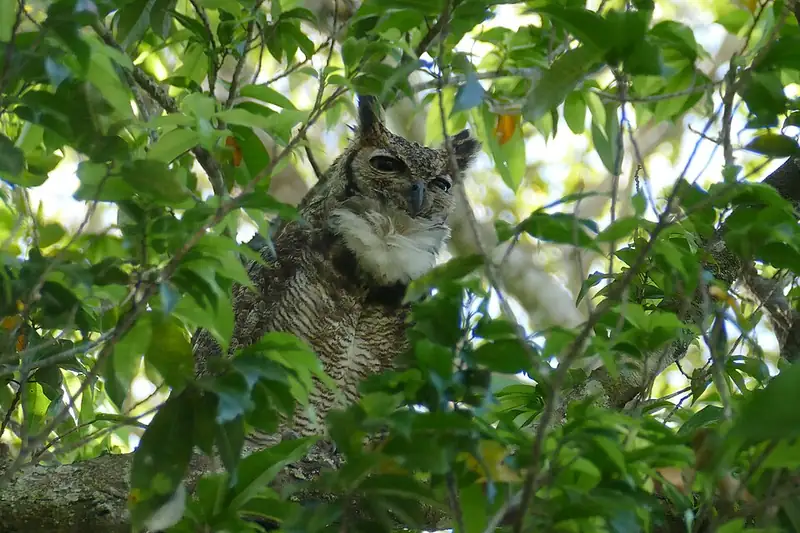
Great horned owl
Bubo virginianus
A big night hunter with feathery "horns" and a deep hoot, found from the saguaro desert to the Everglades, hunting after dark on silent wings.
-
 Bird
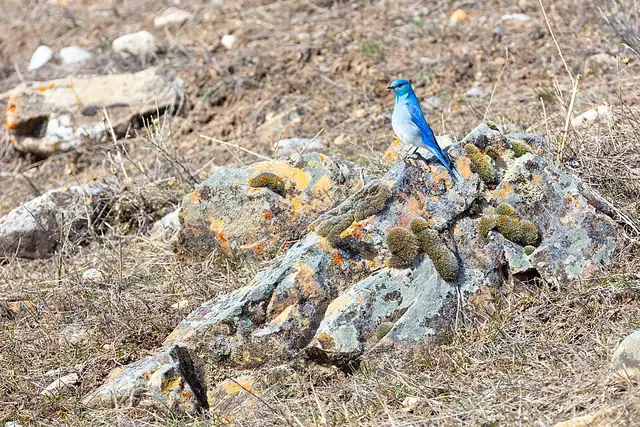
Mountain bluebird
Sialia currucoides
A sky-blue thrush of high, open country, the only bluebird seen regularly above 5,000 feet, nesting in lava-rock crevices at Craters of the Moon.
-
 Bird
Red-tailed hawk
Buteo jamaicensis
The hawk most often recorded in Yellowstone. We watched a hawk take a pika near the Roosevelt cabins and could not tell you which hawk it was.
-
 Bird
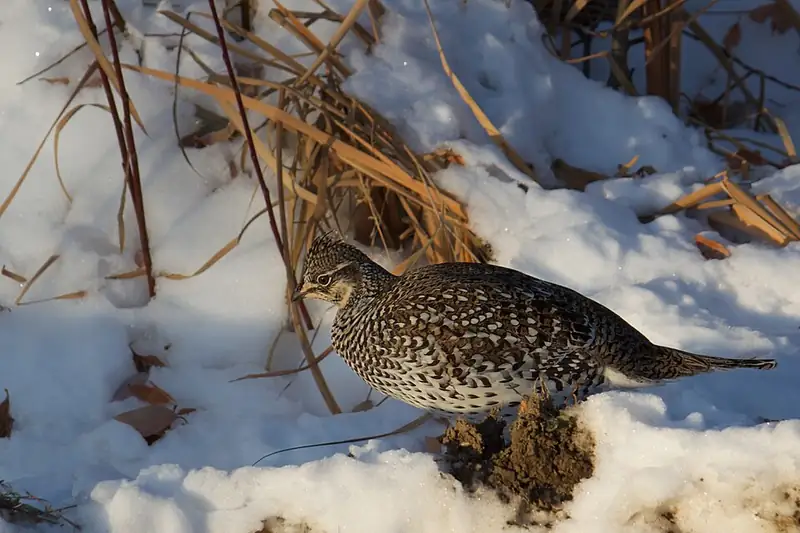
Sharp-tailed grouse
Tympanuchus phasianellus
A prairie grouse that dances on open ground at dawn, stamping its feet and inflating purple air sacs on its neck to attract a mate.
-
 Bird
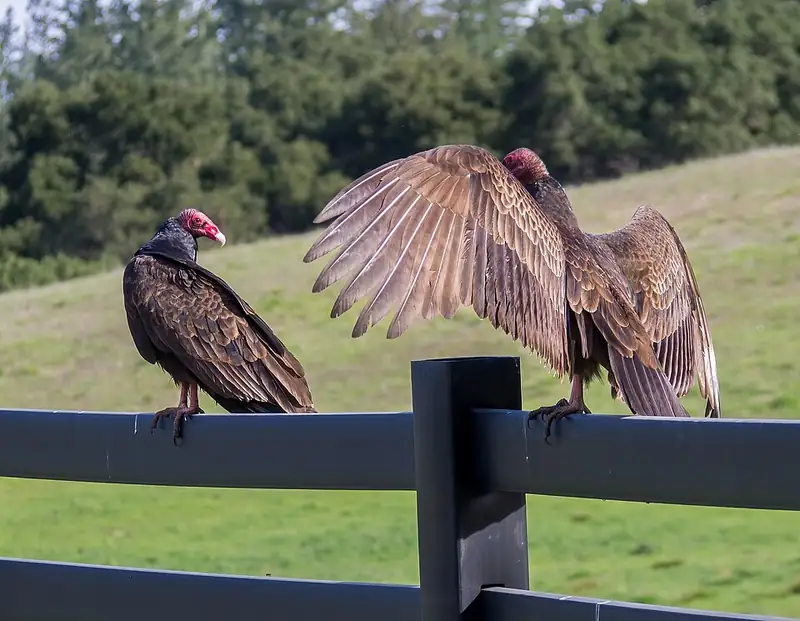
Turkey vulture
Cathartes aura
A large, dark soaring bird with a bare red head, circling on thermals over open country, using one of the sharpest noses of any bird.
-
 Bird
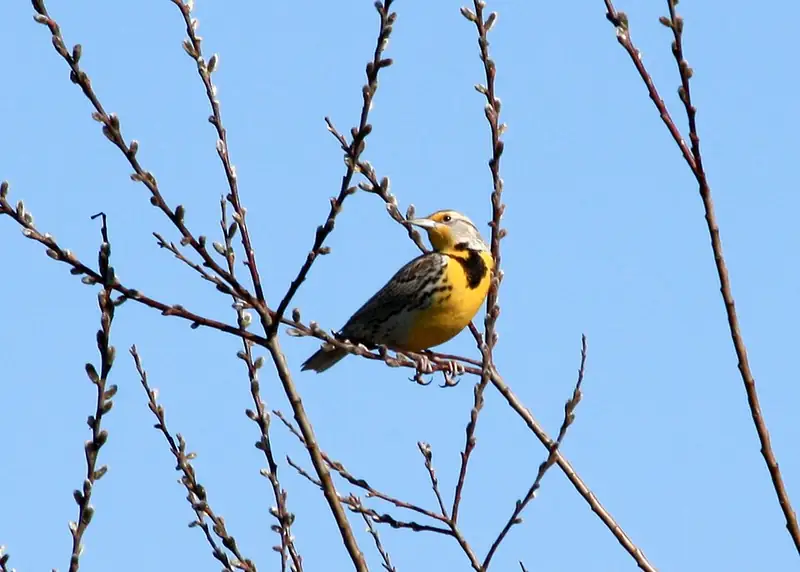
Western meadowlark
Sturnella neglecta
A grassland songbird with a yellow throat and a black V on its chest, the state bird of Montana, Wyoming, and North Dakota.