Invertebrates of Saguaro National Park
The 2 invertebrates of Saguaro National Park: Desert tarantula and Giant desert hairy scorpion. Their profiles carry sizes, diets, and whether you should worry.
Common questions
Which Saguaro National Park invertebrates demand distance from a kid?
Desert tarantula and Giant desert hairy scorpion carry a rule worth reading. Desert tarantula: A desert tarantula has venom, but its bite is mild. Giant desert hairy scorpion: Its sting hurts, but it is not dangerous to a healthy person. (per NPS species pages).
What do Saguaro National Park invertebrates eat?
Desert tarantula eats crickets, beetles, grasshoppers, other insects, sometimes small lizards. Giant desert hairy scorpion eats insects, spiders, other scorpions, small lizards. (per NPS species pages).
The strangest true thing about Saguaro National Park's invertebrates.
Desert tarantula: In autumn, grown males leave their burrows and walk long distances looking for females. That is when hikers most often see tarantulas out in the open, crossing trails and roads. Giant desert hairy scorpion: Under a blacklight (ultraviolet light) the whole scorpion glows a bright blue-green. Chemicals in its hard shell soak up the invisible light and give it back as color, and scientists use blacklights to find scorpions in the dark. (per NPS species pages).
-
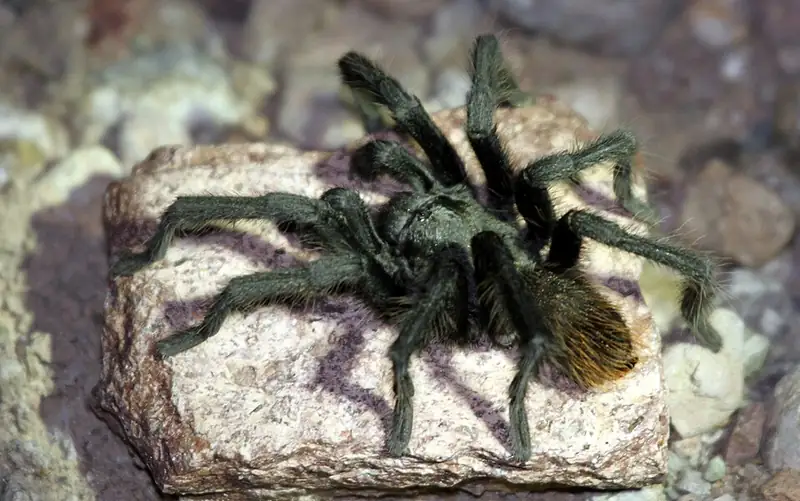 Invertebrate
Desert tarantula
Aphonopelma chalcodes
A large, gentle desert spider with a pale, hairy body that spends its days in a silk-lined burrow and comes out on fall evenings to look for a mate.
-
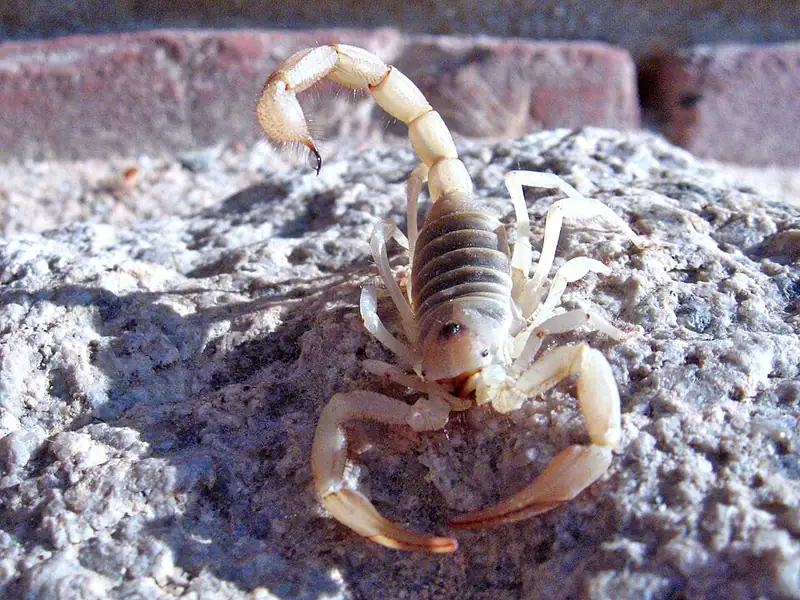 Invertebrate
Giant desert hairy scorpion
Hadrurus arizonensis
The largest scorpion in North America, a sandy-colored desert digger covered in sensing hairs that glows blue-green under ultraviolet light.