Reptiles of Joshua Tree National Park
The 3 reptiles of Joshua Tree National Park. Their profiles carry sizes, diets, and whether you should worry.
Common questions
Which Joshua Tree National Park reptiles demand distance from a kid?
Common chuckwalla, Desert iguana, and Mojave desert tortoise carry a rule worth reading. Common chuckwalla: The chuckwalla has no venom, and it would much rather squeeze into a rock crack than confront anyone. Desert iguana: A desert iguana is not dangerous. Mojave desert tortoise: This tortoise will not hurt you, but you can badly hurt it, so the rule is look, do not touch. (per NPS species pages).
What do Joshua Tree National Park reptiles eat?
Common chuckwalla eats creosote bush flowers, leaves, buds, fruit, occasional insects. Desert iguana eats creosote bush flowers and leaves, other desert wildflowers, buds and fruit, occasionally ants and insects. Mojave desert tortoise eats grasses, wildflowers, new leaves, cactus. (per NPS species pages).
The strangest true thing about Joshua Tree National Park's reptiles.
Common chuckwalla: Joshua Tree's chuckwallas are far scarcer today than they were 40 years ago, according to the park's own naturalists. Desert iguana: It reuses burrows dug by other animals, including desert tortoises and kit foxes, instead of always digging its own from scratch. (per NPS species pages).
-
 Reptile
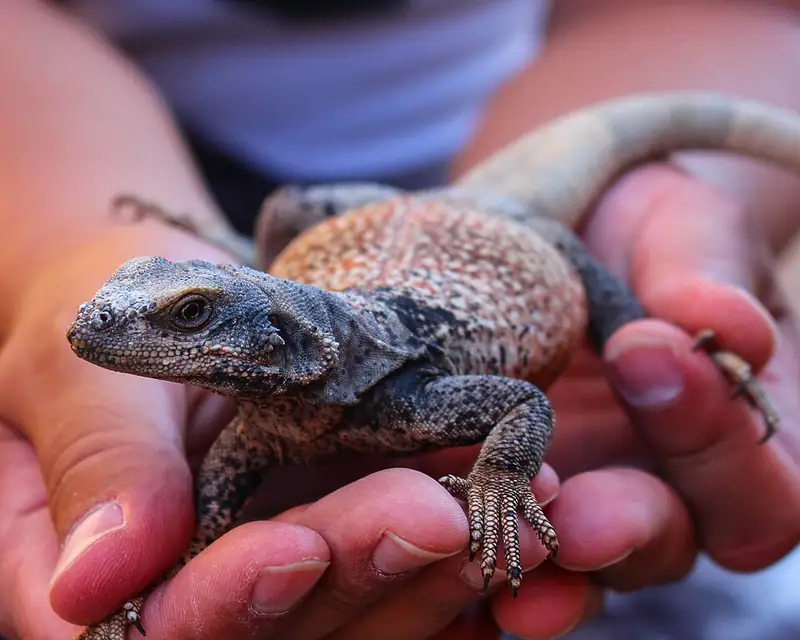
Common chuckwalla
Sauromalus ater
Joshua Tree's largest lizard, a slow plant-eater that wedges into a rock crack and inflates its lungs so nothing can pull it back out.
-
 Reptile
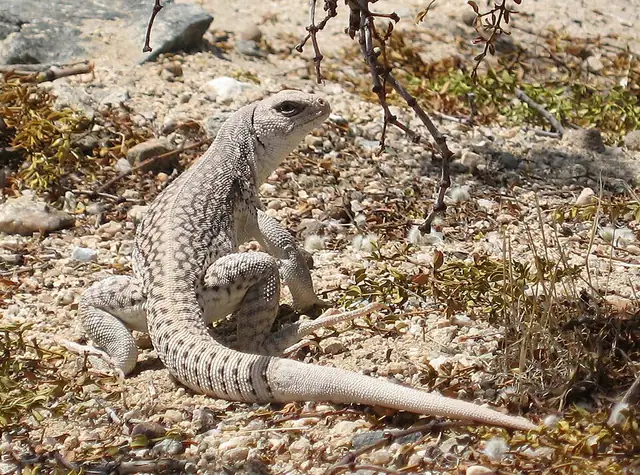
Desert iguana
Dipsosaurus dorsalis
A pale, plant-eating lizard that stays out on the open sand at Joshua Tree in midday heat that sends every other lizard into the shade.
-
 Reptile
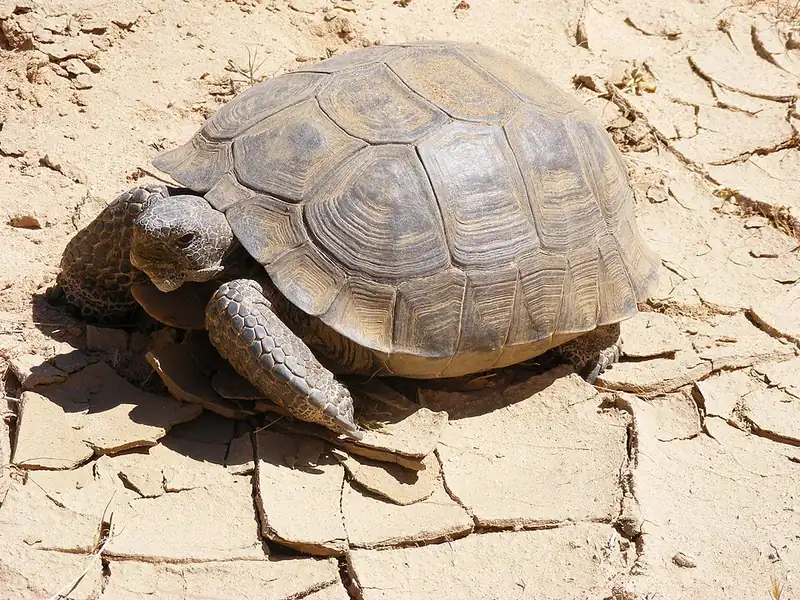
Mojave desert tortoise
Gopherus agassizii
A slow, dome-shelled land turtle that digs long burrows to escape desert heat, living in the Mojave country of Joshua Tree and Death Valley.