Plants of Glacier National Park
The 16 plants of Glacier National Park. Each carries a fun fact and a note on whether a kid should worry about it.
Common questions
Which Glacier National Park plants demand distance from a kid?
American pasqueflower, Beargrass, Big sagebrush, Black huckleberry, and Douglas-fir carry a rule worth reading. American pasqueflower: Every part of this plant is poisonous to eat, and the fresh sap can blister skin. Beargrass: The leaves have fine sawtooth edges that can give a paper-cut-like nick if you pull them through your hand, so run a finger gently along one to feel the teeth rather than gripping and pulling. Big sagebrush: Harmless to touch. Black huckleberry: The berries are safe to eat, and picking a small amount for your own snack is allowed in most national parks (check the current Glacier rule at a visitor center first). Douglas-fir: Completely safe. 11 more species carry a rule worth reading. (per NPS species pages).
What do Glacier National Park plants eat?
American pasqueflower eats sunlight, water, soil nutrients. Big sagebrush eats sunlight, water, soil nutrients. Engelmann spruce eats sunlight, water, soil nutrients. Glacier lily eats sunlight, water, soil nutrients. 3 more species have menus worth reading. (per NPS species pages).
The strangest true thing about Glacier National Park's plants.
American pasqueflower: At Theodore Roosevelt National Park, the pasqueflower is the first wildflower to bloom each spring, in April. Beargrass: Despite the name it is not a grass at all. It is a member of the lily family, with a tall stalk of hundreds of tiny creamy flowers. (per NPS species pages).
-
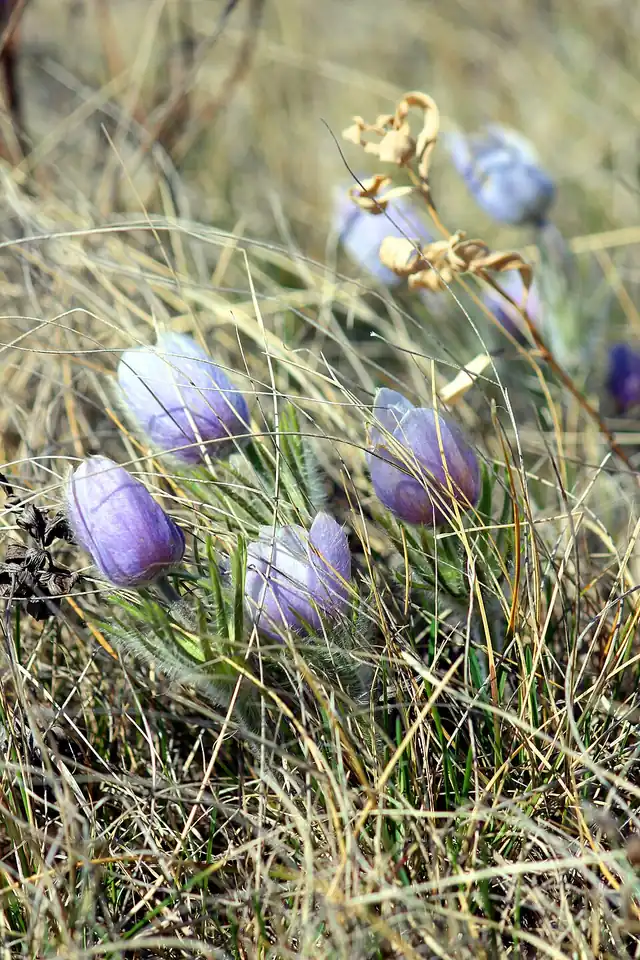 Plant
American pasqueflower
Pulsatilla patens ssp. multifida
A furry, purple-blue prairie flower that beats the grass out of the ground each spring, blooming before almost anything else is green.
-
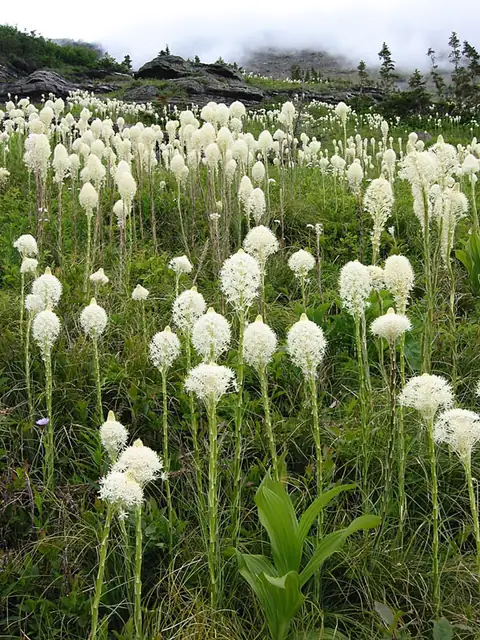 Plant
Beargrass
Xerophyllum tenax
A mountain plant that is not a grass but a lily, sending up a tall creamy plume only every few years, its tough leaves woven into watertight baskets and hats.
-
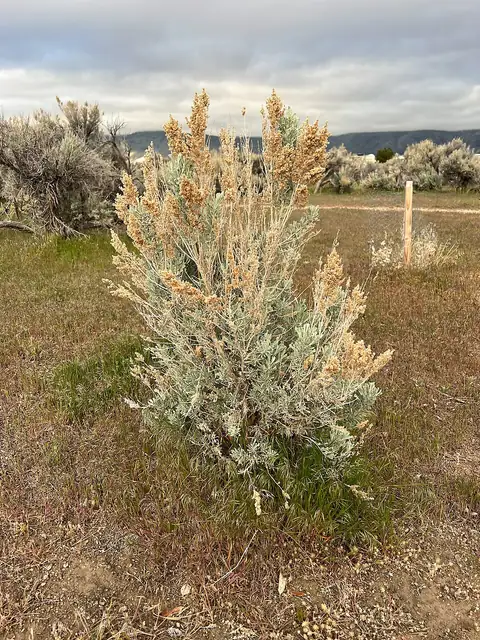 Plant
Big sagebrush
Artemisia tridentata
The silver-leaved, sharp-smelling evergreen shrub of the high desert West, and the main food of the greater sage-grouse nearly all year.
-
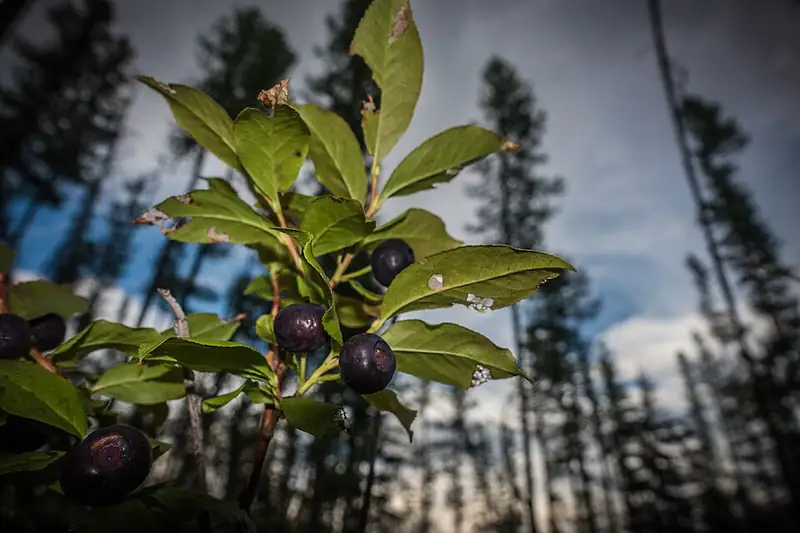 Plant
Black huckleberry
Vaccinium membranaceum
The dark purple berry that feeds Glacier's bears and half the pancakes in Montana, growing on open and burned slopes all over the park.
-
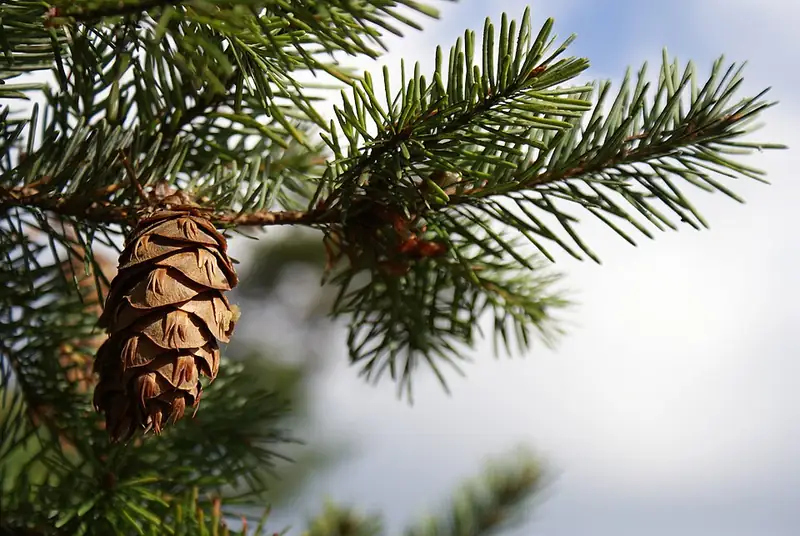 Plant
Douglas-fir
Pseudotsuga menziesii
One of the tallest trees on Earth, not actually a true fir, whose cones carry little three-pointed flaps a Native story calls the tails and legs of hiding mice.
-
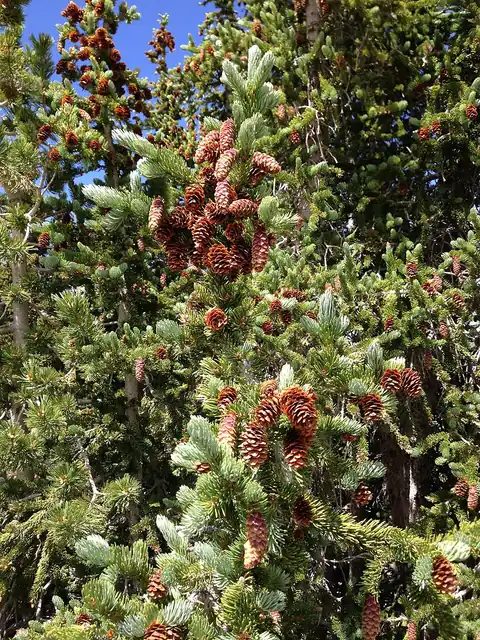 Plant
Engelmann spruce
Picea engelmannii
A high-elevation spruce with scaly bark and sharp, squarish needles, whose Colorado stands have lost more than a million acres to a beetle since 1996.
-
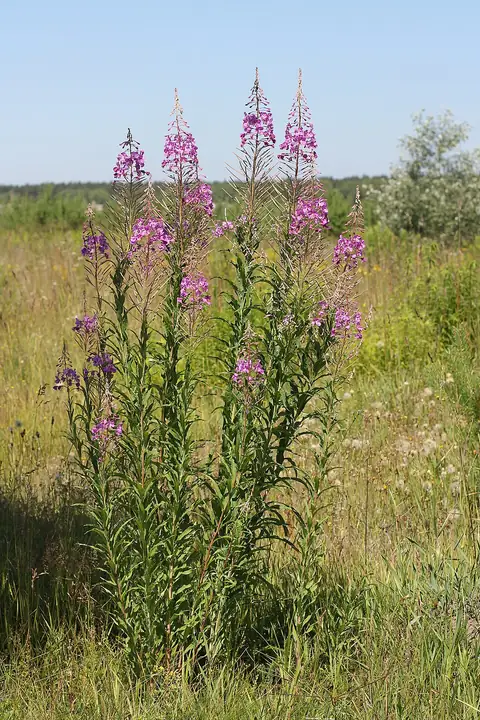 Plant
Fireweed
Chamerion angustifolium
A tall pink-purple wildflower that is often the first color to return to a burned mountainside.
-
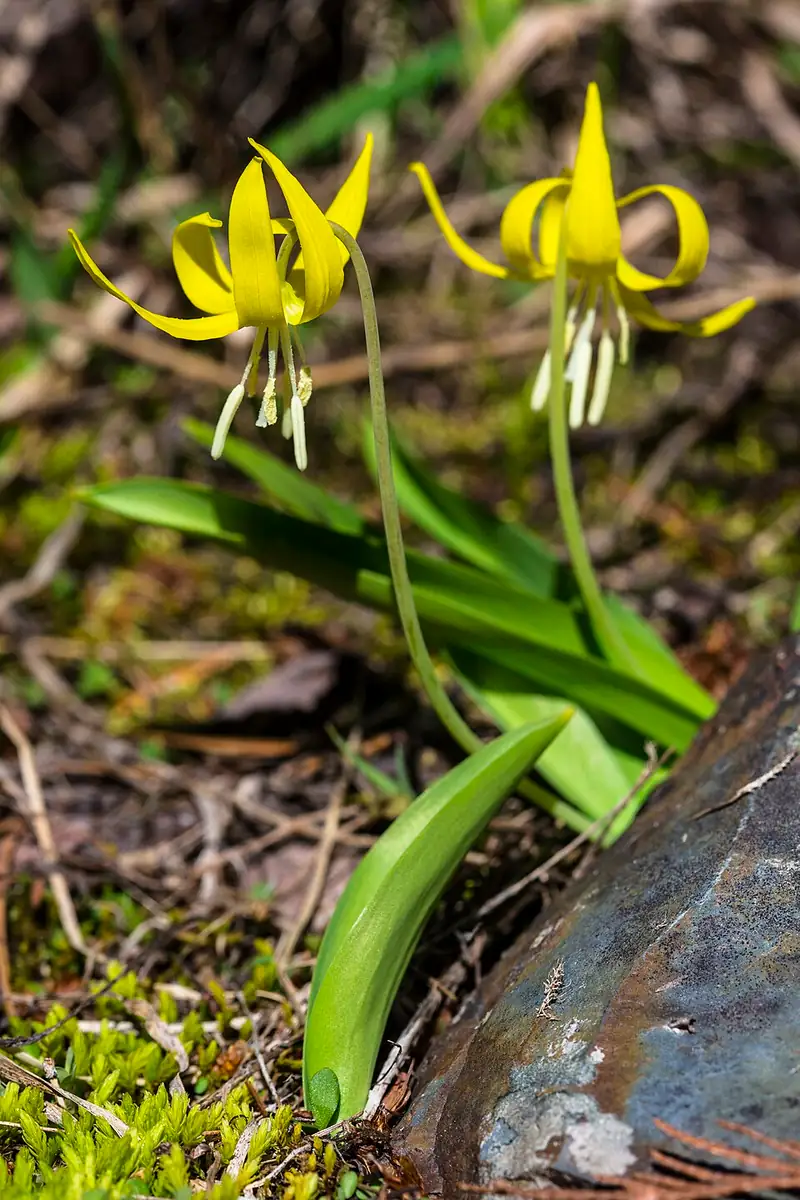 Plant
Glacier lily
Erythronium grandiflorum
A nodding yellow spring flower whose bulb is such important grizzly bear food that the bear's digging can grow bigger flowers the following year.
-
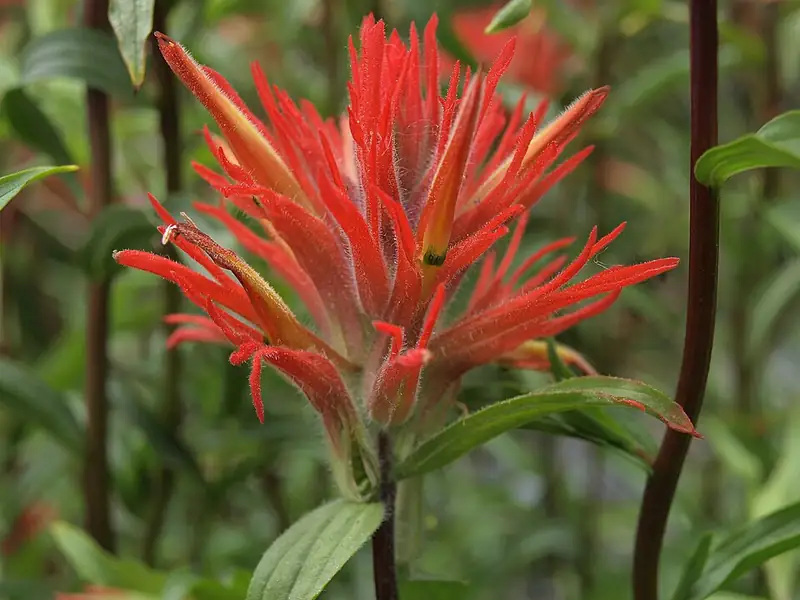 Plant
Indian paintbrush
Castilleja miniata
A scarlet mountain wildflower that steals water and food from its neighbors' roots, and whose bright color comes from leaves, not petals.
-
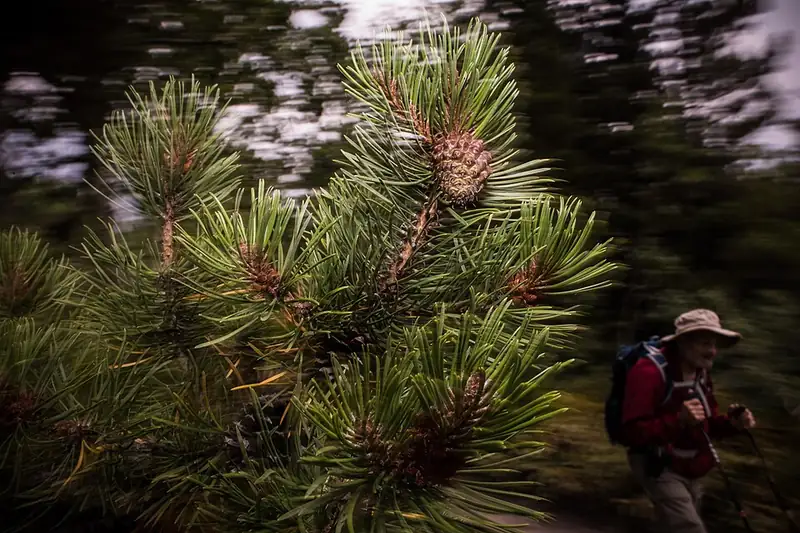 Plant
Lodgepole pine
Pinus contorta var. latifolia
The thin-barked pine covering 80% of Yellowstone's forest, some of whose cones only open in the heat of a fire.
-
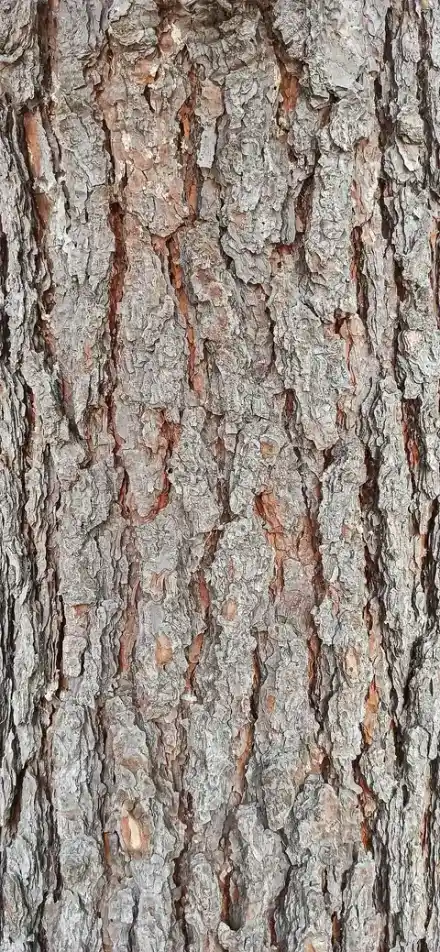 Plant
Ponderosa pine
Pinus ponderosa
A tall western pine whose sun-warmed bark smells like butterscotch and vanilla, and which drops its low branches so ground fire can pass safely beneath it.
-
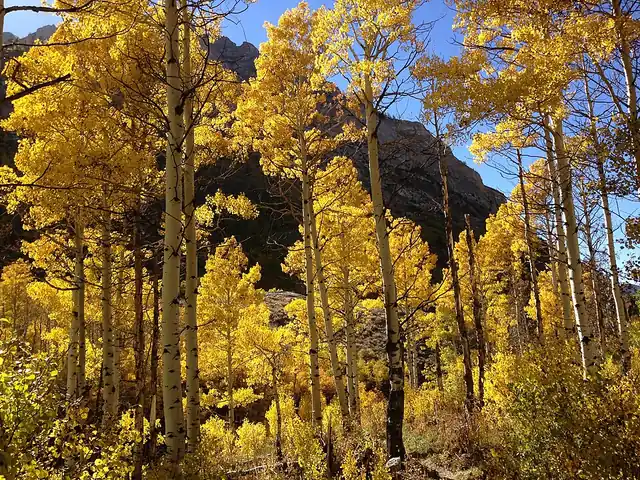 Plant
Quaking aspen
Populus tremuloides
A white-barked mountain tree whose flat-stemmed leaves shiver in the lightest breeze, turning whole hillsides gold each fall.
-
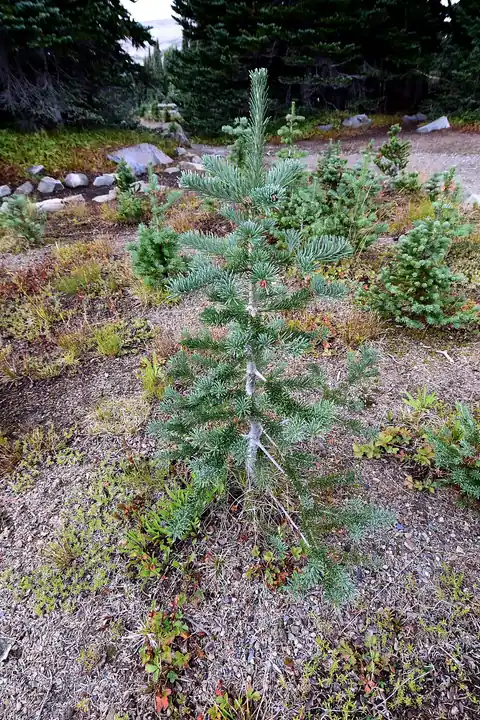 Plant
Subalpine fir
Abies lasiocarpa
A narrow, spire-shaped high-mountain fir with smooth gray bark and flat, soft needles, moving in wherever fire has stayed away long enough.
-
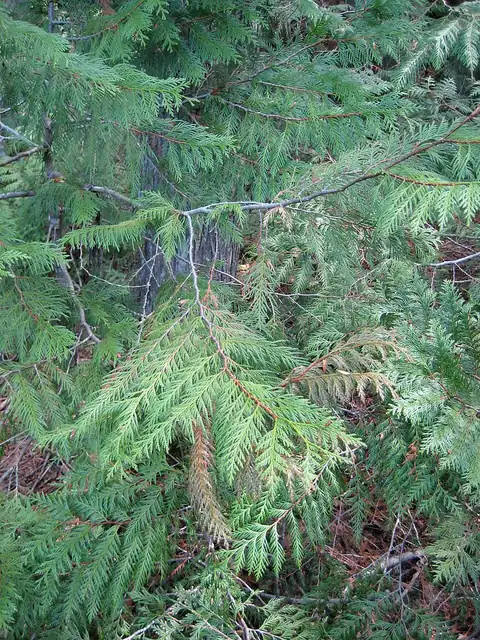 Plant
Western red cedar
Thuja plicata
The great rainforest tree of the Northwest Coast, called the tree of life, used by Coast Salish and other nations for canoes, longhouses, and baskets.
-
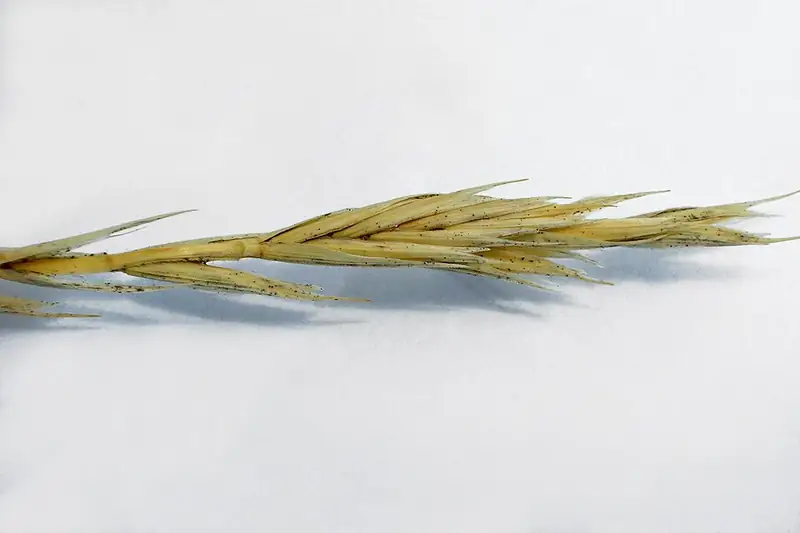 Plant
Western wheatgrass
Pascopyrum smithii
A blue-green prairie grass whose underground rhizomes weave a tough sod — the official state grass of North and South Dakota.
-
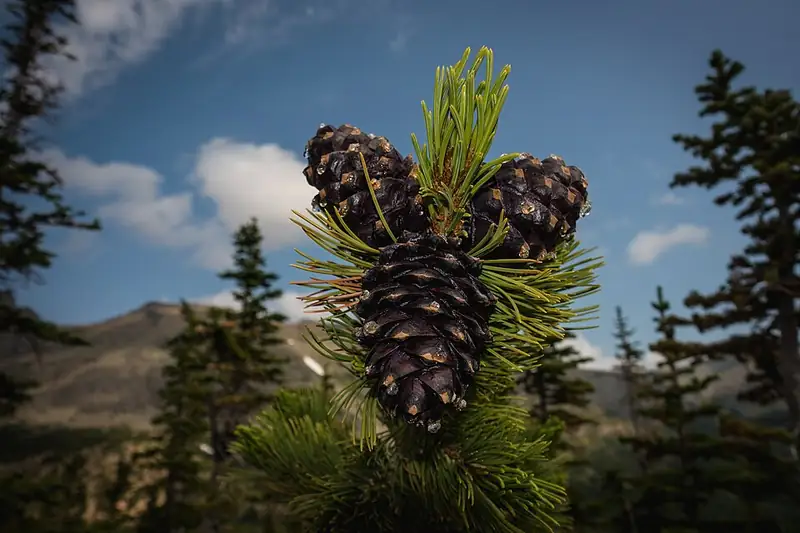 Plant
Whitebark pine
Pinus albicaulis
The twisted pine at Glacier's treeline that feeds grizzlies and Clark's nutcrackers, holds the snowpack in place, and is dying faster than it grows.