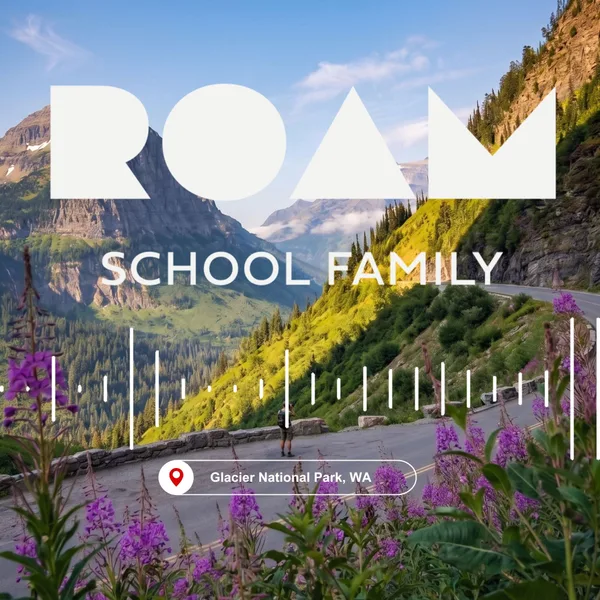
Glacier National Park | Where did all the glaciers go?
Listen now on: Apple Podcasts
Summary
A short written summary of the episode — not the full transcript. Press play above for the whole thing.
The question comes from Little, on the boat below Grinnell Glacier: when I am a mom, will there still be glaciers? The honest answer is that nobody knows the year. The direction is not in doubt.
At the end of the Little Ice Age around 1850, there were about 80 glaciers in what became Glacier National Park. In 2015, 26 named glaciers still met the size standard. The ice we came to see is the small, late ice, not the sheets that carved the valleys. Those were gone thousands of years ago. What is left grew during a cold spell about 7,000 years ago, reached its largest size around 1850, and has been shrinking since.
The park explains the difference with a camera. Lisa McKeon, a scientist with the U.S. Geological Survey, finds old photographs in the park archive, hikes to the exact spot where each one was taken, and stands there with a tripod until the new frame lines up with the old one. Repeat photography, they call it. In one pair, a glacier fills the top corner of a 1930 photograph. In the modern frame it is gone, and a small puddle sits where the ice was. Grinnell Glacier covered the whole basin in 1911. In 2021 it had backed up into its bowl and out of the frame.
The photographs work because you do not have to read a graph to see what happened. The numbers are there too: the air has warmed about 2 degrees Fahrenheit in the last century, and above 6,000 feet it is warming about three times as fast as the rest of the planet. The park’s glaciers are not the only thing changing. Lake trout, stocked in Flathead Lake a century ago, swam up the rivers and ate the bull trout. In 2014 a scientist named Clint Muhlfeld caught 111 baby bull trout in Logging Creek, put them in a backpack, and carried them five miles past a 40-foot waterfall into a high lake where the water is still cold enough for them.
Some of the work is smaller. Volunteers count mountain goats from marked spots and look for pika scat, because the animals are moving uphill as the low ground warms. The park says the year the glaciers disappear depends on what people do now, which is a different sentence from the one on the old signs.
We drove Going-to-the-Sun Road, 50 miles over Logan Pass, 12 of them cut into the cliff. We stood below the Garden Wall, the thin arête two glaciers sharpened from opposite sides. We threw rocks into Lake McDonald and watched the colors come up: green, red, purple, iron in mud that was laid down a billion and a half years ago.
This is the homeland of the Blackfeet, Salish, Pend d’Oreille, and Kootenai people, who have lived with these mountains and this ice far longer than the park has existed. The episode ends on the rock where we took our own photograph, with a promise to stand on the same spot next time and take it again.
The full episode is 26 minutes. It is a good one to listen to in the car with a kid who asks hard questions.
The place
Glacier National Park — Going-to-the-Sun Road and 37 named glaciers in northern Montana, the range the Blackfeet call the Backbone of the World.