Photo cards, one fact each. Big and Little made them.
Card 1 of 8
Photo: Frank Schulenburg / Wikimedia Commons (CC BY-SA 4.0)
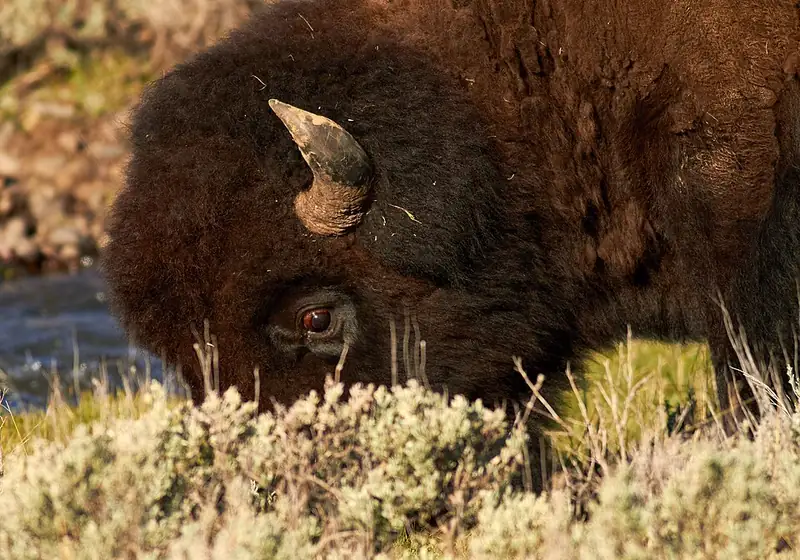
Bison are the largest land mammal in North America. A bull weighs up to 2,000 pounds. They look calm, but they have injured more people in Yellowstone than any other animal, and they run three times faster than a person. Stay at least 25 yards away.
Photo: National Park Service / Wikimedia Commons (public domain)
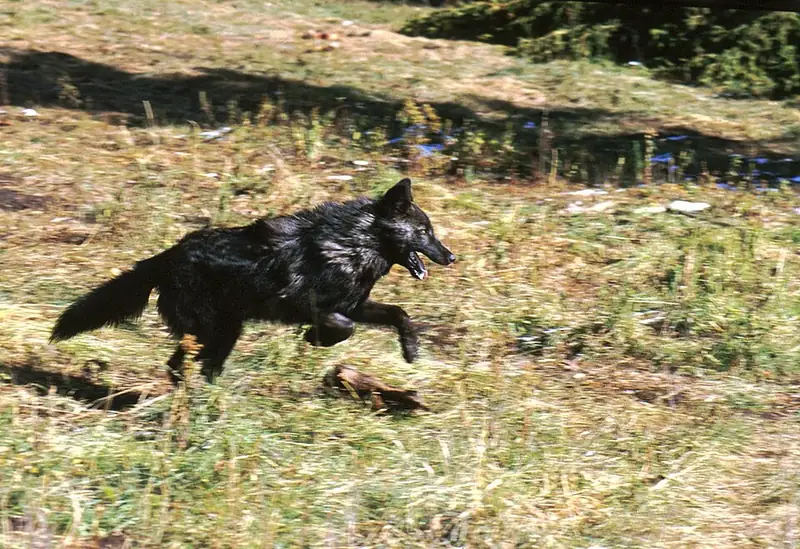
Wolves were wiped out of Yellowstone by the early 1900s. From 1995 to 1997, 41 wild wolves from Canada and northwest Montana were released here. About half the wolves in the park have black coats and about half are gray.
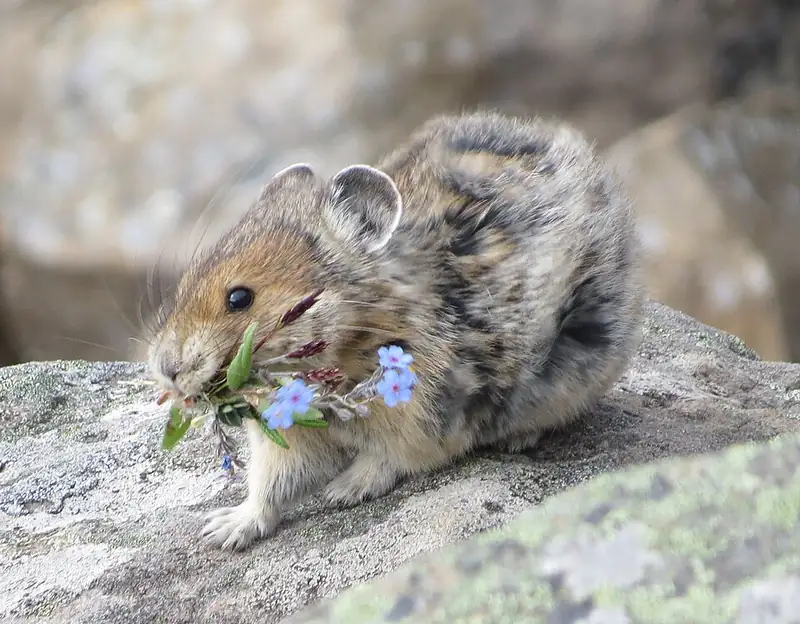
A pika is a small relative of the rabbit that lives in rock piles. It does not hibernate, so all summer it carries mouthfuls of plants to a drying pile called a haystack. Listen for its high, sharp call. You will hear a pika long before you see one.
Photo: Terry Tollefsbol, U.S. Fish and Wildlife Service / Wikimedia Commons (public domain)
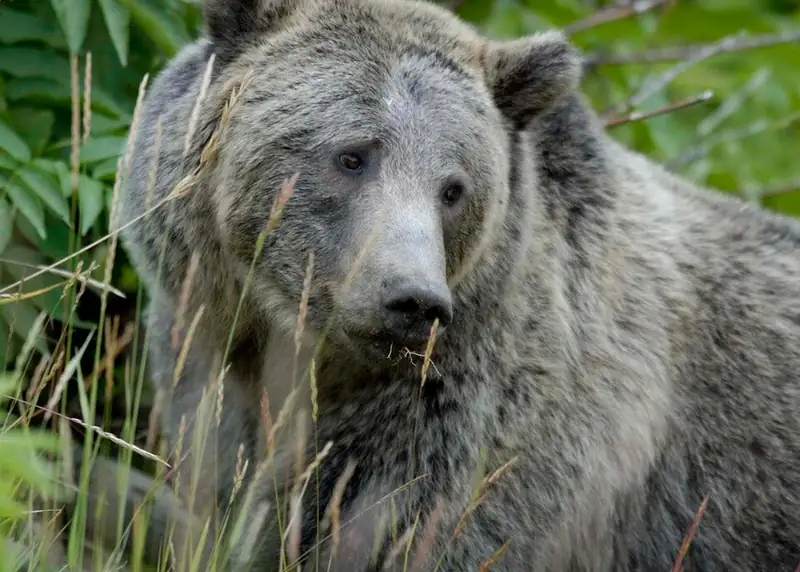
Two kinds of bear live in Yellowstone: grizzly bears and black bears. Greater Yellowstone is one of the few places south of Canada where both live in the same country. Stay at least 100 yards from any bear.
Photo: Thomas Wolf / Wikimedia Commons (CC BY-SA 3.0)
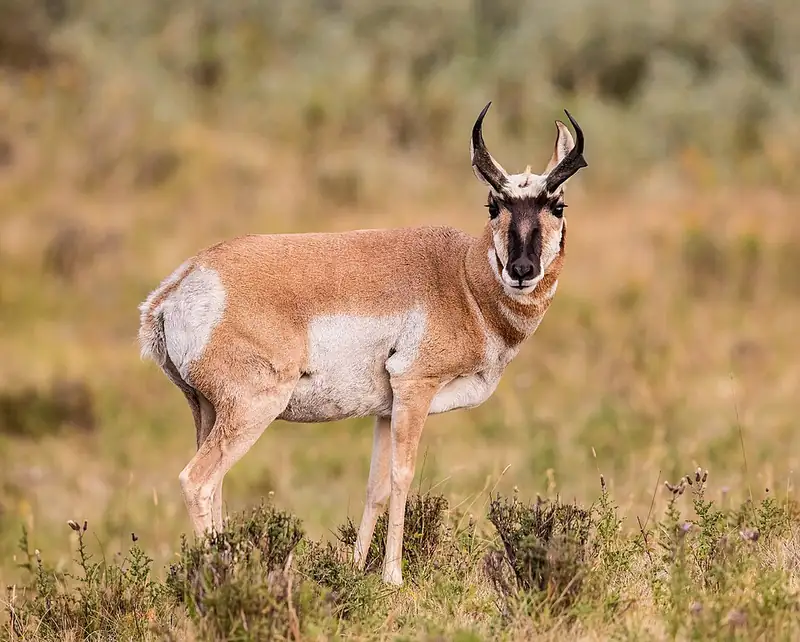
A pronghorn can sprint 45 to 50 miles per hour. It has an oversized windpipe and heart to move that much oxygen. It is not a true antelope. Its family has lived only in North America for about 20 million years.
Photo: Brigitte Werner / Wikimedia Commons (CC0)
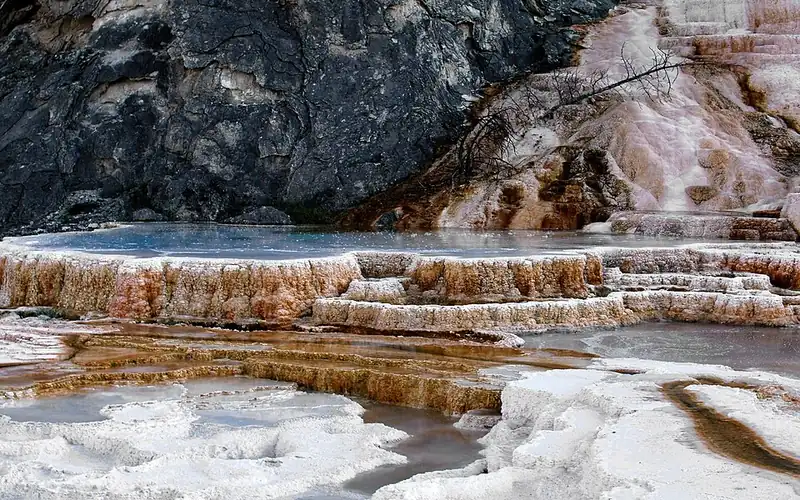
The white steps at Mammoth Hot Springs are made of travertine. Water rises through limestone underground and carries dissolved calcium carbonate up with it. At the surface the carbon dioxide escapes and the mineral is left behind as chalky white rock. The steps change shape fast.
Photo: Jim Peaco, National Park Service / Wikimedia Commons (public domain)
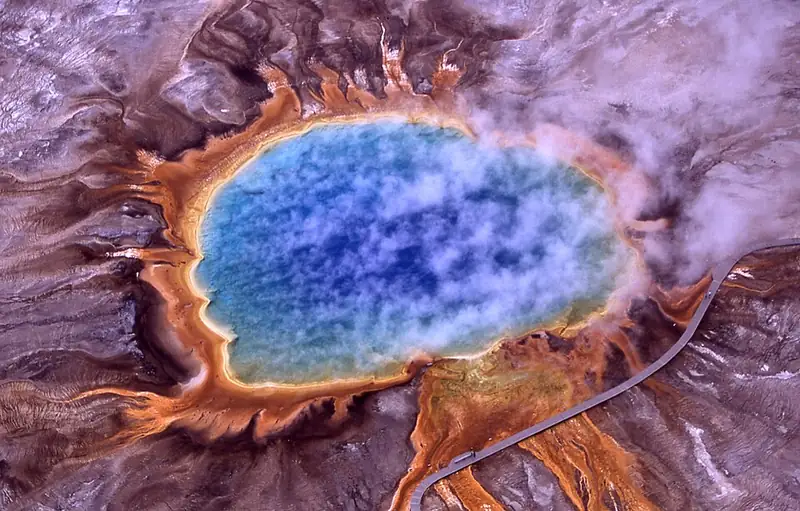
Grand Prismatic Spring is the largest hot spring in the park, 200 to 330 feet across and more than 121 feet deep. The rings of color are living things called thermophiles, which means heat lovers. Colorless and yellow ones live in the hottest water. Orange, brown, and green ones live in the cooler water at the edges.
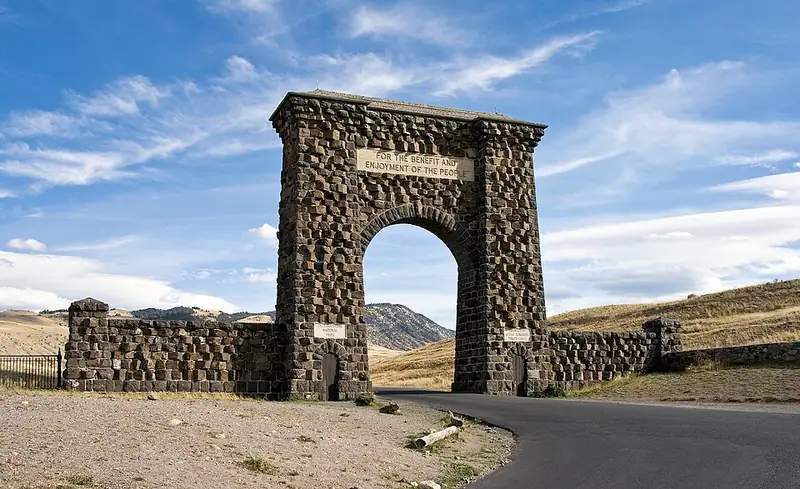
On March 1, 1872, President Ulysses S. Grant signed the law that made Yellowstone the world's first national park. No country had done that before. The stone gate at the north entrance carries the words from that law: for the benefit and enjoyment of the people.