Photo cards, one fact each. Big and Little made them.
Card 1 of 6
Photo: James St. John / Wikimedia Commons (CC BY 2.0)
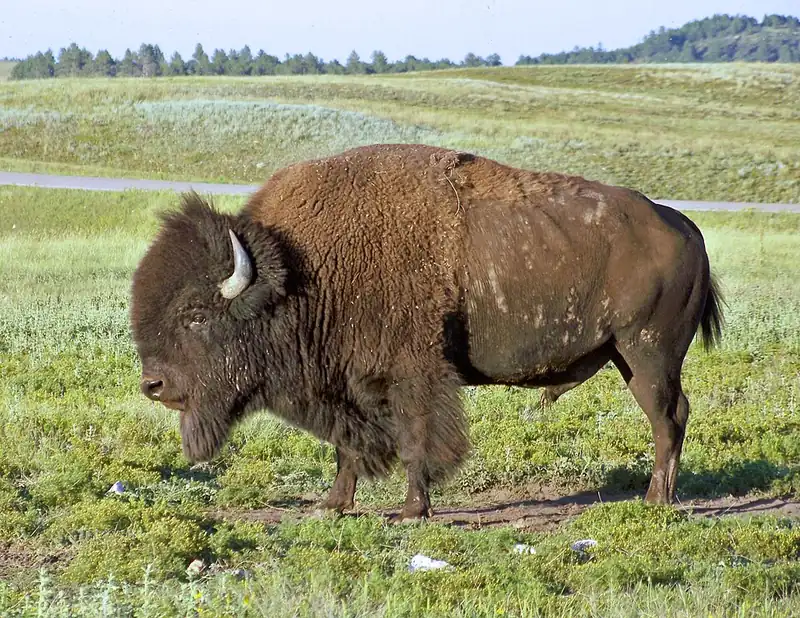
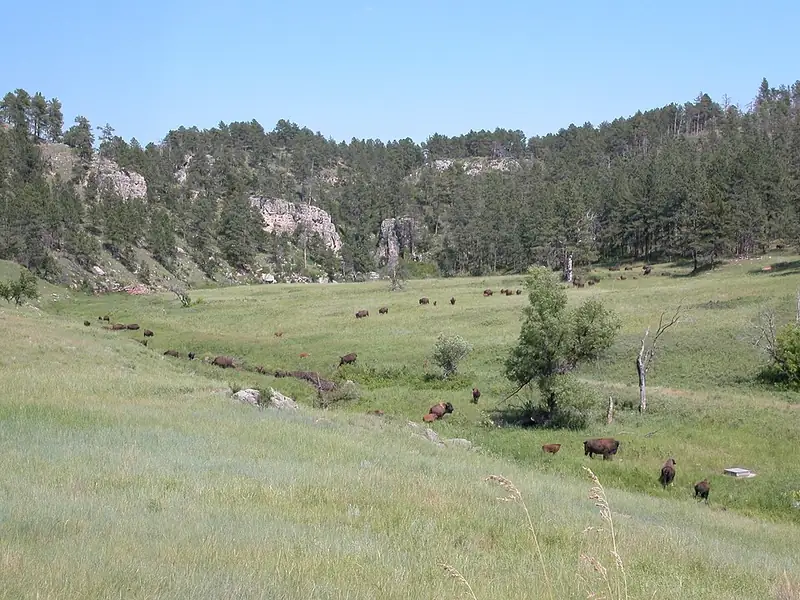
A bison bull weighs about 2,000 pounds, runs 35 miles an hour, and can clear a 5-foot fence. Its neck muscles are strong enough to swing its head side to side and sweep snow off the grass, which is how it feeds through a Black Hills winter.
Photo: James St. John / Wikimedia Commons (CC BY 2.0)
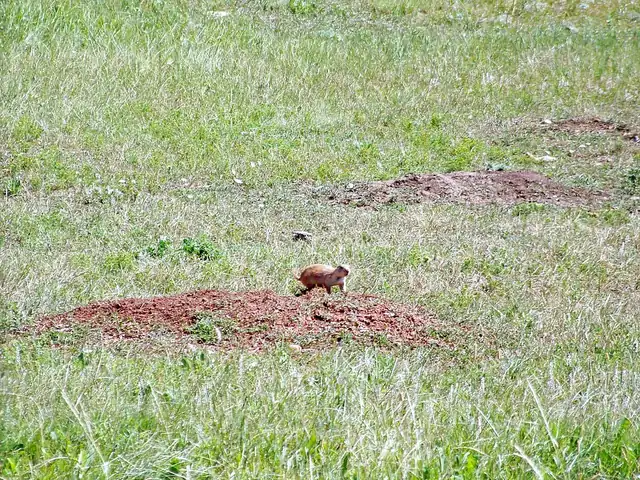
A prairie-dog town is divided into neighborhoods called coteries, each one adult male, three or four females, and their pups. Members groom each other, dig together, and bark a warning that sends everyone within earshot down the nearest hole.
Photo: James St. John / Wikimedia Commons (CC BY 2.0)
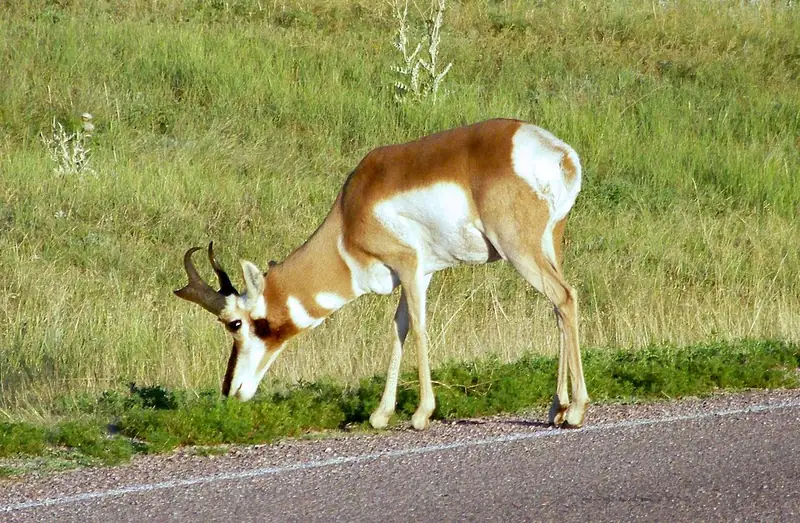
Pronghorn run 60 miles an hour for about half a mile, faster than anything alive that hunts them. Biologists think they were built to outrun the American cheetah, which went extinct. They are also the only animal in the world that sheds the outer sheath of its horns every year.
Photo: National Park Service / Wikimedia Commons (public domain)
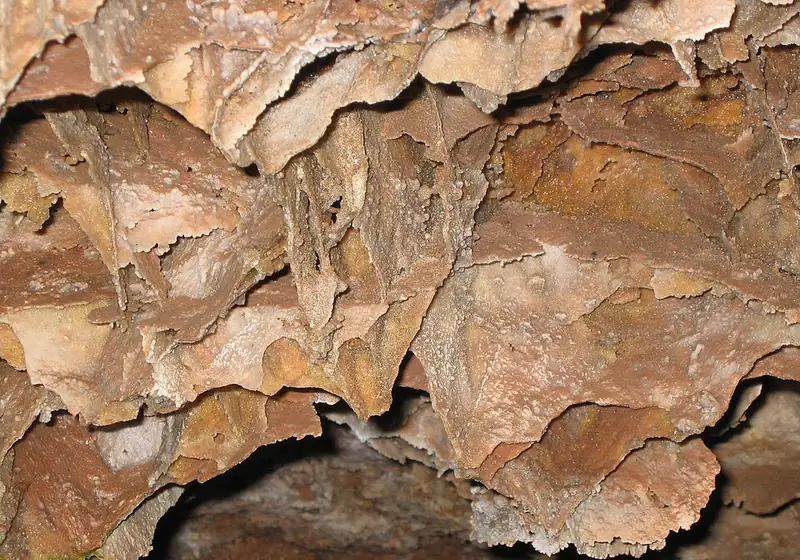
Boxwork is thin blades of calcite that stand out from the walls and ceiling in a honeycomb. The calcite filled cracks in the limestone first, then the rock between the blades weathered away and left the fins hanging. Wind Cave holds more boxwork than every other cave on Earth combined.
Photo: Stripey the crab / Wikimedia Commons (CC BY-SA 3.0)
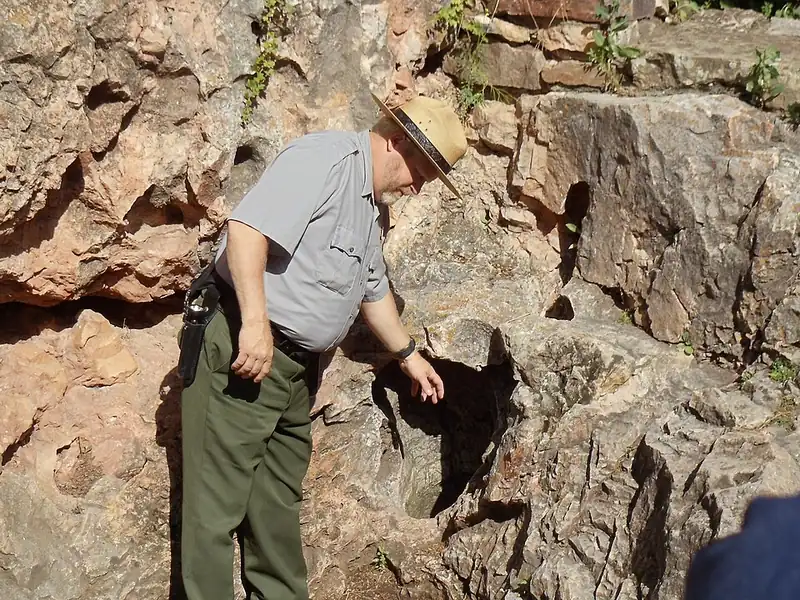
The natural entrance is a hole about ten inches across, and the wind moving through it is what gave the cave its name. In Lakota tradition this is Oniya Oshoka, where the earth breathes inside, and the first people and bison came up through it. At least 20 Native nations have ties to this place, and prayer cloths still hang in the trees around it.
In November 1913 the American Bison Society put 14 bison on a train in New York City, rode them to Hot Springs, South Dakota, and hauled them the last miles to Wind Cave by wagon. Every bison in the park today descends from that shipment, and the herd has since been used to start herds in other parks and in Mexico.