Photo cards, one fact each. Big and Little made them.
Card 1 of 7
Photo: Frank Schulenburg / Wikimedia Commons (CC BY-SA 4.0)
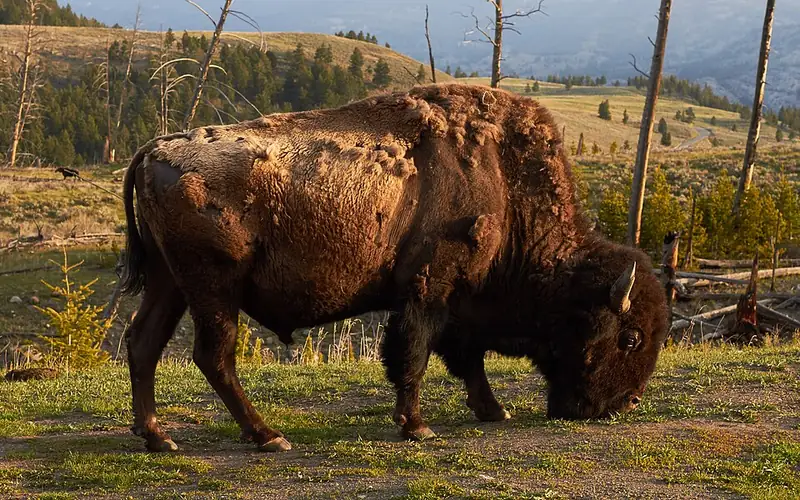
A bison bull can weigh as much as a small car and still run three times faster than a person. Bison have the right of way on the park's scenic drives, and NPS asks visitors to stay at least 25 yards back.
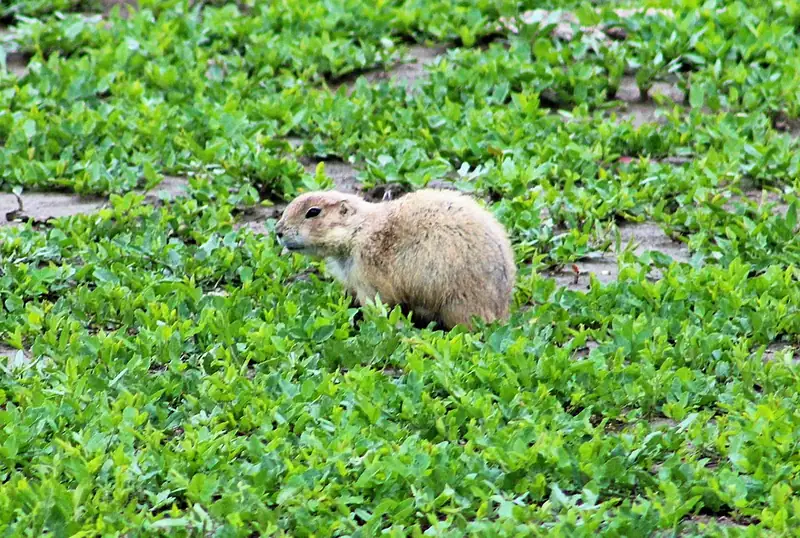
A black-tailed prairie dog town looks like a colony of small rodents and works like a salad bar for animals a thousand times their size: grazing the grass short lets better food plants grow, which draws in bison and pronghorn.
Photo: Amaury Laporte / Wikimedia Commons (CC BY 2.0)
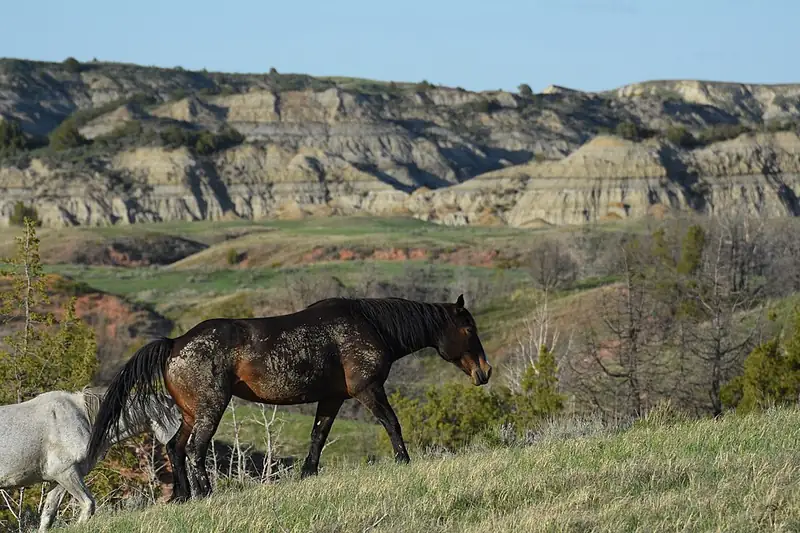
The horses in the South Unit are feral, not wild: descendants of ranch horses turned loose on the open range, managed today as a historic demonstration herd rather than as wildlife.
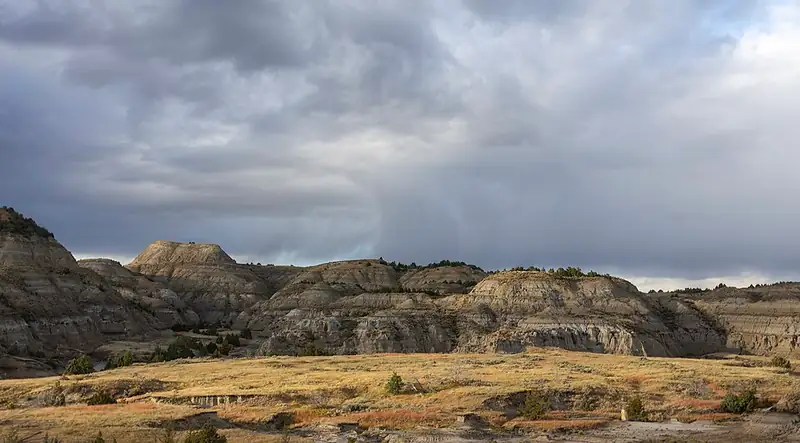
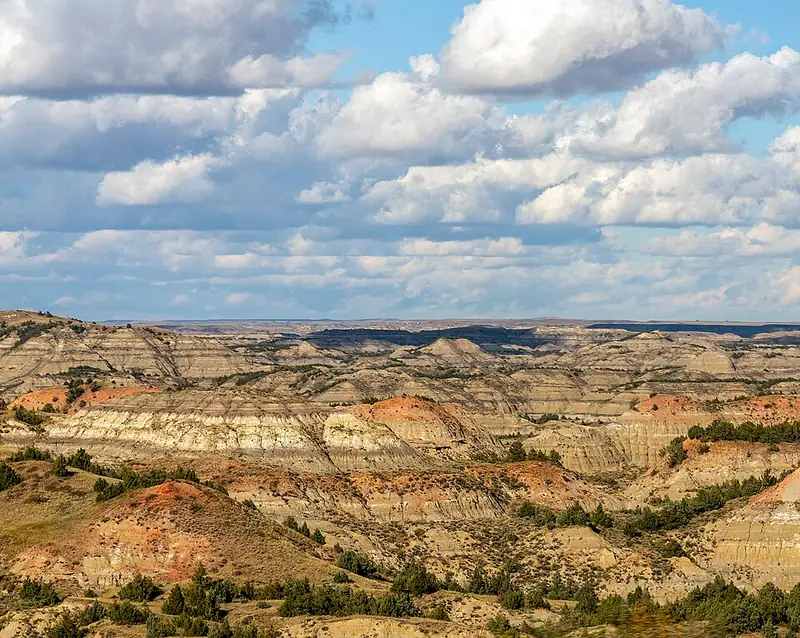
The red rock capping the badlands buttes is clinker, locally called scoria: an underground coal seam burned for years and baked the clay above it hard, and that hard cap protects the softer clay butte underneath from washing away.
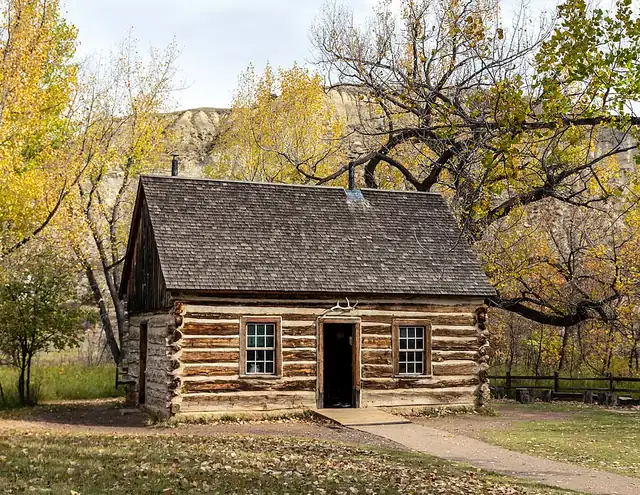
Theodore Roosevelt came to the Dakota Badlands in 1883 and bought a stake in the Maltese Cross Ranch. His cabin from that ranch still stands beside the South Unit Visitor Center in Medora.
This park was set aside twice. Congress created Theodore Roosevelt National Memorial Park in 1947, the only national memorial park ever designated, then redesignated it Theodore Roosevelt National Park in 1978 and added a wilderness area.
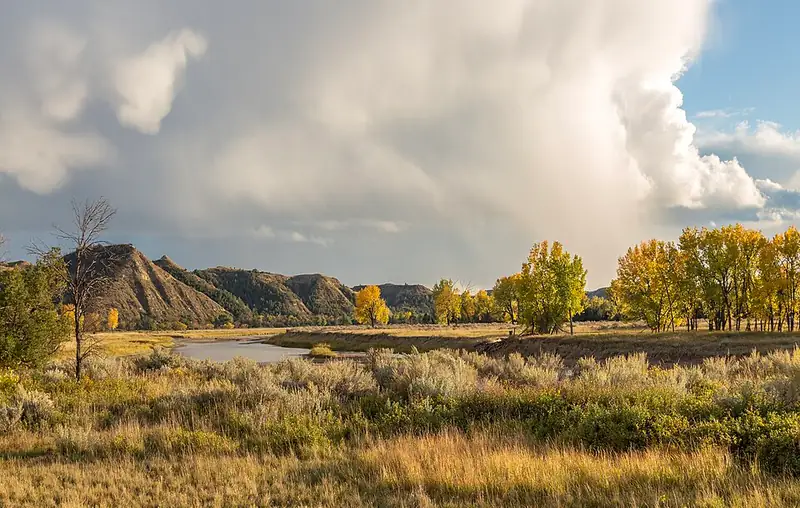
The Little Missouri River cut these badlands and still runs through all three units of the park. Its cottonwood-lined banks turn gold in late September and early October.