Photo cards, one fact each. Big and Little made them.
Card 1 of 5
Photo: mark byzewski / Wikimedia Commons (CC BY 2.0)
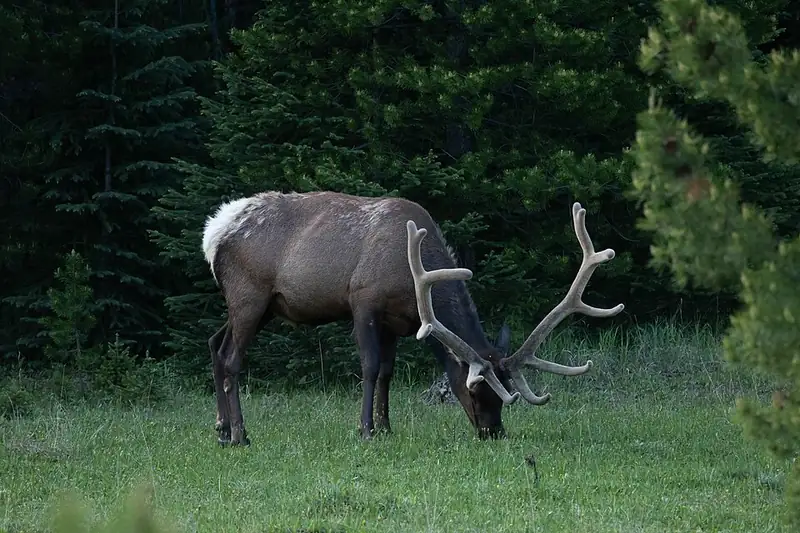
Rocky Mountain elk live in the park year-round, and fall is when the bulls bugle. The rut runs from mid-September to mid-October. Bulls call to gather and guard harems of cows. NPS asks visitors to stay at least 75 feet, about two bus lengths, from elk.
Photo: mark byzewski / Wikimedia Commons (CC BY 2.0)
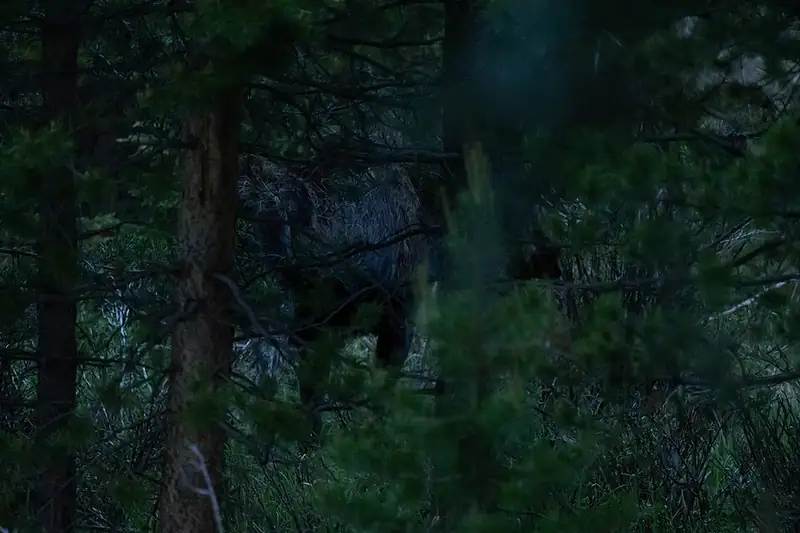
Moose live on the west side of the park, in the Kawuneeche Valley and the headwaters of the Colorado River. Their long noses and long legs let them wade into wet meadows and eat water plants. NPS asks visitors to stay 120 feet, three bus lengths, from moose.
Photo: Anne Dirkse / Wikimedia Commons (CC BY-SA 4.0)
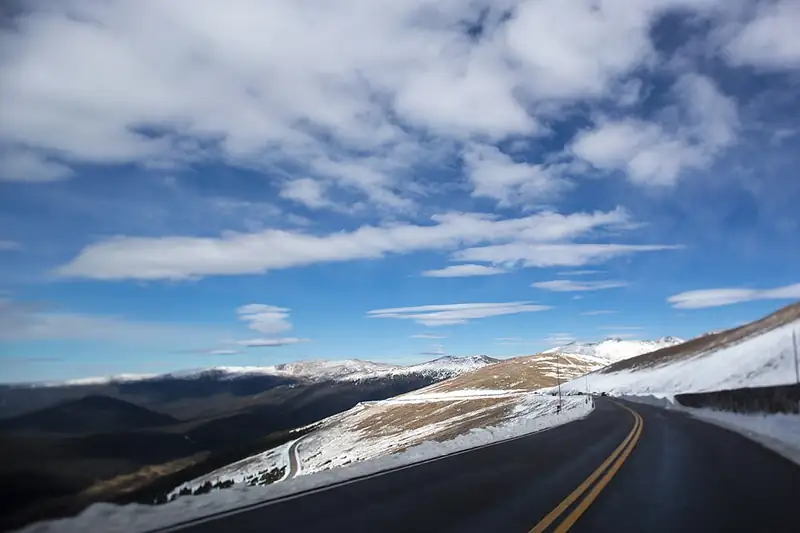
Trail Ridge Road is U.S. 34. It runs 48 miles between Estes Park and Grand Lake, tops out at 12,183 feet, and spends 11 miles above treeline. Every winter it closes to through-travel, and the high country closes first: Many Parks Curve on the east side and the Colorado River Trailhead on the west. The lower approaches stay open.
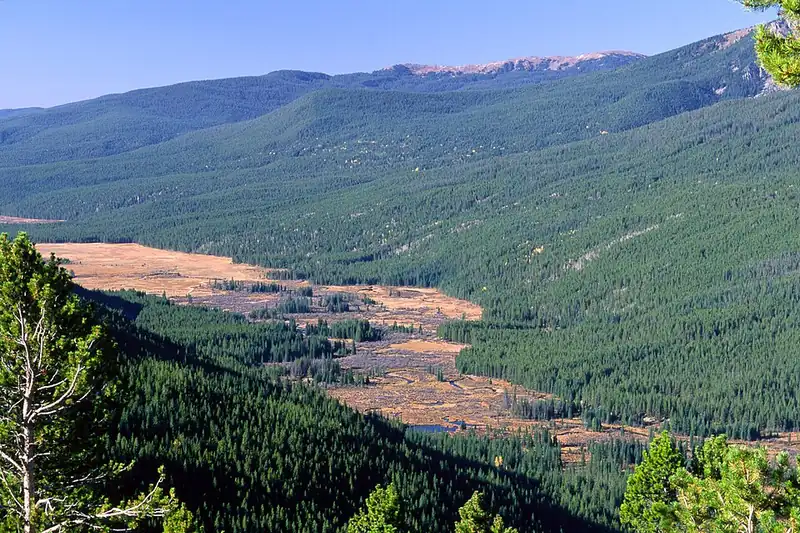
Kawuneeche is an Arapaho name for the wide valley on the west side of the park, where the Colorado River begins. In 1914, Arapaho elders traveled with the ethnographer Oliver Toll and recorded Arapaho place names for many park features, a year before the park was created in 1915.
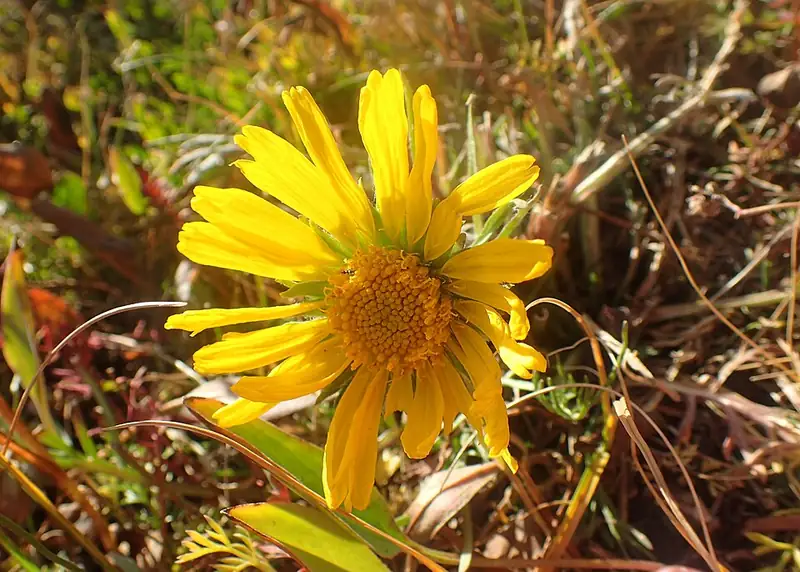
Photo: Kenraiz / Wikimedia Commons (CC BY-SA 4.0)
The alpine sunflower, Hymenoxys grandiflora, is nicknamed Old Man of the Mountain. It grows 10 to 20 years as only roots and leaves, then sends up a single flower, makes seed, and dies. Plants that bloom once and die are called monocarpic.